



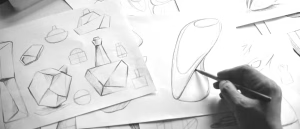
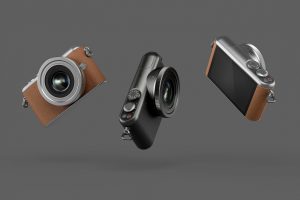
Industrial design is a discipline focused on creating innovative solutions that shape the products and systems we use in everyday life. Emerging during the Industrial Revolution, it has grown into a field that combines creativity, engineering, and user-centered thinking to design products, environments, transportation, and services. Although the term product design is often used interchangeably with industrial design, the latter has a broader scope and goes beyond individual products.
In recent years, interest in studying industrial design has increased significantly. Succeeding in this field requires a combination of creative skills, technical knowledge, and a strong understanding of user needs. In this article, we will explain what industrial design is, explore its history and key responsibilities, introduce leading universities in Iran and abroad, and review potential career paths. If you are considering this field, this guide will give you a clear overview.
What is Industrial Design ?
Industrial design is the process of designing products that are intended for mass production. One of its key characteristics is the clear separation between the design stage and the production stage. In industrial design, designers define the product’s form, user experience, and functionality before the product is physically manufactured. This separation is what distinguishes industrial design from handicraft production, where designing and making the product typically happen at the same time.
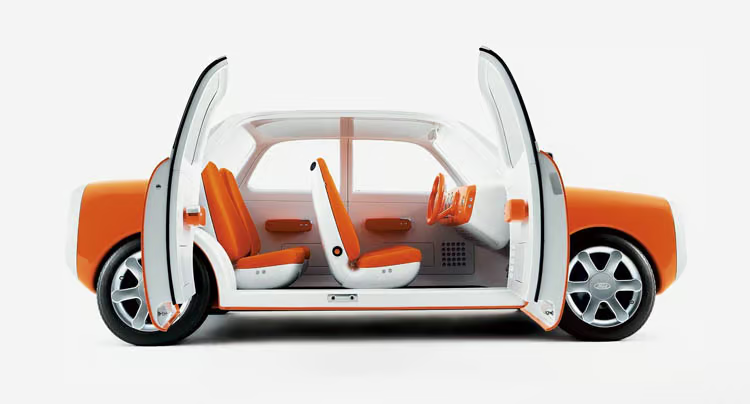
Industrial design explores the relationship between a product’s function, its form, and the way it interacts with users and the surrounding environment. Industrial designers typically do not design engines, electrical systems, or complex mechanical components. Instead, they focus on areas such as usability, form development, ergonomics, and the overall user experience—factors that can also influence a product’s technical decisions. In many cases, industrial designers work closely with marketing teams to define product features and better understand users’ needs and expectations.
Explaining design can often be challenging for professionals outside the design field, such as engineers, because many design concepts are not easily expressed in simple technical terms. For this reason, designers often rely on broader conceptual definitions to describe the discipline. One widely cited definition from Carnegie Mellon University states: “Design is a process that involves taking an existing situation and transforming it into a preferred one.” This definition applies both to entirely new products and to existing products that are redesigned and improved.
Industrial design frequently overlaps with engineering design, and the boundaries between the two fields may vary across countries and industries. Generally, however, engineering design focuses on the technical mechanisms and functional systems of a product, while industrial design concentrates on aspects such as form, usability, and user interaction. In practice, successful product development usually depends on the collaboration between engineers and industrial designers, whose combined expertise helps transform ideas into innovative and manufacturable products.
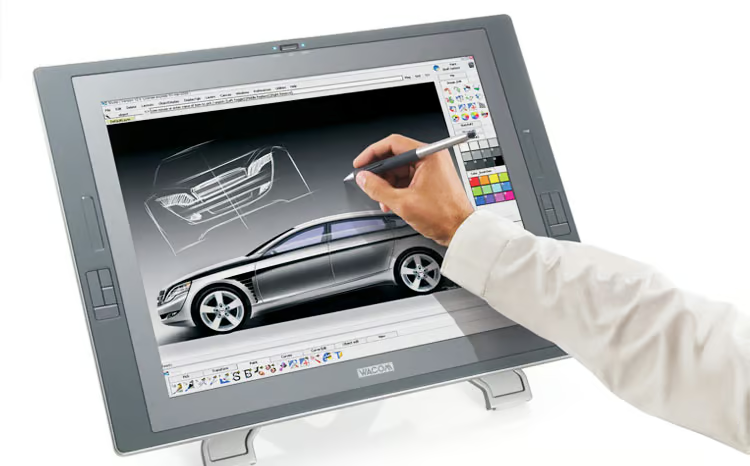
Over time, many definitions of industrial design have been proposed by leading design organizations around the world. As the field continues to evolve, these definitions are also updated to reflect new perspectives and practices. Currently, widely recognized definitions are provided by organizations such as the World Design Organization (WDO) and the Industrial Designers Society of America (IDSA):
A: Definition by the World Design Organization (WDO)
Industrial design is a strategic problem‑solving process that drives innovation, supports business success, and improves quality of life through the development of innovative products, systems, services, and experiences. It bridges the gap between what is technically possible and what people actually need and value. Industrial design is an interdisciplinary profession that harnesses creativity to address complex problems and develop solutions that enhance products, systems, services, experiences, and even business models. At its core, industrial design offers an optimistic perspective on the future by reframing challenges as opportunities. The discipline connects innovation, technology, research, business, and users to create new value and competitive advantage across economic, social, and environmental dimensions.
B: Definition by the Industrial Designers Society of America (IDSA)
Industrial design is the professional practice of creating products, devices, objects, and services used by millions of people worldwide every day. Industrial designers focus on a product’s appearance, functionality, and manufacturability, while contributing throughout the product development process. Their work shapes the overall value, sustainability, and user experience a product or service delivers.
Every object we interact with at home, work, school, or in public spaces is the result of a design process. During this process, industrial designers and their teams make numerous decisions aimed at improving quality of life and enhancing the way people interact with products.
Industrial design places people at the center of the process. Designers develop a deep understanding of user needs through empathy and research, applying practical, user-centered problem‑solving methods to create products, systems, services, and experiences. They connect different disciplines and business goals while considering the economic, social, and environmental impact of their work.
All industrial products are the result of a design process; however, the nature of this process can vary significantly in its structure and approach. In some cases, it emphasizes creative intuition, while in others it relies on analytical, research‑driven decision‑making. The process may also be shaped by factors such as materials and manufacturing methods, production technologies, business strategies, or broader social, commercial, and aesthetic considerations.
The role of industrial designers is to develop and implement design solutions that address formal, functional, ergonomic, marketing, branding, and sales-related challenges.
History of Industrial Design
For decades before industrial design emerged as a distinct profession, technical knowledge and production expertise were held by master craftsmen. They determined the form of products based on their personal skills, inherited traditions, and the experience gained under the guidance of their mentors.
The craft guilds that laid the foundations of early industrial production trace their origins to the pre‑industrial era. As trade expanded during the Middle Ages, large workshops emerged in cities such as Florence, Venice, and Nuremberg. Growing competition in the early sixteenth century led to the appearance of pattern books in Italy and Germany—collections of illustrated and engraved decorative motifs used to design a wide variety of products before they were manufactured. The use of drawing as a method of product design was first introduced during the Renaissance by an Italian architect and shipbuilder.
In the seventeenth century, royal patronage for major architectural projects in cities such as Florence contributed to the expansion of large state‑run manufacturing operations in Paris. There, teams of hundreds of master craftsmen—including artists, decorators, and engravers—produced a wide range of decorative products. For many years, however, the formal and artistic quality of these products remained in the hands of individual craftsmen. As production volumes increased, this dynamic gradually began to change.
The emergence of industrial design is closely linked to the Industrial Revolution and the mechanization of production. The Industrial Revolution of the eighteenth century in England led to a significant expansion of industrial manufacturing, which transformed the way products were designed and how their form was defined.

Industrial design is largely a twentieth‑century phenomenon. Although the term industrial design was first used in 1839 at St. Peter’s Catholic Boys’ School in New Zealand in reference to the production of silk textile patterns, it was later adopted as the name of a specialized technical and artistic field by the New Zealand designer Joseph Claude Sinel in 1919. Christopher Dresser is often regarded as the first independent industrial designer.
Another early and influential figure was the German architect Peter Behrens, who was strongly influenced by the nineteenth‑century English designer and poet William Morris and the Arts and Crafts movement associated with him. Behrens, in turn, influenced many designers and architects of the next generation, including Walter Gropius, the founder of Germany’s renowned Bauhaus school of design.
After Germany and other European countries, the United States was well positioned to further develop the profession of industrial design. During World War II, industrial designers contributed by developing products that supported the war effort. Following the war, other countries also made significant progress in product design. By the early 1990s, however, the global economic recession pushed design into a more restrained role and directed architecture toward a stronger emphasis on value engineering and the evaluation of service and product costs—although industrial design had already been evolving rapidly.
Since then, two prominent tendencies have emerged in industrial design: one emphasizes the artistic creativity of a highly talented individual designer, while the other relies on collaborative teamwork among design and engineering specialists to shape the final product.
A more common approach today places the designer within a larger multidisciplinary team responsible for developing marketable products. The company Frog Design, founded in 1969 by Hartmut Esslinger, challenged the modernist principle that “form follows function” by promoting the idea that “form follows emotion.” In the twenty‑first century, design environments increasingly present a company’s products in ways that are both aesthetically refined—worthy of a museum setting—and widely accessible. At the same time, as access to products and technologies expands, design has become increasingly intertwined with the integration of advanced technologies.
The Importance of Industrial Design
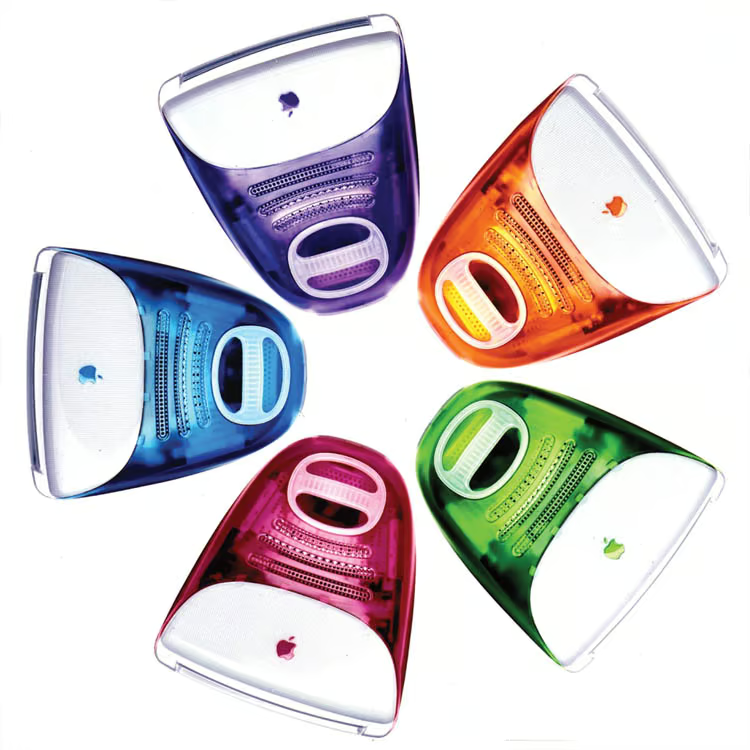
Industrial design lies at the intersection of science, industry, and art, and involves conceiving and developing products intended for mass production. This creative process defines the form and characteristics of a product before it is manufactured. In contrast, production largely consists of repetition—often automated and process‑driven. This distinction separates industrial design from craft‑based design, in which a product’s form is shaped directly by its maker during the act of creation. The design process may be used either to transform an initial idea into a tangible product or to refine and further develop products already available in the market.
All products result from a design process, although its structure and organization can vary widely. It may be carried out by a single individual or by a multidisciplinary team that includes industrial designers, mechanical and electronics engineers, marketing specialists, and others. The process may rely on intuitive creativity, analytical research‑based decisions, or a combination of both.
Design is also influenced by factors such as materials, manufacturing processes, business strategies, and broader social, commercial, and aesthetic considerations. In general, industrial design can be described as an applied discipline that integrates aesthetics with user‑centered thinking while addressing issues related to form, functionality, ergonomics, branding, sustainability, and market success.
Industrial design explores product form and function as well as the relationship between the product, the user, and the surrounding environment. Industrial designers typically work at a smaller scale rather than designing large and complex systems such as buildings or ships. They usually do not design the engines, circuits, or mechanical components that power machines. Instead, they focus on usability and on shaping effective relationships between components to achieve the desired performance. Industrial designers collaborate closely with specialists—such as mechanical and electrical engineers—to ensure functionality and manufacturability, and with marketing teams to understand and address user needs and expectations.

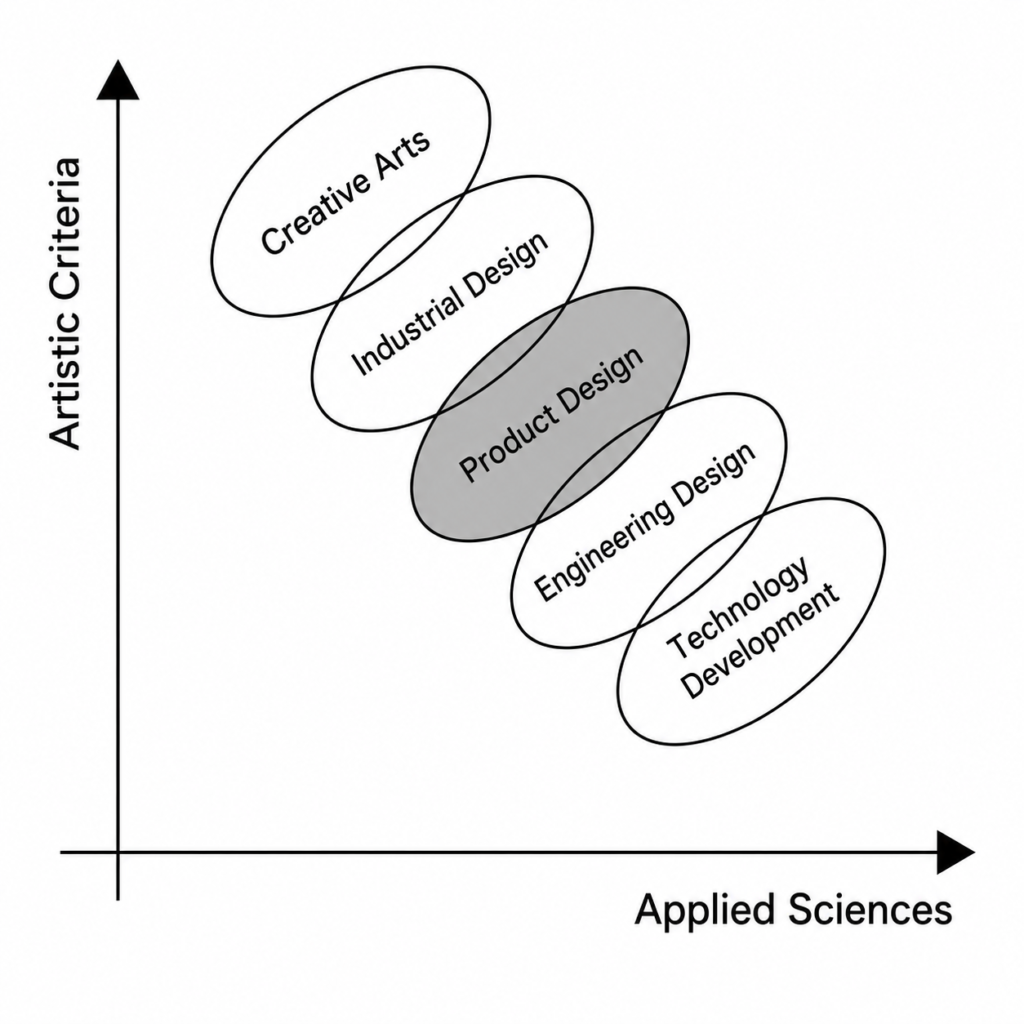
Industrial design often overlaps with engineering design, and the boundaries between these fields can vary across countries. In general, however, engineering design focuses primarily on a product’s functionality and technical performance, while industrial design emphasizes its aesthetic qualities and user interaction. In this context, the overlap between industrial design and industrial engineering occurs mainly in the field of ergonomics.
Industrial design is a strategic problem‑solving process that drives innovation and business success, ultimately leading to higher‑quality products, systems, services, and innovative user experiences.
*Industrial design bridges the gap between what exists and what could be*
Industrial design is a strategic problem‑solving process that drives innovation and business success. Designers reframe problems as opportunities and connect technology, research, business, and user needs to create value and competitive advantage across economic, social, and environmental domains. By placing people at the center of the process, they gain deep insights into user needs and develop practical, user‑centered solutions that improve products, systems, services, and experiences.
Although the design process is often viewed as purely creative, it also involves extensive analytical work. Industrial designers use methods such as user research, design analysis, model making, prototyping, testing, and feedback collection as part of their workflow. These activities help transform ideas into practical solutions and guide decision‑making throughout development.
Designers frequently use 3D software to translate concepts into manufacturable forms and may build prototypes to evaluate performance and usability. The design process is inherently iterative, involving repeated cycles of ideation, design, testing, and refinement. Insights gained from testing lead to continuous improvements in both the product and, in some cases, the production process.
Industrial designers also define many key product characteristics, including overall form, details, color, texture, and usability aspects. They may contribute to decisions about materials, manufacturing considerations, and how the product is presented to consumers. Their involvement in product development can create significant value by improving usability, reducing production costs, and helping companies deliver more appealing and competitive products.

Industrial design may also focus on technical concepts, products, and processes. Beyond aesthetics, usability, and ergonomics, it can encompass engineering considerations, functionality, market positioning, and other aspects such as user psychology, desire, and emotional attachment. These values and associated dimensions that form the foundation of industrial design may vary across different schools of thought and among professional designers.
FurtherReading: What Is Product Design and What Are Its Applications?
Every product must meet specific requirements and address the needs of its users. Industrial designers contribute to this process by developing products that respond to both customer expectations and manufacturing constraints. They communicate their ideas through drawings, models, and clear documentation that guide the product’s development.
Industrial designers typically work within multidisciplinary teams that include professionals from management, marketing, engineering, and manufacturing, collaborating with these groups throughout the product development process.
In today’s saturated markets, many products offer similar functions, and design often becomes the key factor that differentiates one brand from another. Beyond functionality, products can also convey meaning and identity. Product design plays a crucial role in communicating this meaning to consumers. Brands that succeed are those that carefully understand user needs and respond with thoughtful, creative design solutions.
Industrial Design and Engineering Design
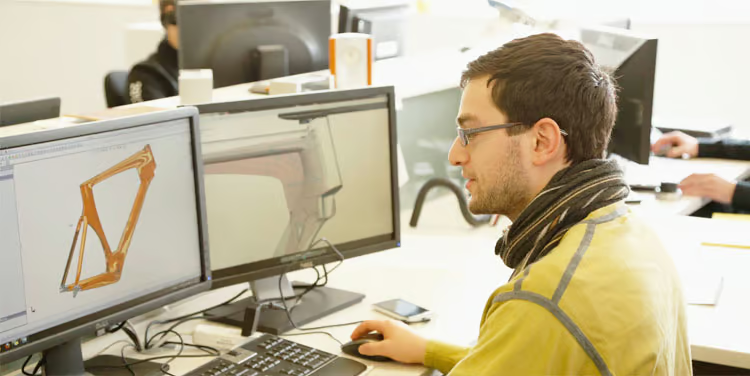
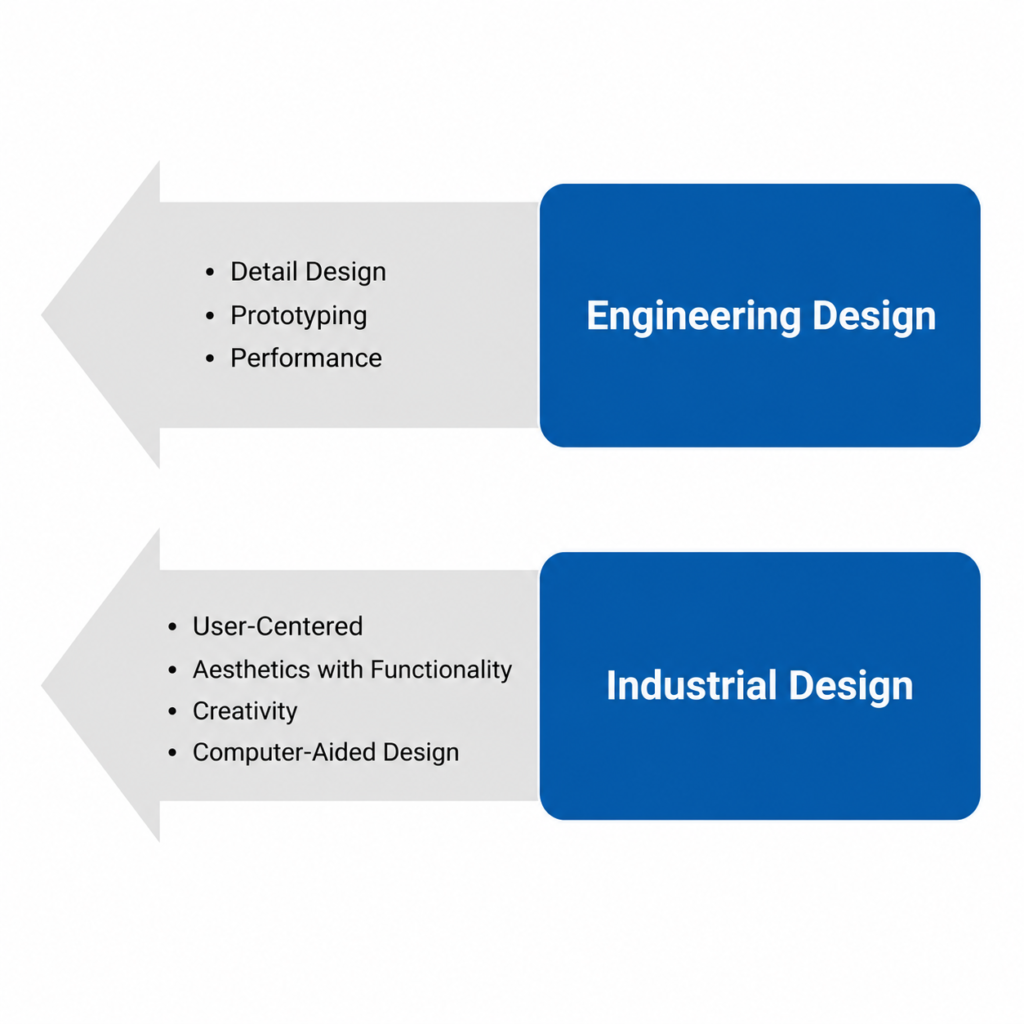
The integrated collaboration between engineering design and industrial design is essential for bringing successful products to market. However, these two fields often follow different design methods, and in some cases their approaches may even conflict. Industrial designers focus on improving the user experience of a product while shaping its form and user interface. To achieve this, they apply their expertise in aesthetics and ergonomics.
In collaboration with industrial designers, engineering designers are responsible for implementing the design concepts developed by the industrial design team. They provide the technical foundation that ensures the product’s functionality, reliability, and manufacturability.
Engineering designers are often described as taking an “inside‑out” approach—developing products from function to form and focusing on internal components and technical systems. In contrast, industrial designers tend to follow an “outside‑in” approach, shaping products from form to function while emphasizing external design and user‑facing aspects.
Industrial Design and Product Design
Design is a broad term that encompasses many disciplines, each with its own objectives and required skill sets. For instance, industrial design and product design are both related to product development, but they differ in focus and scope.
Industrial design involves developing products and improving their functionality, constraints, and aesthetics with the goal of enabling efficient mass production. The process applies product design principles to create systems and solutions suitable for large‑scale manufacturing. It may include evaluating the purpose or existing need for a product and identifying ways to enhance its usability, appearance, and overall performance. Industrial designers often combine technical knowledge with artistic sensibility to create products that are cost‑effective, visually appealing, and well suited to everyday users.
Product design, often considered part of the broader industrial design process, focuses specifically on developing individual products and identifying their purpose and intended users. It typically follows a product from initial ideas and concept development through research, design visualization, and prototyping. Compared with industrial design, product design is less focused on manufacturing processes and more concerned with why a product is created and for whom.
Below are key differences between industrial design and product design from three perspectives: purpose, outputs and technical considerations.
Purpose: Both industrial design and product design aim to create and refine products. However, product design focuses more on developing solutions to specific problems. In contrast, industrial design is concerned with implementing these solutions within manufacturing systems and delivering them effectively to end users. In this sense, the conceptual and developmental work of product design can be seen as part of the broader industrial design process.
Product: Industrial design often centers on products intended for mass production, including complex or specialized items such as automobiles and computers. In contrast, product design covers a broader range of products and frequently focuses on everyday consumer goods. Today, the scope of product design has expanded to include software and other non‑physical or digital products.
Technical Knowledge: Both industrial designers and product designers need a solid understanding of the overall product development process. However, in some areas of product design, designers may not have the same level of technical specialization as industrial designers, particularly in areas such as 3D modeling, materials, and manufacturing. In contrast, industrial designers are generally expected to understand engineering principles, production processes, and business considerations. Despite these differences, many design methods and tools are shared across disciplines, and their approaches often overlap.

Key Approaches in Industrial Design
1.Inclusive Design
Inclusive design is a design philosophy and methodology that seeks to meaningfully include diverse people in their interactions with organizations, products, and services. This approach takes into account cultural, social, and contextual needs that go beyond those of the “average” or “typical” user.
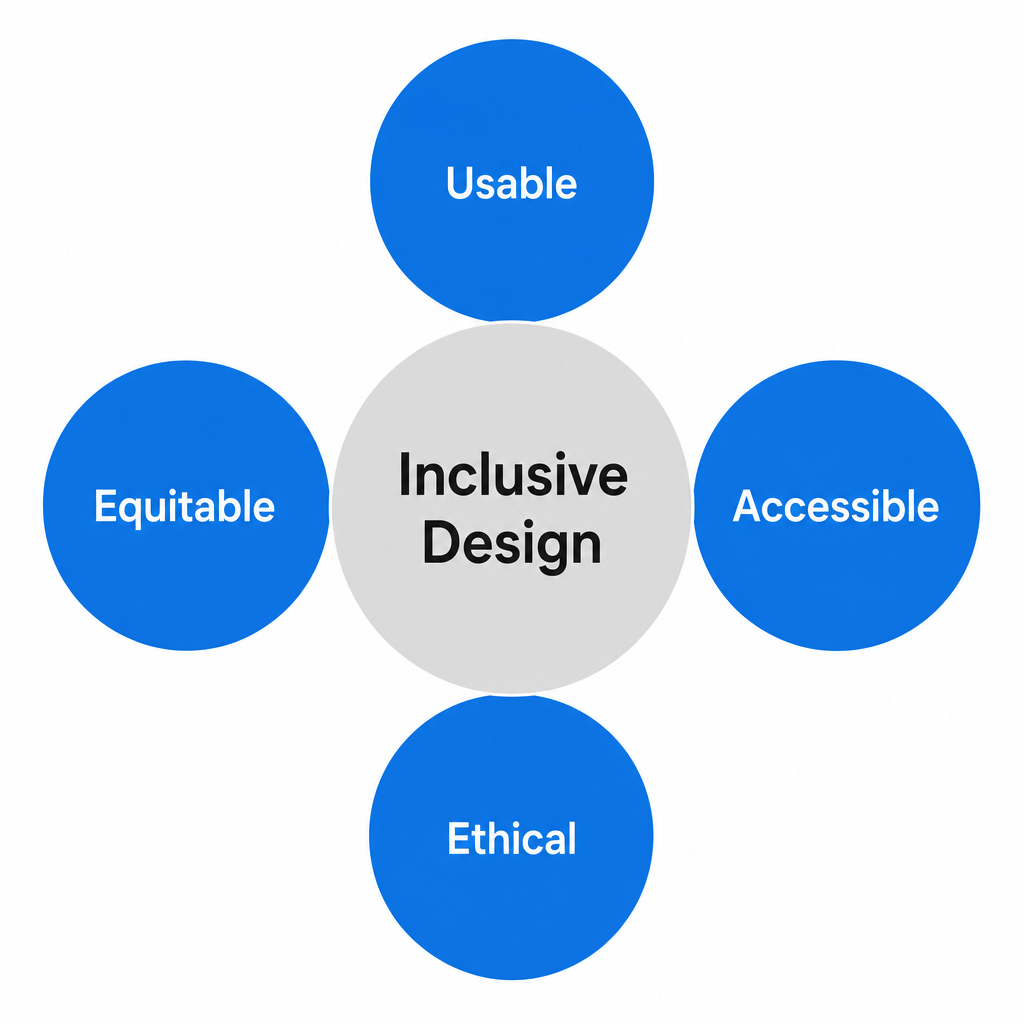
Inclusive design does not mean creating a single product that meets the needs of everyone. Rather, it is an approach to responding appropriately to the diversity of the population through the following methods:
- creating a family of products and their derivatives to provide the broadest possible coverage of the population’s needs.
- ensuring that each product has clearly defined target users.
- reducing the level of ability required to use each product in order to improve the user experience for a wide range of customers in different situations.

2. Universal Design
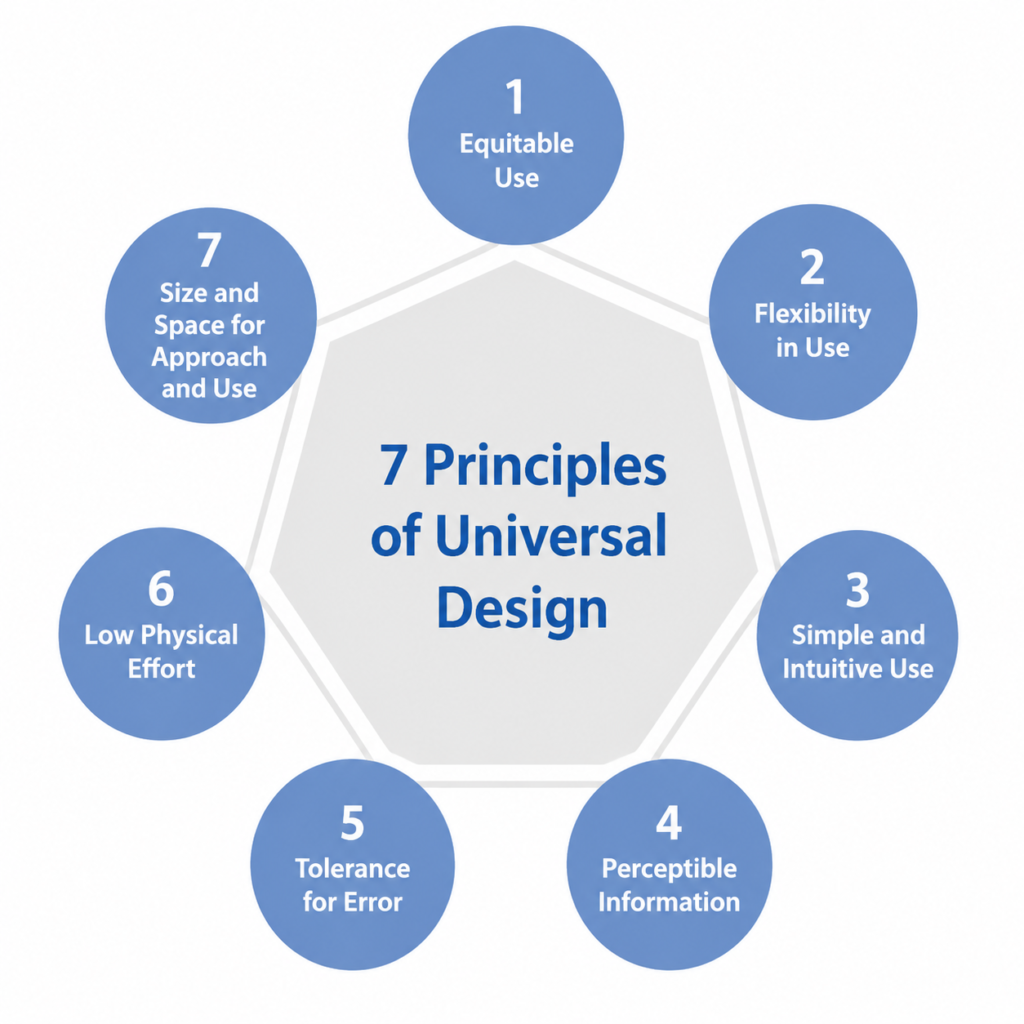
Universal design is the process of creating products that are accessible to people with a wide range of abilities, disabilities, and other characteristics. While many products are typically designed for the “average” user, universal design aims to make them usable by as many people as possible.
3. Sustainable Design
According to the World Commission on Environment and Development, sustainability is “development that meets the needs of the present without compromising the ability of future generations to meet their own needs.” Sustainable design reflects this broader perspective by acknowledging that today’s decisions shape tomorrow’s world. Effective sustainable design takes a holistic approach to choosing and integrating products and processes that deliver long-term user value while minimizing environmental harm. Its primary focus is on reducing negative ecological impacts and improving the performance of buildings and products. The overarching goal is to limit the use of non‑renewable resources, reduce waste, and create functional, efficient environments.
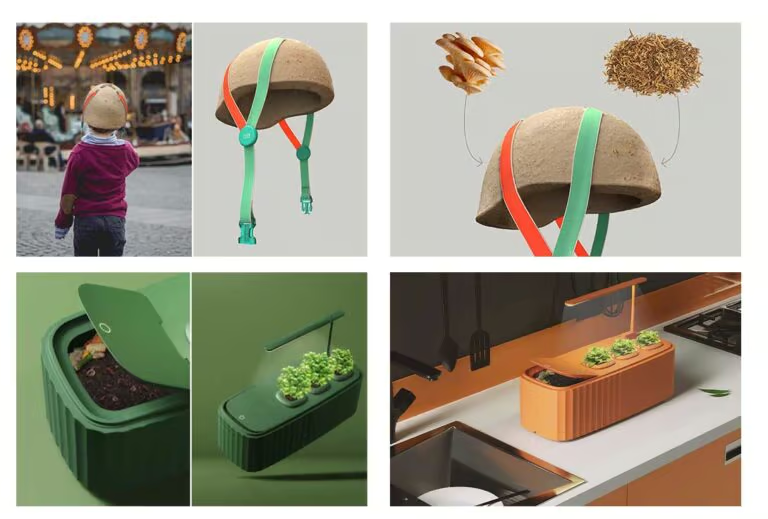
4. Green Design
Green design focuses on creating energy‑efficient, resilient infrastructures that minimize environmental impact and reduce the use of natural resources through careful material selection and efficient performance.
Unlike sustainable design, which takes a broader, long‑term view centered on the well‑being of future generations, green design is more directly focused on reducing immediate environmental impacts and conserving materials and resources.

5. Emotional Design
Emotional design is an approach that focuses on creating products that evoke positive feelings and experiences for users. UX and UI designers use this approach to design interfaces that encourage positive emotional responses and strengthen user engagement.
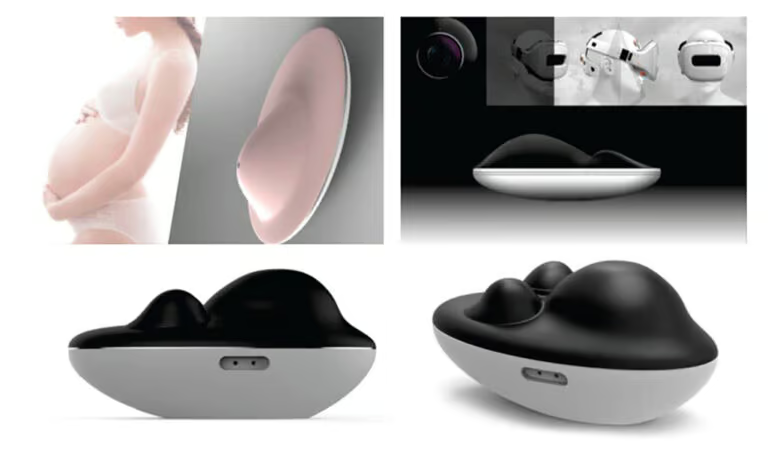
6. Critical Design
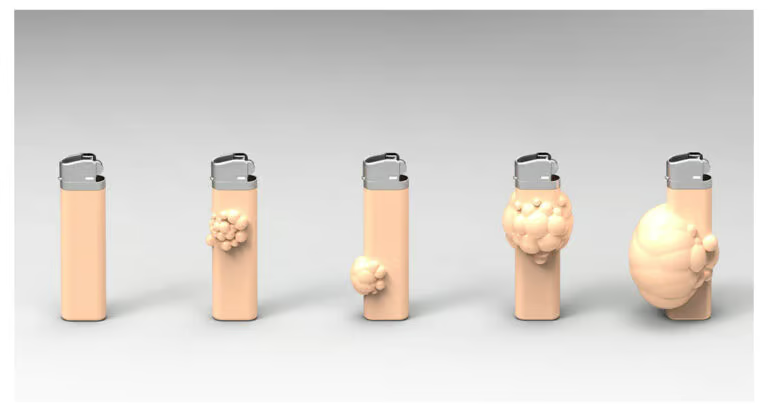
Critical design is a conceptual and often provocative approach that uses satire or darker themes to challenge conventional thinking. Rather than focusing on commercial viability or immediate functionality, it encourages long-term reflection and presents alternative perspectives on consumers as complex, often contradictory individuals. By proposing speculative solutions, critical design aims to spark debate and demonstrate that change is always possible.
Industrial Design as an Academic Discipline
Industrial design is often considered an art-related field, but many students enter it from mathematics and science backgrounds because it also requires a good understanding of physics and math. Students from art schools should remember that its main goal is to create functional products, not just artistic works.
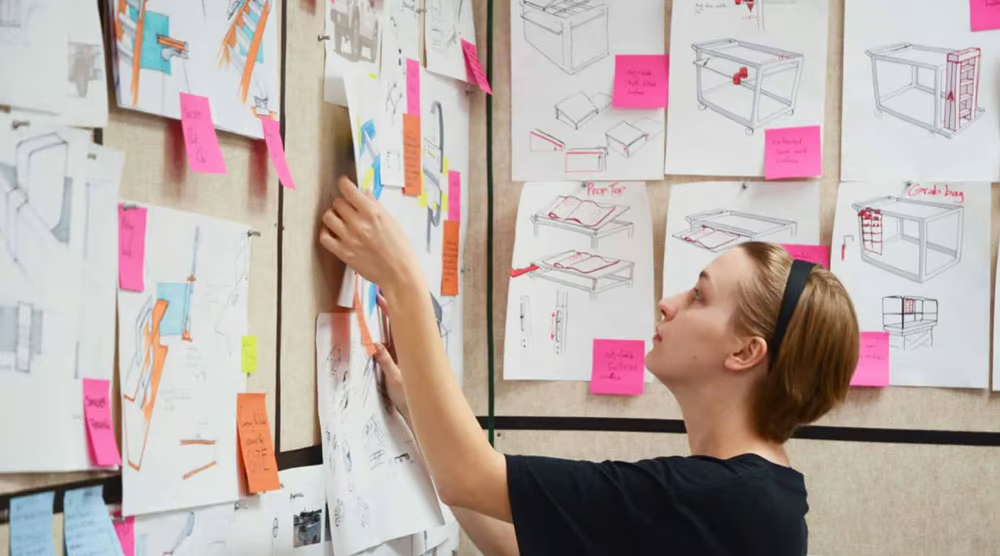
Especially in the early semesters, industrial design students spend much of their time on research and information gathering, which helps them create better designs and understand the needs of both users and manufacturers. They are also expected to keep learning beyond the university by reading design books, practicing sketching, and learning 3D design software.
History of Industrial Design as a Discipline
Industrial design emerged as a distinct discipline in the twentieth century. One of its early pioneers was the German architect Peter Behrens, who was influenced by William Morris and the Arts and Crafts Movement of nineteenth‑century England.
A major turning point came with the founding of the Bauhaus in Germany (1919–1933) by Walter Gropius. Although established by an architect, the school emphasized design and promoted the integration of art, craft, and industry into a unified approach. After the Nazis forced it to close, many Bauhaus teachers emigrated—especially to the United States—where they influenced design education at institutions such as Harvard and Columbia and later founded the New Bauhaus in Chicago.
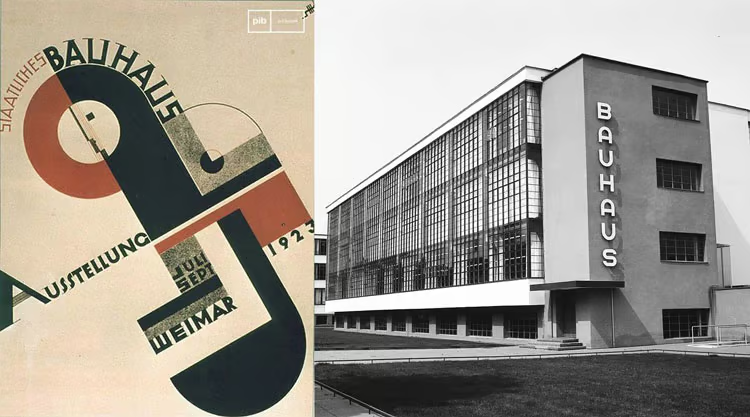
While Germany is often seen as the leader in industrial design, the United States also played a vital role in its development. Benefiting from relative stability and a powerful industrial reputation gained during the war years, the U.S. was well-positioned for the profession to flourish.
In fact, the U.S. Patent Office officially recognized the term “industrial designer” as early as 1913. This led to the formation of several professional organizations for the visual and applied arts, including the American Union of Decorative Artists and Craftsmen (1927) and the Society of Industrial Designers (1944). These groups eventually merged to form the Industrial Designers Society of America (IDSA).
Top Universities for Industrial Design
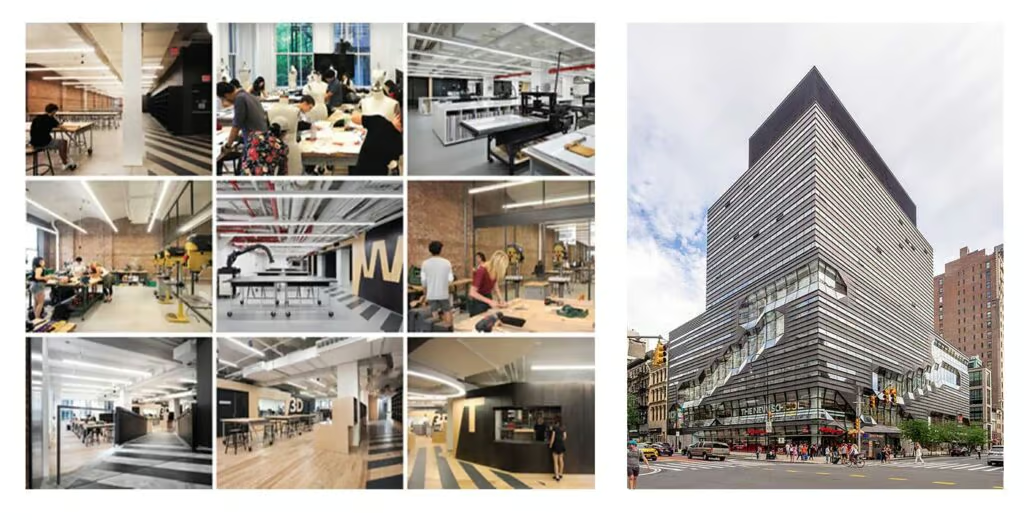
- Parsons School of Design, New York, United States
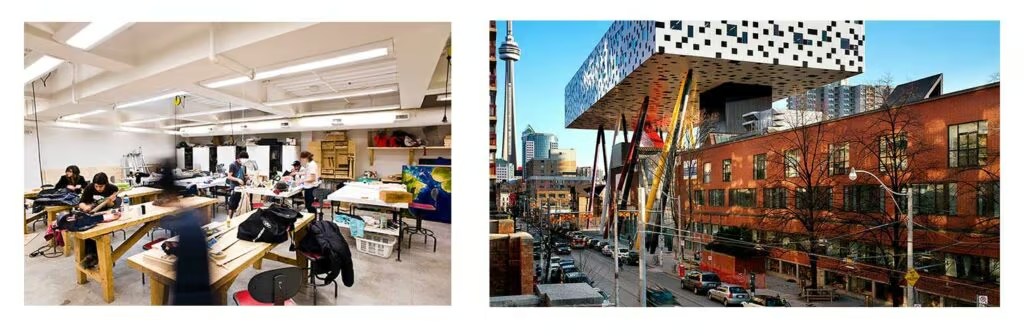
- OCAD University, Ontario, Canada
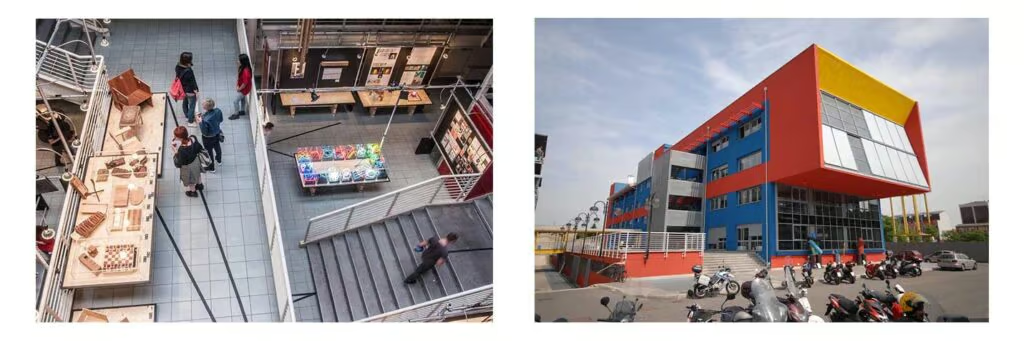
- Polytechnic di Milano, Milan, Italy
- Virginia Polytechnic Institute and State University (USA)
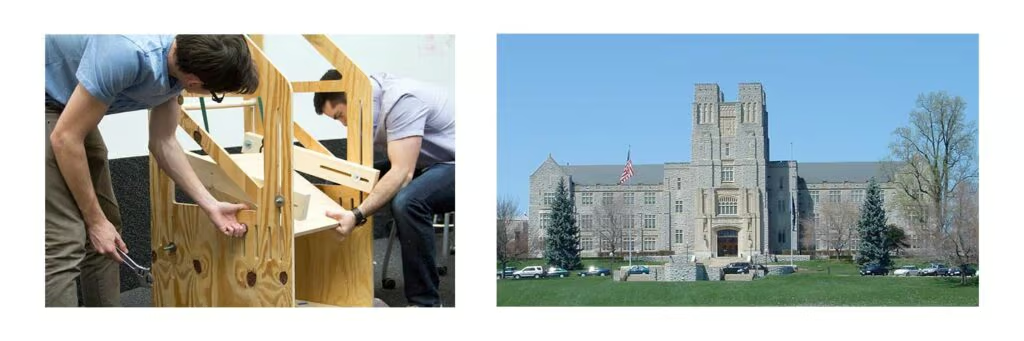
- University of the Arts London, United Kingdom

- Royal College of Art, London, United Kingdom

Major Specializations in Industrial Design
Industrial design is a broad field that can serve as your main professional path. However, to grow within it, you need to choose one or more areas of specialization and focus your efforts there. While industrial designers gain general knowledge across multiple areas, becoming truly professional requires deeper expertise in a specific field.
Below are some of the main specializations within industrial design:
1. Product Design
Product design is the largest area within industrial design and is therefore not considered a specialization in the strict sense. Its core skills are typically covered in most advanced industrial design programs. As an undergraduate, courses in design, art history, and drawing provide a strong foundation for further study. Gaining part‑time experience or a summer internship at a design studio can also give you a significant advantage. (For a more detailed overview, see the Product Design article.)

2. Car Design
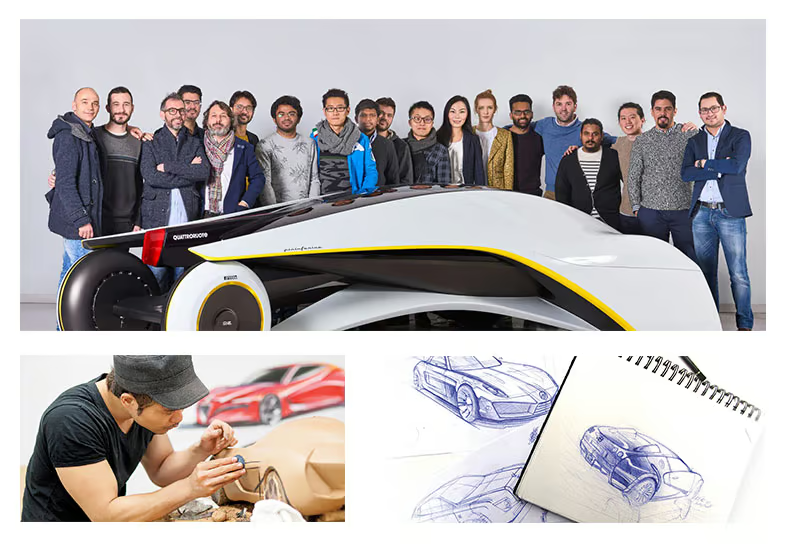
Car design focuses on developing the appearance—and to some extent the ergonomics—of motor vehicles such as cars, motorcycles, trucks, and buses. While the technical development of vehicles is handled by large multidisciplinary engineering teams, automotive designers primarily concentrate on visual form, aesthetics, and early product concepts. Most professionals in this field have artistic backgrounds and hold degrees in industrial or transportation design.
Transportation designers create designs for vehicles and other mobility‑related products. Many specialize in specific areas such as concept cars, public transportation systems, or aircraft interiors. Their work requires strong design skills as well as proficiency in digital tools such as CAD software.
Transportation designers typically work in office environments using computer‑aided design programs and collaborating with colleagues during design discussions and concept development. Most are employed by large companies, with the manufacturing industry representing the largest share of jobs in this field.
3. Packaging Design
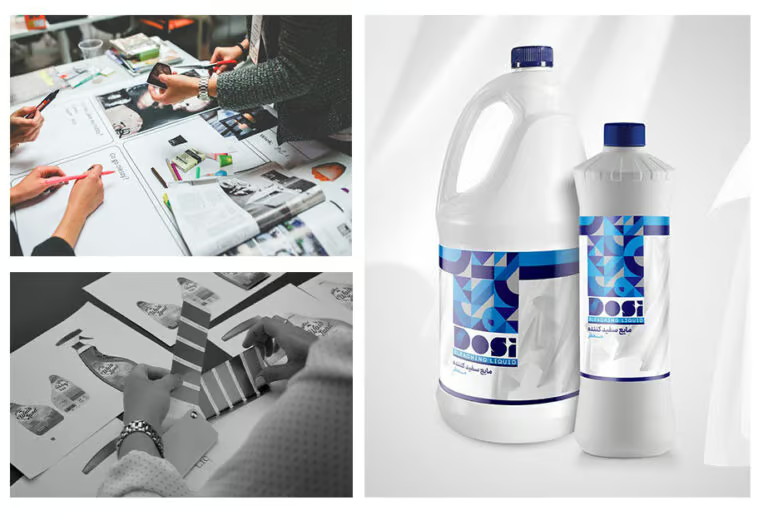
Packaging design combines form, materials, color, imagery, typography, and required information to create packaging suitable for the market. It is an important part of a product’s marketing strategy and includes both the graphic design and the physical container of the product. Packaging designers guide the process from concept to final production, using elements such as shape, color, graphics, and typography to create packaging that is both functional and visually appealing.
In most cases, the following responsibilities can be expected from a packaging designer:
- Lead the design process for product packaging materials, including brainstorming, designing, and creating prototypes.
- Work closely with clients to understand their needs and requirements.
- Evaluate market trends and packaging design trends.
- Collaborate with marketing and creative teams, especially graphic designers, to create eye‑catching designs.
- Present ideas to clients and stakeholders using sketches and design software to help ensure the brand’s success.
- Redesign prototypes based on feedback from clients, engineers, and consumers.
4. Service Design
Service design focuses on improving the internal processes that enable organizations to deliver better customer experiences. While many organizations concentrate on products and delivery channels, service design examines how services actually work behind the scenes. Designers break services into components and develop solutions that align with users’ needs, considering factors such as people, context, and environment.
The goal is to ensure that all service touchpoints work smoothly and that the organization can consistently deliver a high‑quality experience. This means designing not only customer interactions but also the entire system that supports them. For example, in a restaurant, service design involves everything from sourcing ingredients and training staff to the coordination between waiters and chefs—ensuring that the final experience delivered to the customer runs seamlessly.

The three main components of service design are:
- People: This component includes anyone who creates or uses the service, as well as individuals who may be indirectly affected by it.
- Props: This component refers to the physical or digital artifacts (including products) required for the successful delivery of the service.
- Physical environment: shop windows, service counters, conference rooms.
- Digital environment: websites, blogs, and social media platforms.
- Processes: These include any workflows and procedures carried out by employees or users during a service, such as withdrawing money from an ATM, resolving an issue through customer support, interviewing a new employee, or sharing a file.
Returning to the restaurant example, people include the farmers who supply the ingredients, as well as the restaurant managers, chefs, hosts, and waiters. Props include elements such as the kitchen, ingredients, uniforms, and other physical tools used in the service. Processes involve activities like staff training, waiters entering orders, washing dishes, and storing food.
5. UI/UX Design
UI (User Interface) refers to the visual and interactive elements of a digital product—such as a website or mobile app—including buttons, text, images, input fields, layouts, and animations that users interact with. UX (User Experience), on the other hand, focuses on the overall human experience of using the product, analyzing users’ needs, expectations, and behaviors to ensure the interaction is clear, meaningful, and effective.
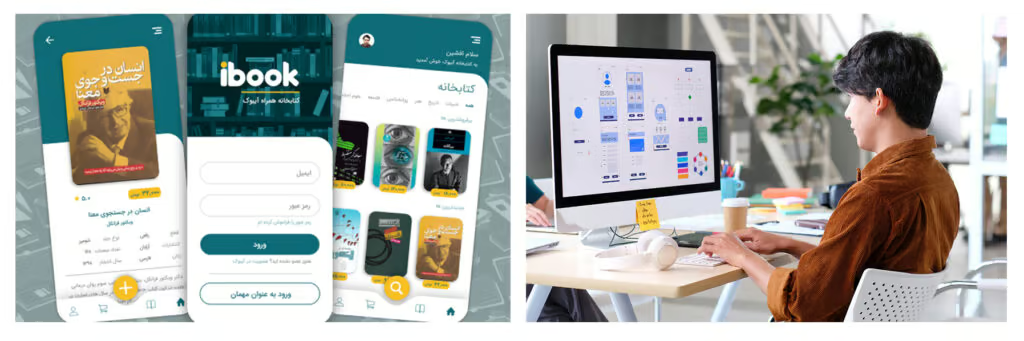
In most cases, this stage comes before visual design. User experience (UX) design is the process teams use to create products that deliver meaningful and relevant experiences. It covers the entire journey of acquiring and using a product, including branding, usability, functionality, and overall design.
Don Norman defines UX as follows: “User experience encompasses all aspects of the end user’s interaction with a company, its services, and its products.”
6. Tool Design
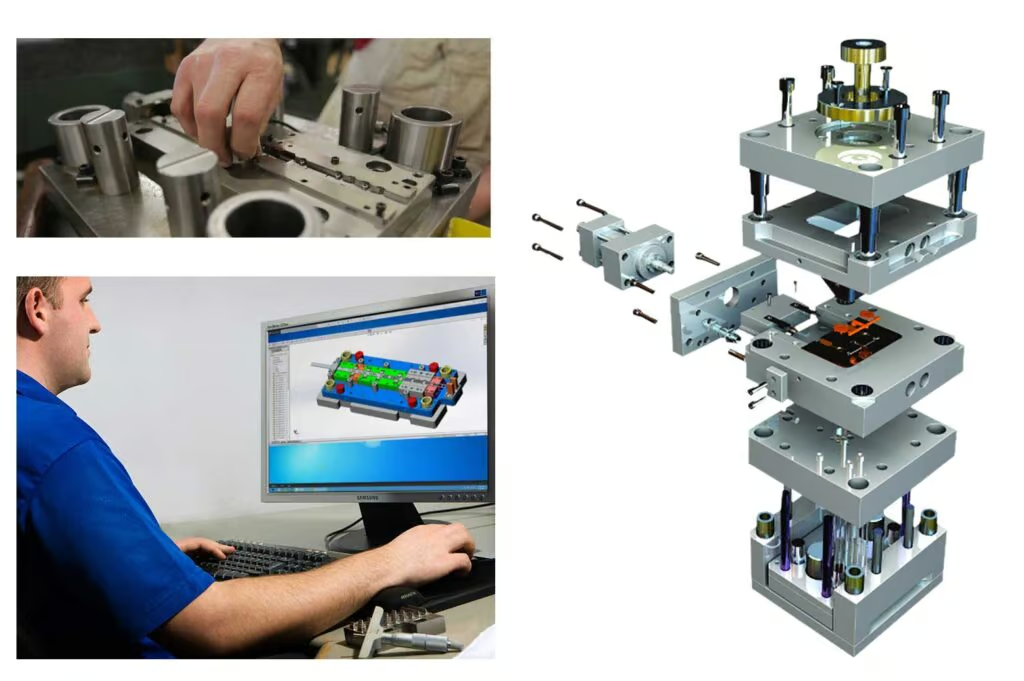
Tool design is a specialized area within manufacturing engineering that focuses on the analysis, planning, design, and development of tools and processes used to improve manufacturing efficiency. The design of a tool depends on its intended function, as well as factors such as safety requirements, materials, size, and the type of machine it will be used with.
7. Toy Design
Toy design involves considerations that set it apart from most other consumer products. Children perceive and interact with the world differently from adults, so the features, forms, and functions of toys must be designed according to their unique perspectives and needs. Play itself is one of the most important factors shaping a toy designer’s approach.
At the undergraduate level, students interested in toy design can build a strong foundation by studying subjects such as sculpture, ceramics, painting, and drawing.

8. Medical Equipment Design
Medical device design is the process of developing devices for medical use, typically moving through several key stages from concept to production. Because these devices directly affect patients’ health, their development involves significant responsibility and risk. Beyond simply creating and manufacturing a product, the process must address strict regulations, technical specifications, application requirements, and user needs to ensure the device is safe, reliable, effective, and market‑ready.

Required Skill Set in Industrial Design
To become a good industrial designer, you need to develop and strengthen the following skills:
Design and Sketching:
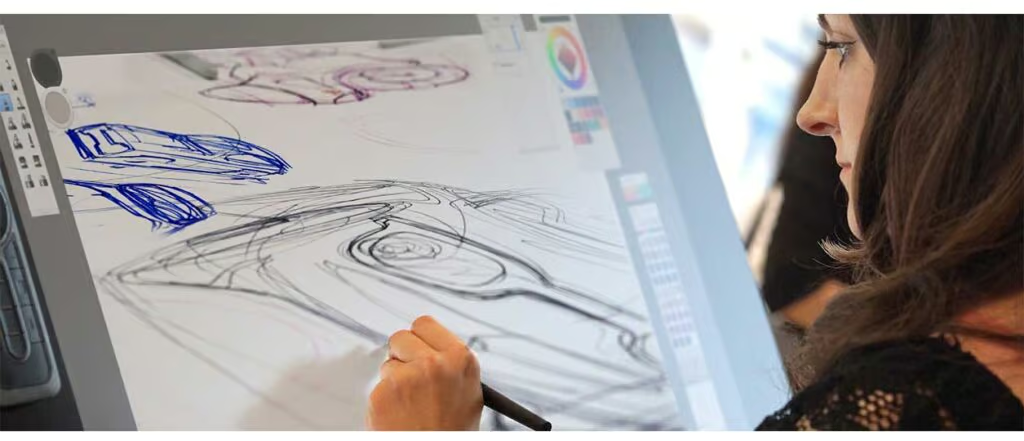
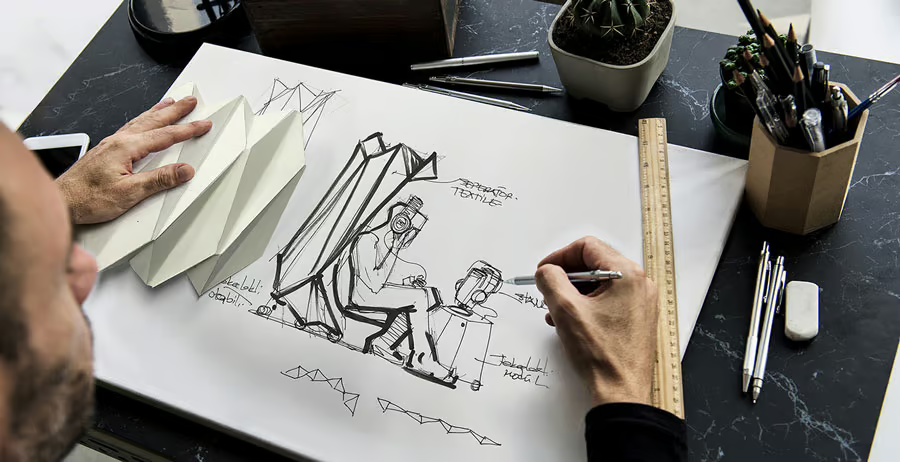
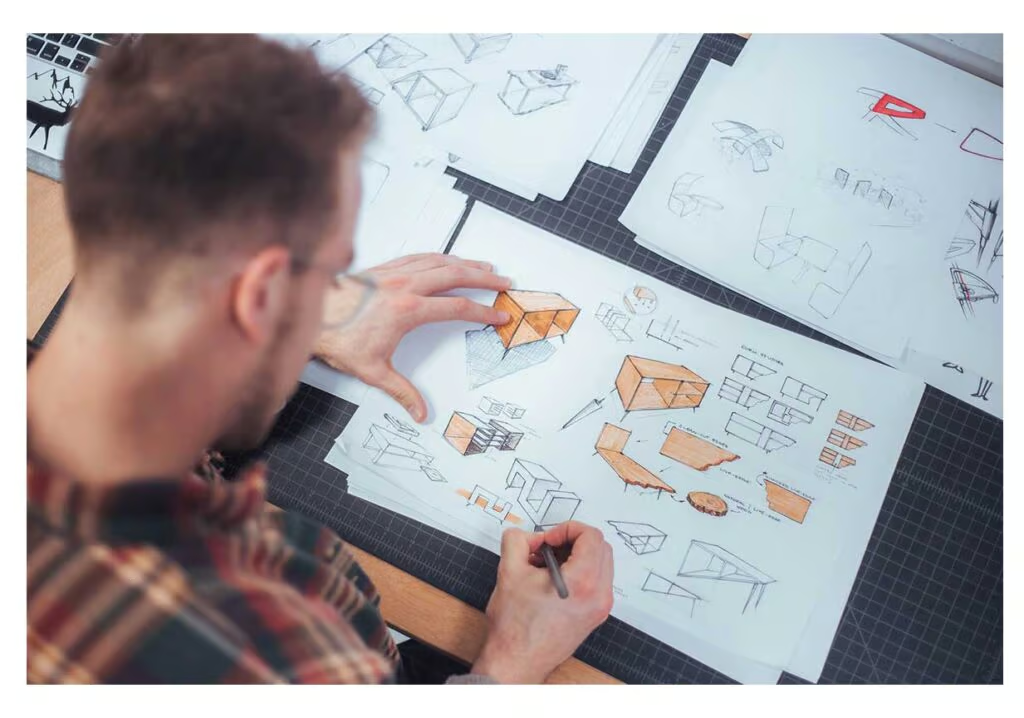
Sketching is a form of drawing designers use to propose, explore, refine, and communicate ideas. It is often the first step in tackling a design problem because sketches are quick, inexpensive, and easy to revise or discard. Unlike written or verbal communication, sketching bypasses the rules of grammar and helps express ideas more directly and clearly.
3D Modeling:
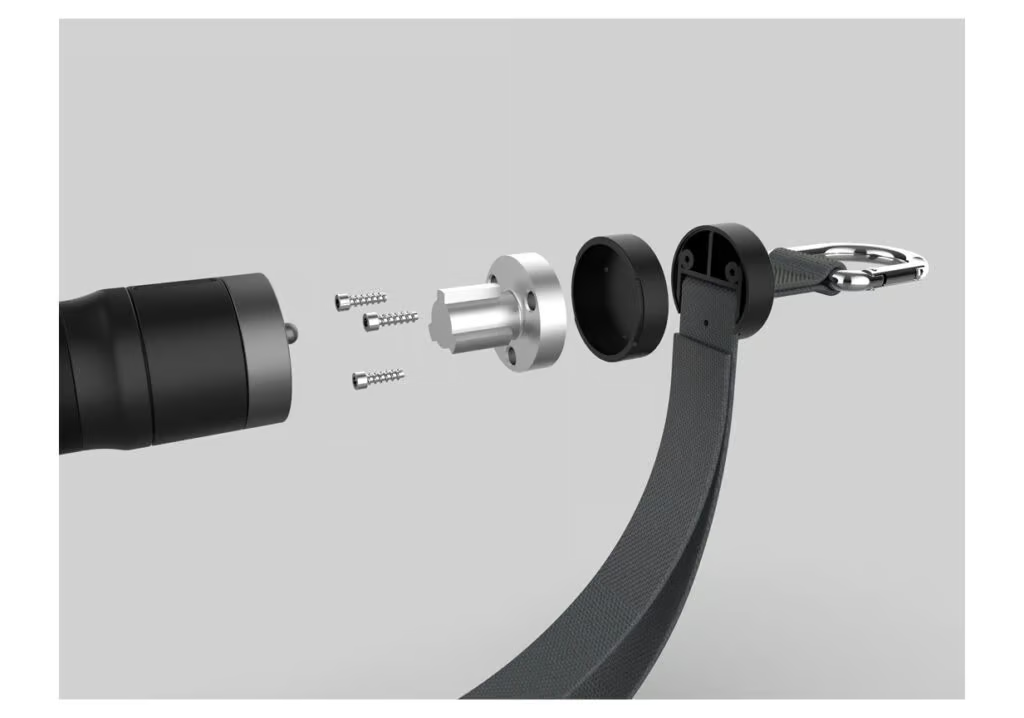
3D modeling is the process of creating simulated three‑dimensional objects using software, ranging from simple shapes to complex models. It enables fast and efficient prototyping in product design, allowing early concepts to be developed and tested without additional costs. Designers can also optimize models for 3D printing and quickly send them to manufacturers.
3D Rendering:
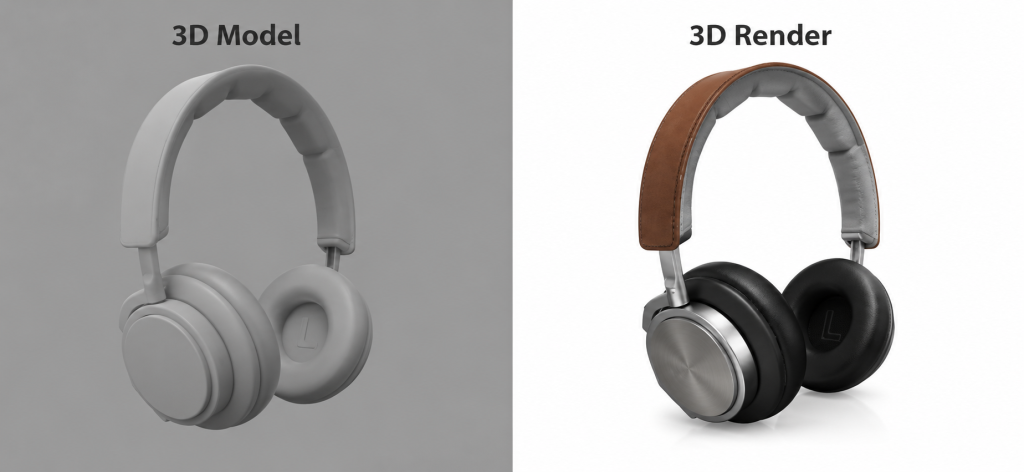
Product 3D rendering, or product visualization, is the process of generating realistic or stylized images from 3D models using specialized software. It allows designers and stakeholders to visualize a product before it physically exists, exploring it from different angles, in various colors, and within different environments.
It can be presented from front, side, and top views, as well as in close‑up or sectional perspectives. This allows marketers to create promotional materials early, manufacturers to evaluate the product’s final appearance, and brands to test the market through pre‑sales.
User Research:
Design research is the process designers use to understand the needs, desires, and sometimes hidden challenges of end users, also known as the target audience.

Visual Storytelling (Storyboarding):
Storyboards are a useful ideation tool that illustrate the user journey and help designers connect personas, user narratives, and research insights to define product requirements.

Rapid Prototyping and Testing:
Prototypes are a critical part of the product design process. They provide early feedback on a product’s market potential, reveal necessary design improvements, and help teams reduce risk throughout the development lifecycle.

Color, Materials, and Finishing (CMF):
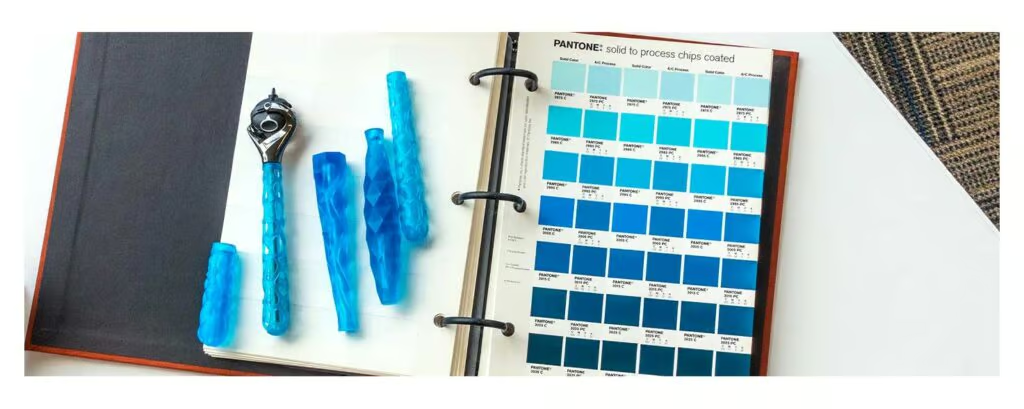
Whether a product is designed for consumers or industrial users, the way it looks, feels, and behaves strongly influences both its functional and perceived value. In product development, these qualities are known as Color, Material, and Finish (CMF).
Fundamental Engineering and Manufacturing (Manufacturing Methods):
Design for Manufacturing (DfM) focuses on designing products in ways that make them easier and more efficient to manufacture. While used across many engineering disciplines, its principles vary depending on the production method—such as casting, machining, plastic injection molding, cutting and forming, or sheet metal fabrication.

Familiarity with Manufacturing Processes:
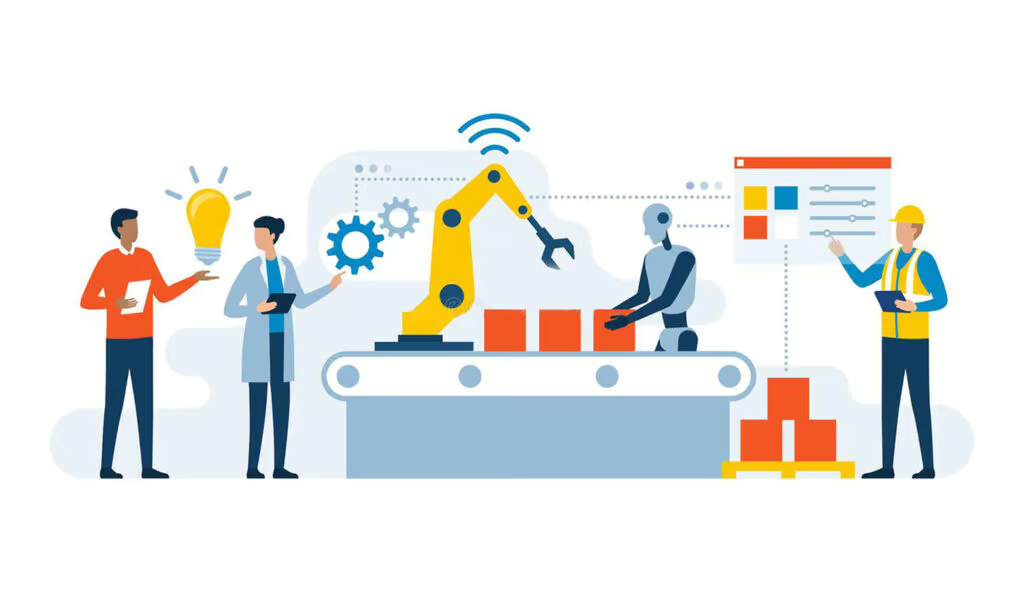
Industrial processes involve chemical, physical, electrical, or mechanical operations used to produce goods, typically at large scale. These processes aim to deliver products with the required quality, quantity, timing, and minimum cost. Understanding them helps designers create products that are practical, feasible, and efficient to manufacture.
Marketing and Branding:
Marketing is the process of connecting a company with its customers. It includes activities such as advertising, sales, market research, and product development based on demand—all aimed at driving profitability. Marketing promotes products or services and communicates their value through various strategies and channels.A brand builds customer loyalty, while marketing encourages purchase decisions. Branding focuses on creating, communicating, and consistently delivering a brand’s promise, representing a long‑term commitment.

Design Process:
The design process is rooted in design thinking—a solution‑oriented approach to solving complex or unclear problems. It emphasizes understanding human needs, reframing problems from a human‑centered perspective, generating ideas through brainstorming, and testing solutions through prototyping.
Design thinking is an iterative and non‑linear process that may include three to seven stages depending on the model. One of the most widely recognized frameworks is the five‑stage model developed by the Hasso Plattner Institute of Design at Stanford (D.school).
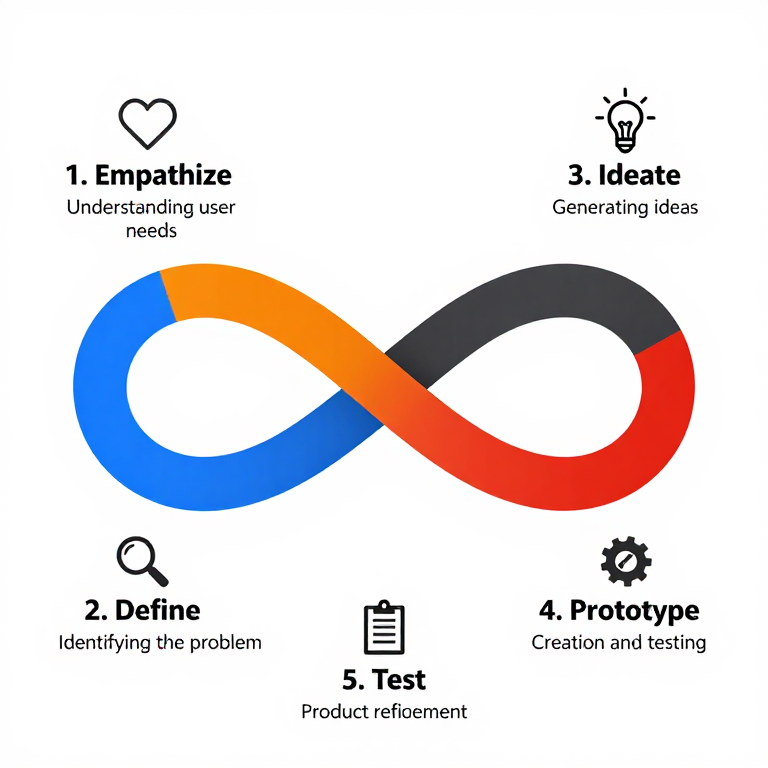
The five stages of design thinking are:
- Empathize: Research your user’s needs.
- Define: Clearly articulate your user’s needs and problems.
- Ideate: Challenge assumptions and generate ideas.
- Prototype: Start creating solutions.
- Test: Try out your solutions.
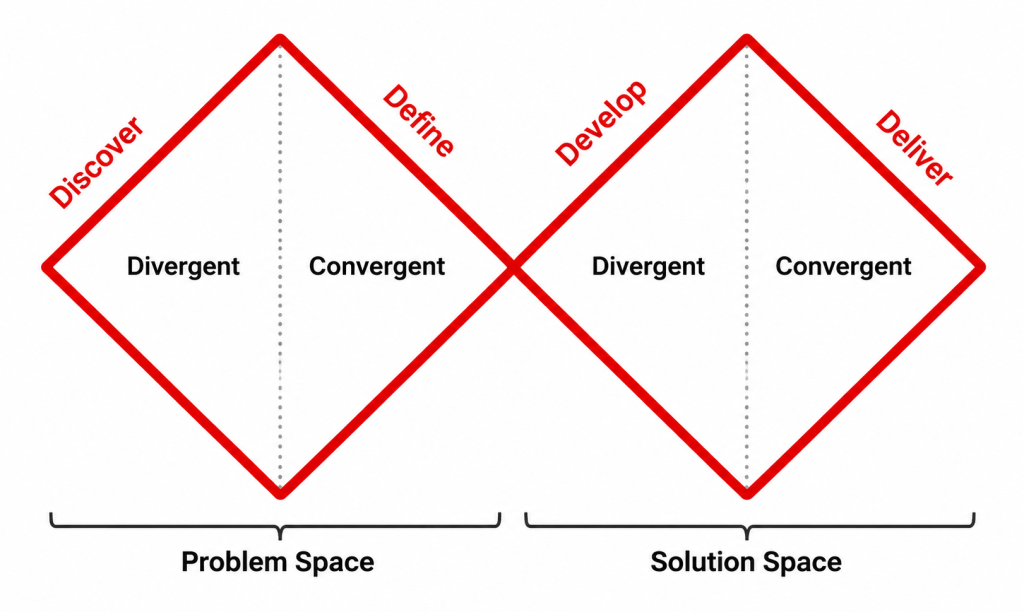
There are several models of the design process, and one of the most well‑known is the Double Diamond method. The Double Diamond is a visual framework that outlines the design and innovation process, offering a clear way to describe the key stages involved in any project, regardless of the specific tools or methods used.
Conceptual Design
Conceptual design is a stage in the product design process where multiple design concepts are generated and explored. These concepts are developed by comparing product specifications with the problem being addressed. Each concept meets the product’s requirements in different ways, and the goal is to develop a coherent design based on the relative importance of those needs.
Conceptual design goes beyond diagrams and flowcharts. It involves deeply understanding user needs, generating and visualizing ideas, and comparing them to determine which concept best meets the product’s requirements.

The conceptual design approach can be described in four stages: Define, Research, Verbal Ideation, and Visual Ideation. These stages do not have to follow a strict order. Designers often move between them—for example, beginning with sketches even before a clear idea is fully formed. The way ideas are generated and expressed varies from person to person.
Case Study
In this section, we examine several case studies from each of the industrial design fields introduced in this article.
A: Product Design – Neater Feeder at Spark
The challenge was to develop a pet feeding system that contains spills, prevents property damage, and can be cleaned quickly in just a few steps. Another goal was to help pet owners save time and effort on routine cleaning, while allowing the bowls to be adjusted to an appropriate height based on the animal’s size and breed.
- Research: Several pet feeders currently on the market were analyzed. Many existing designs use trays that allow food and water to spill and splash onto surrounding surfaces. When dry food mixes with spilled water on the tray, it quickly creates an unhygienic and messy condition.

- Preliminary Sketches: The initial concept was to design a feeder with protective walls around the bowls, along with a possible filtration system to separate and manage spilled water.
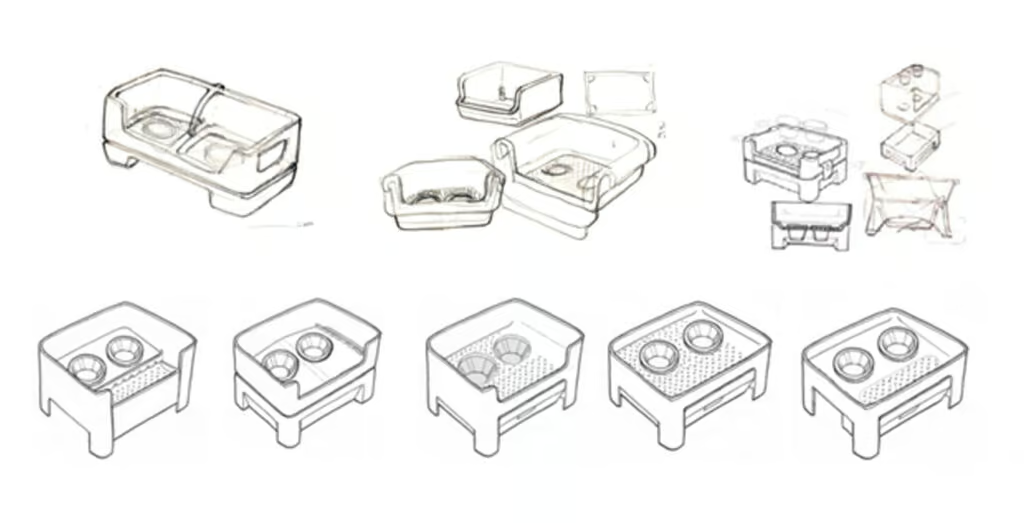
Once an idea develops into a concept, the designs are refined in preparation for prototyping. Conceptual design refers to the stage in the product development process where multiple ideas are formalized for presentation and evaluation. It can also refer to the final concept approved by the client for engineering development, documentation, and mass production. The designers generated validated ideas that were ultimately consolidated into a single solution through active collaboration with the client.
- Testing and Prototyping: The design process and methodology in this project emphasize user research and rapid prototyping. The industrial design team uses various digital tools to transform hand‑drawn sketches into tangible ideas through the creation of three‑dimensional models. At Spark, filament‑based 3D printers are used for modeling, early prototyping, and physical evaluation. Testing full‑scale (1:1) prototypes is essential to verify dimensions, functionality, and usability. Prototyping also enables timely modifications when needed. One of the key advantages of 3D printing is the ability to physically handle and test ideas, helping users gain a more realistic understanding of the product.
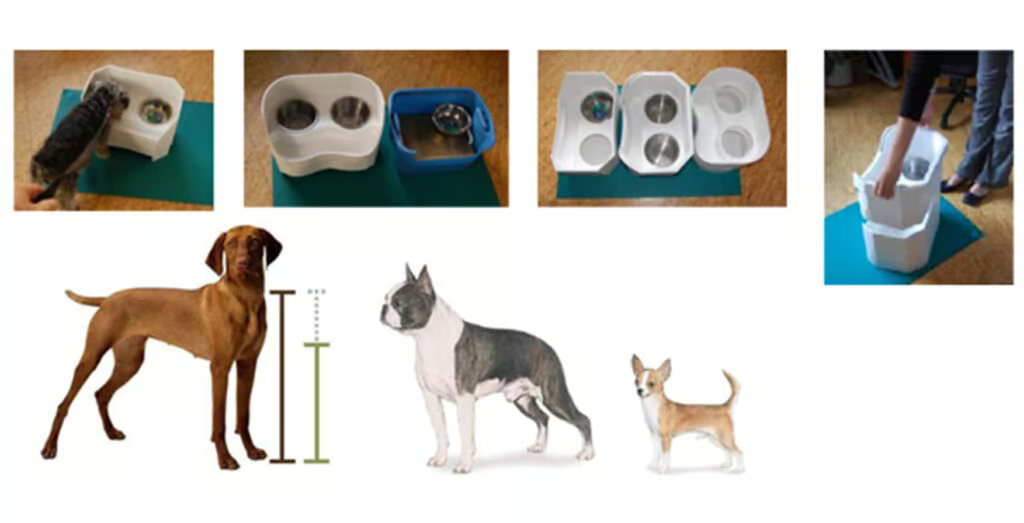
- Concept Development: Concept development is the process of generating and refining ideas to address defined problems and translate them into viable design solutions. At Spark Studio, this is an iterative process that includes ideation, evaluation, feedback-driven refinement, concept modeling, functional prototyping, and systematic testing. Each concept is assessed for performance, usability, compliance with industry standards, manufacturability, and ultimately market viability.
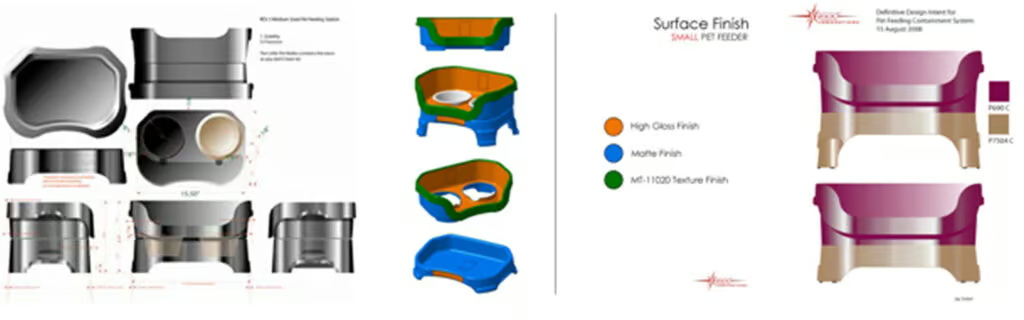
- Industrial Design Section: The scope of industrial design may include one or more of the following: visual design, primary modeling geometry, two‑dimensional drawings, product renderings, physical models, and prototypes.
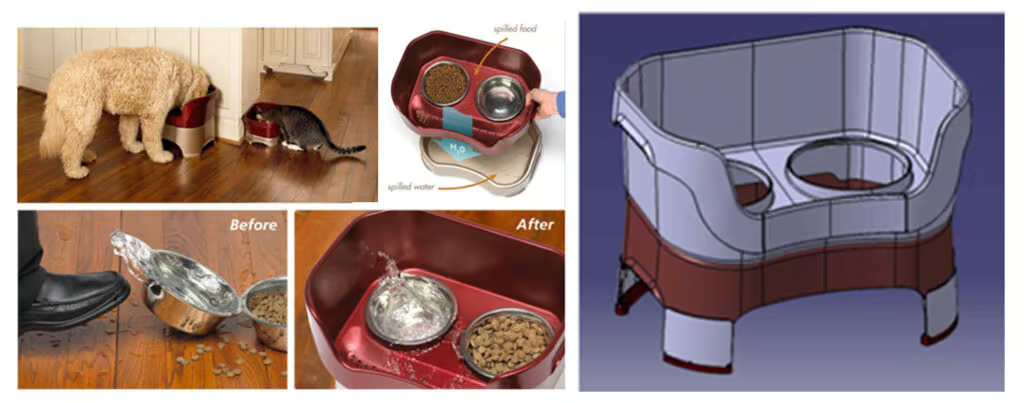
- Final Product: The Neater Feeder is an innovative pet feeding product designed to keep feeding areas clean and organized. It features protective walls surrounding the food and water bowls, along with an integrated filtration system that separates spilled food from spilled water. The filter captures dry food, keeping it clean so it can either be reused or easily discarded. Meanwhile, spilled water flows down a sloped surface, passes through the filter, and collects in a lower reservoir. This system keeps water off the floor, helping prevent slippery surfaces and potential stains.
B: Design of a Raman (Laser Spectroscopy) Device at Ekas Design Studio
Laser spectroscopy devices are used to identify the constituent elements of samples at the molecular level through an optical process based on laser interaction. In this method, the sample is placed inside the device and exposed to laser light in a completely dark environment. The resulting spectra are captured, analyzed, and displayed through dedicated software.
The product body was designed for both domestic and international markets, requiring a high standard of visual quality, functional performance, and manufacturability. All components were developed to ensure ease of production and cost efficiency, while maintaining a refined and professional appearance. The final design reflects these requirements through balanced form and color integration with its environment, enhanced performance, reduced weight compared to similar products, easy access to internal components, and a distinctive, aesthetically appealing identity.
A key innovation in the design is a creative opening mechanism for the main door. This mechanism preserves the light‑sealed interior while eliminating the need for additional clearance space, as the doors slide inward along internal rails when opened.

Product Design Challenges
- Competitiveness with foreign products
- Low weight (portable by two people)
- Ensuring complete darkness within the optical components area
- Opening and closing of the device door for access to the interior space
- Compatibility with optical components available on the market
- Aesthetic appearance distinct from existing products on the market
Features of the Proposed Design
- Distinctive and aesthetically appealing appearance
- Combined use of metal and plastic
- Use of a new mechanism for the device’s main doors
- Full accessibility to all parts of the device
- Easy access to different parts of the microscope
- Maximizing simplicity in assembly
- Use of lightweight materials to minimize the device’s weight
C: Service Design for Property Management, Leasing, and Ownership at Beaker & Flint
- Main Challenge: For more than fifteen years, Kolmeo helped pioneer standardized software for the real estate industry, but eventually encountered challenges. Although the company had strong sales and customer service teams, its development team was relatively weak, and its product began to fall behind contemporary market needs. To address this, Kolmeo partnered with Beaker & Flint to develop a new product aimed at making renting, owning, and managing property a more positive and seamless experience.
- What Beaker & Flint Did: Product strategy, product management, rapid project delivery, experience design, customer research, journey mapping, ideation, early prototyping, and concept validation.
- Design Process: Using its product management framework, the Beaker & Flint team helped Kolmeo transform into a more customer‑centric organization.
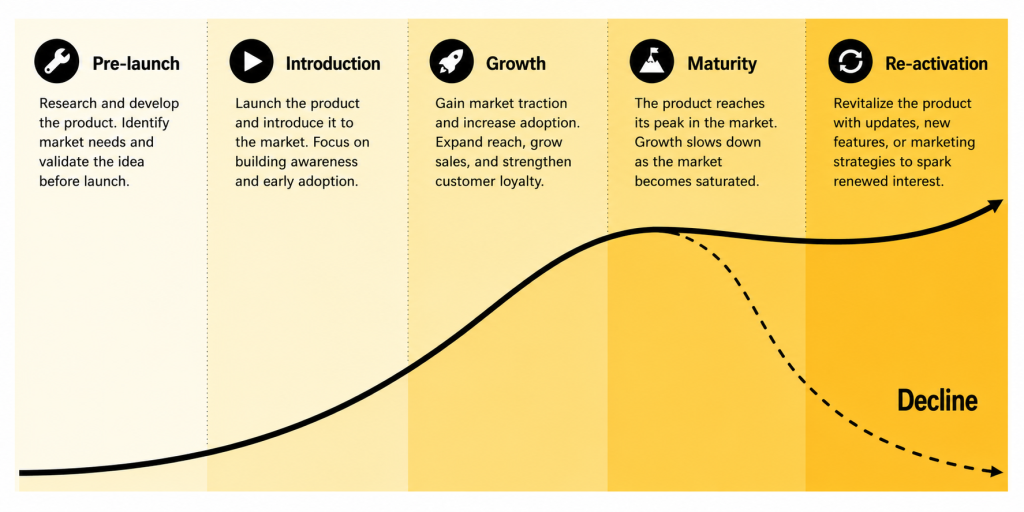
- The team worked closely with Kolmeo’s existing user base and staff to generate insights into their behaviors and needs.
- The team translated the research into actionable insights and built a business case for a new approach to service delivery centered on a mobile‑optimized experience.
- Within a few months, the company developed a prototype of a new tool.
- The company used this prototype to rebuild confidence and trust among the organization, its board, and its customers.
Outcome: The service design team developed a strong body of knowledge through customer research focused on user needs. This approach led to the creation of an entirely new and widely adopted product for Kolmeo’s three‑sided market. The process also helped rebuild trust between the organization, its board, and its users. Ultimately, the teams, structures, and product roadmaps were aligned to successfully bring the new product to market.
Some of the software used by industrial designers
1. Adobe Photoshop
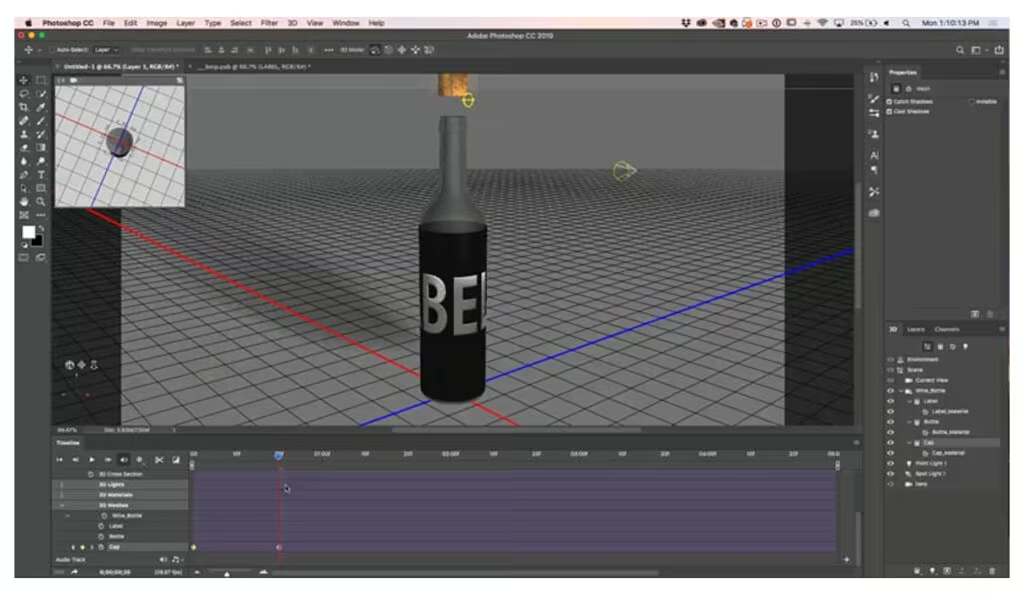
Adobe Photoshop is a raster graphics editor developed and published by Adobe Inc. for Windows and macOS. It is widely used by designers and editors for cropping images, refining compositions, correcting lighting, and presenting subjects in their best visual form. Photoshop is particularly effective for texture work and lighting adjustments, and it offers a range of tools that support certain three‑dimensional visual tasks. However, its limitations include the absence of advanced modeling capabilities and relatively slow rendering performance.
2. Rhinoceros (Rhino)
Rhinoceros, commonly known as Rhino or Rhino3D, is a commercial 3D computer graphics and computer‑aided design (CAD) software application. It is used for CAD, CAM, rapid prototyping, 3D printing, and reverse engineering across a wide range of industries, including architecture, industrial design—such as automotive and marine design—and product design, including fields like jewelry design.

3. SolidWorks (3D CAD)
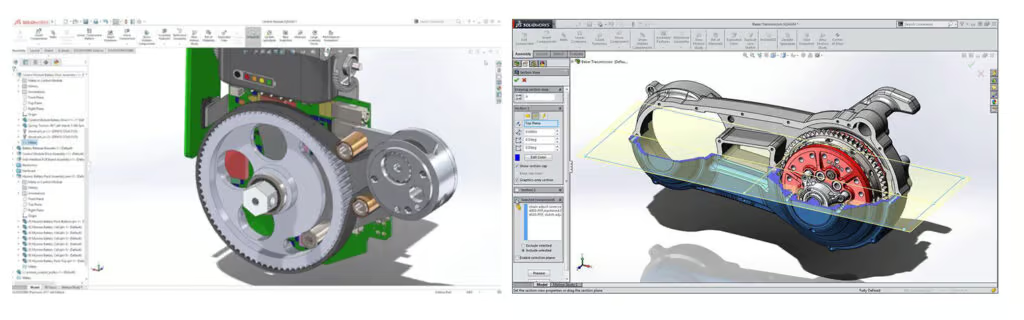
SolidWorks is a computer‑aided design (CAD) and computer‑aided engineering (CAE) software application used to develop complex industrial systems from concept to production. In the early stages, it supports planning, visual ideation, modeling, feasibility analysis, prototyping, and project management. It is then used for the detailed design and development of mechanical, electrical, and software components. SolidWorks is also particularly well suited for modeling injection‑molded plastic products and sheet‑metal parts due to its comprehensive features and specialized tools.
4. Autodesk Inventor
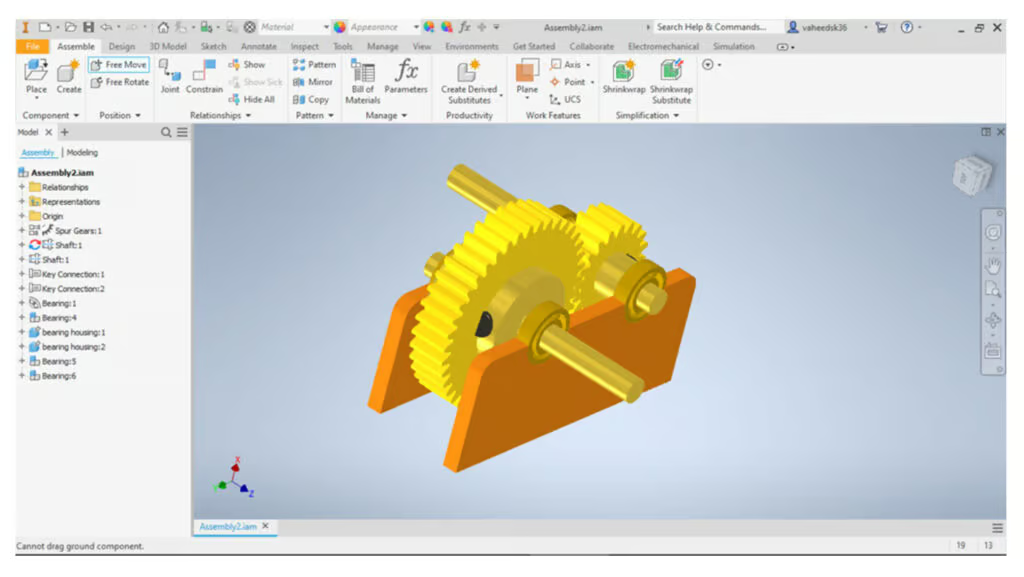
Autodesk Inventor is a computer‑aided design (CAD) application for 3D mechanical design, simulation, and visualization. It enables users to integrate 2D and 3D data within a single environment and create a virtual representation of the final product, allowing designers and engineers to evaluate the form, fit, and function of a product before manufacturing.
5- Blender
Blender is a free and open‑source 3D computer graphics software suite used for creating animated films, visual effects, artwork, 3D‑printable models, motion graphics, interactive 3D applications, virtual reality content, and high‑quality renderings.

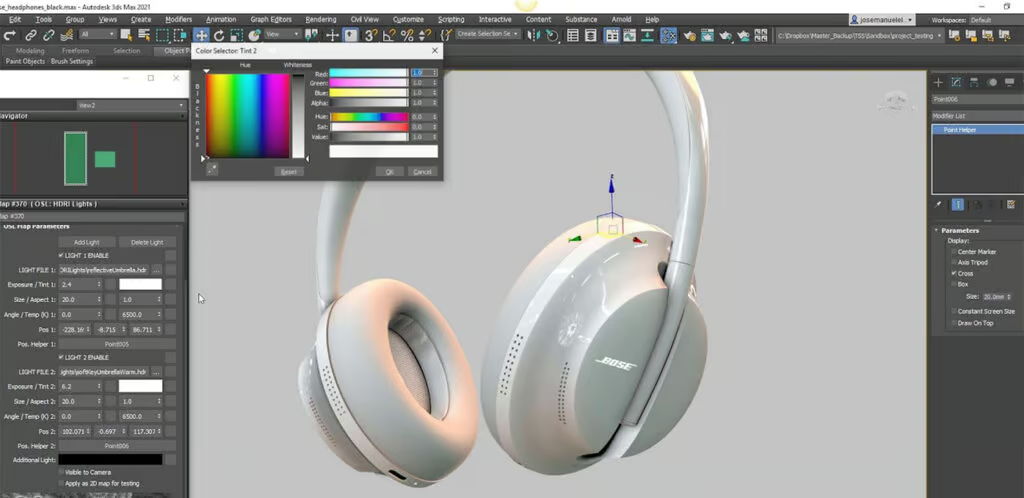
6. 3ds Max
Autodesk 3ds Max, formerly known as 3D Studio and 3D Studio Max, is a professional 3D computer graphics software application used to create animations, models, game assets, and high‑quality rendered images.
7. KeyShot
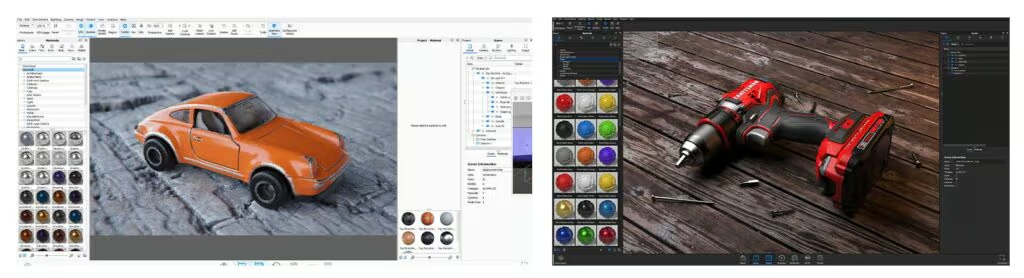
KeyShot is a software application for creating 3D renderings, animations, and interactive visuals. Its CPU‑based architecture allows it to produce photorealistic results on both Mac and PC—including laptops—without the need for high‑end graphics cards.
Industrial Design Rights
Industrial design rights are a category of intellectual property that protect the visual and aesthetic features of products—elements that are not purely functional. This category includes design patents, also known as registered industrial designs. An industrial design may consist of shapes, configurations, arrangements of lines, patterns, colors, or combinations of these elements that define a product’s visual appearance. These designs can be expressed as two‑dimensional or three‑dimensional patterns applied to consumer products, industrial equipment, or handcrafted items.
Under a key international agreement governing the global registration of industrial designs, an official system enables applicants to file and register their designs across multiple member countries through a single application. Once registered, the design is granted protection in the designated member states in accordance with the agreement.

?What is the career path of industrial designers like
Industrial designers typically have three primary career paths to choose from. These roles are not necessarily permanent, and professionals may shift direction over time based on experience, financial goals, or emerging opportunities. Each path offers distinct advantages and challenges, and the right choice often depends on how well it aligns with an individual’s lifestyle, strengths, and personality.
A: Join a company as a designer
Many industrial designers spend their entire professional careers working in salaried positions within companies. After graduation, many begin their careers at some of the world’s leading companies—such as Microsoft, Nike, or Sony—or at design consultancies like IDEO or Whipsaw. According to recent reports, most salaried industrial designers are employed in manufacturing or in professional, technical, and scientific services.
– The advantages of being a salaried employee in a company, whether an established firm or a startup, include:
- You will have reliable pay and benefits with defined working hours.
- You will have the opportunity to climb the career ladder and advance to positions such as manager, senior executive, or beyond.
- You will have the opportunity to work for some of the leading companies in developed countries around the world.
- You can solve challenging problems through design in a focused manner.
- If you love design, you can focus your entire role on designing rather than on management, production, payroll, and other responsibilities.
The disadvantages include:
- Your projects will not be your own choice; they will be assigned to you.
- You must follow your company’s process and approach.
- The product belongs to your company (or your client), not to you, so you must follow the company line.
B: Freelance (independent) design
For designers who have spent several years in large organizations—or who value flexibility and variety—freelancing can be an excellent way to apply their skills while maintaining greater control over their time and projects. Reports indicate that approximately 30 percent of industrial designers are self‑employed, and this figure is expected to grow. Whether working independently as a consultant, collaborating with design firms on a project basis, or running a personal studio, independent practice offers a significant degree of professional freedom.
The advantages of freelancing include:
- You control your own schedule, including where you work and how many hours you work.
- You are almost always treated as a design specialist, and as a consultant you carry out your work independently, working directly with the client rather than under a supervisor.
- You can take on several different projects or limit your commitments at any given time.
The challenges include:
- You are responsible for your own invoicing and taxes.
- You need to consistently generate new business.
- Your income may be high, but it may not always be stable.
- You do not necessarily move up a hierarchy unless you run your own company, so if you want to manage a team, the path is not clearly that of a company.
- Some clients can be challenging.

C: Entrepreneurship as an Industrial Designer
You can take your independence a step further by identifying a market opportunity and designing a product that addresses its needs. From there, you may establish a startup around your concept—overseeing its development, manufacturing, marketing, and sales.
The advantages of entrepreneurship include:
- You will have the experience of being a CEO while also being intimately involved in the actual product design of the company.
- You will have ownership of your company and its product(s), which is a significant accomplishment.
- Other resources, such as 3D printing and manufacturing consultancy firms, support entrepreneurs.
- You will have the freedom to pursue your unique ideas and bring them to fruition.
The most challenging parts of running a company include:
- Failure is a possibility. Although the path is easier than before, launching a startup is still complex and stressful.
- You will need to manage accounting, payroll, and employee benefits.
- You will need to hire, manage, and pay employees.
- You will be responsible for your own manufacturing, shipping, and distribution.
- You will need to think about financing for your startup or how to become profitable.
- The timing isn’t always right; if you’re paying off loans or saving for a house, or if you haven’t found the right business partner yet, it makes sense to wait to achieve your dream.
If you’re developing a new product or looking to improve an existing one, industrial design can make a significant difference in usability, appearance, and market success. At Ekas Design, we help brands transform ideas into thoughtful, functional, and manufacturable products. If you’re planning a project, feel free to contact us and start the conversation.
Conclusion
Effective industrial design balances the needs of end-users, businesses, and manufacturers. By optimizing form and function while simplifying production, it helps bring products to market more efficiently. The field continues to evolve in response to rapid technological progress, shifting cultural trends, and changing socio‑economic conditions. As a result, designers today face challenges that were unimaginable when the profession first emerged. It is an exciting time to work in design, with new approaches constantly developing and the discipline increasingly expanding into service and digital domains.
Industrial design is also a dynamic and growing field with many career opportunities. Choosing the right path begins with understanding what you want most from your career. Once you identify your priorities, you can evaluate different options and prepare accordingly—by pursuing relevant education, building a strong portfolio, developing marketing and business skills, seeking financial guidance, networking, and collaborating with partners or mentors who can support your progress.
- What is the relationship between industrial design and engineering?
Industrial design can significantly overlap with engineering design, and the boundaries between these two concepts can vary in different countries. However, in general, engineering primarily focuses on the function or application of products, while industrial design mainly focuses on the aesthetic aspects and user interface of products. As such, industrial design overlaps with the subfield of industrial engineering only in ergonomics.
- What skills does an industrial design student learn at university?
Skills are taught to the student in two sections: practical knowledge and phased learning, so that the student can ultimately perform their future work projects well with a correct understanding of the design process.
- What is the role of industrial design in product development and its position?
Designers, by viewing problems as opportunities, offer a more optimistic approach to the future by integrating innovation, technology, research, business, and customers to create new value and competitive advantage in economic, social, and environmental contexts. They place humans at the center, gaining a deep understanding of user needs through empathy, and utilize a practical, user-centered solution.
- What are the main fields of industrial design?
Industrial design extends into fields such as product design, UI and UX design, packaging design, automotive design, jewelry design, and more. Designers, depending on their interests and skills, work in one or more of these areas.
- What is the difference between industrial design and product design?
Industrial design and product design both relate to the creation and refinement of products. However, product design is more focused on developing products to provide a specific solution. Conversely, industrial design involves implementing these potential product solutions within manufacturing processes and bringing products to end-users.
- Is it possible to enter the job market after a Bachelor’s degree in Industrial Design?
Entering the job market at any level and with any educational background requires sufficient skills and problem-solving abilities, and it varies from person to person. In this field, designers are evaluated based on their skills and abilities, not solely on their education.