

A product is anything offered to the market to satisfy a need or desire, including physical goods, services, experiences, events, places, assets, organizations, information, and ideas. Product design plays a key role in driving innovation and strengthening a company’s competitiveness. When innovation successfully redefines the meaning or use of a product, it can even create entirely new markets. Achieving such success typically requires the integrated efforts of both engineering design and industrial design.
Today, product designers have access to a wide range of design methods and principles. They must consider the entire product life cycle, sustainable material selection, user experience, and functional, user‑friendly solutions. As a result, design education increasingly faces interdisciplinary challenges that require continuous learning and development. Moreover, product design now extends beyond physical objects, encompassing service design, process design, and user experience design as growing and integral fields.
A Review of the History of Industrial Design and Product Design
Industrial design emerged with the advent of mass production. In the pre‑industrial era, craftsmen typically designed and modified their own products. As production became centralized and standardized, however, a distinct role for designers emerged. Industrial designers began defining the characteristics of mass‑produced products and ensuring they were suitable for their intended markets.
Industrial design focuses on the development of mass‑produced consumer products that combine effective functionality with appealing aesthetics, helping them compete successfully in the marketplace. The field often overlaps with areas such as graphic design—including advertising, packaging, imagery, and corporate branding—as well as interior design, which deals with the organization and design of human‑made spaces.
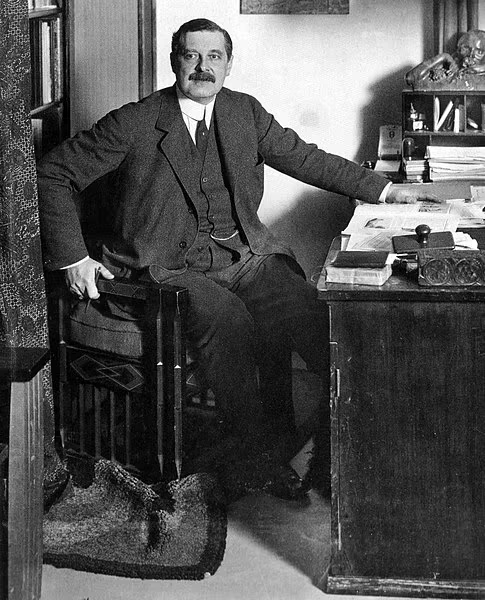
Industrial design is largely a twentieth‑century development. The German architect Peter Behrens is often regarded as the first industrial designer. He was strongly influenced by the nineteenth‑century English designer and poet William Morris and the Arts and Crafts movement. In turn, Behrens shaped the next generation of designers and architects, including Walter Gropius, founder of the Bauhaus in Germany. The Bauhaus sought to unite art, craft, and industry, promoting a harmonious relationship between design and mass production to meet the needs of the modern post‑imperial era.
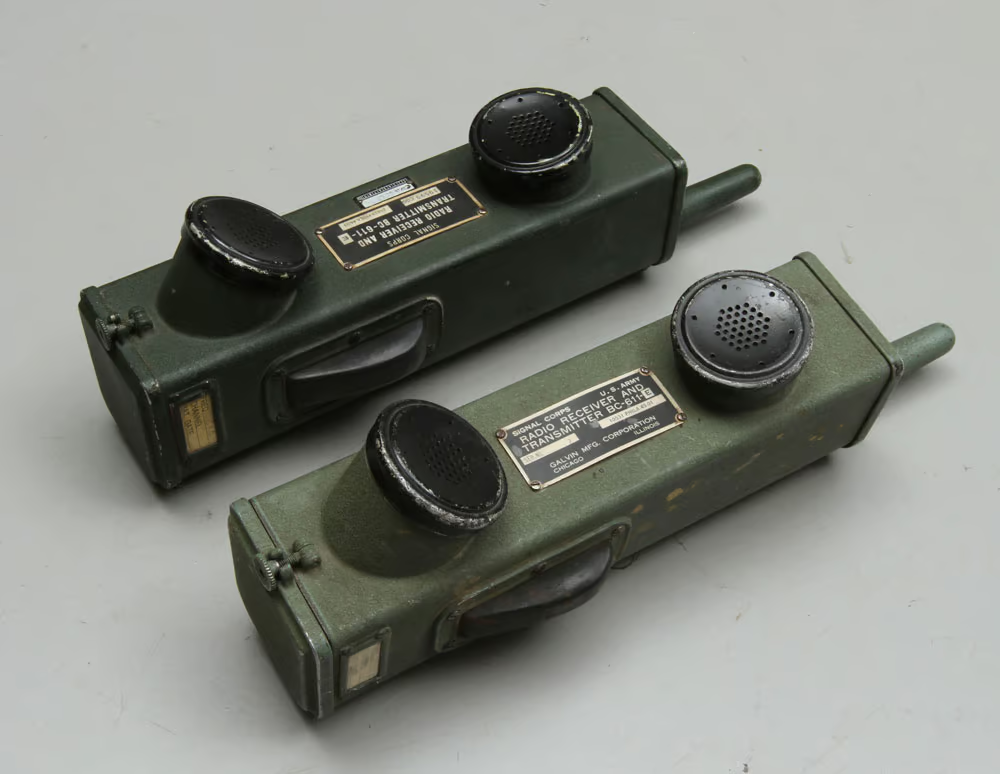
In the early 20th century, architects and designers across various nations began producing distinctively designed goods. Following the lead of Germany and other European countries, the United States became a fertile ground for the growth of industrial design. This profession proved vital during World War II (1939–1945), as designers developed critical equipment to support the war effort—most notably the “Walkie-Talkie,” a two-way FM radio created by Galvin Manufacturing (now Motorola) and deployed by the U.S. Army in 1943.
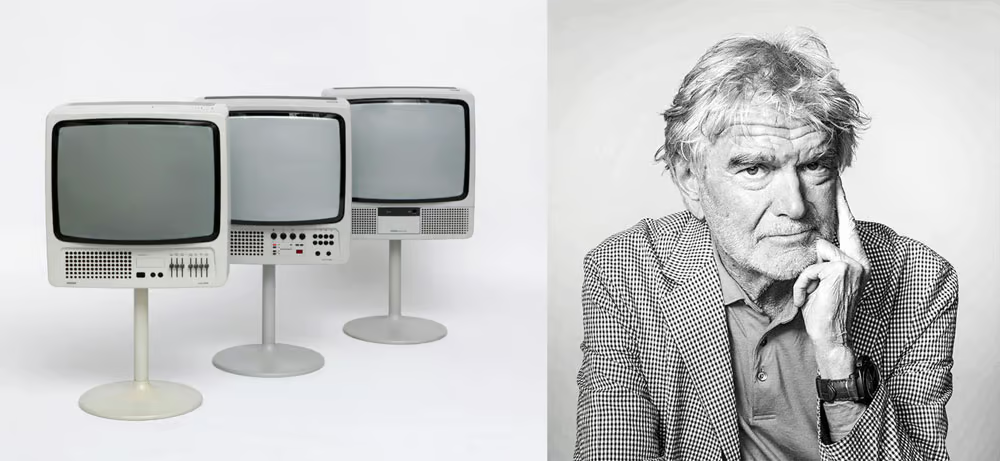
Following World War II, global progress in product design accelerated. In the second half of the 20th century, Italian design gained international prominence through major American exhibitions, such as “Italy at Work” (1950) and MoMA’s “Italy: The New Domestic Landscape” (1972), which introduced modular furniture to the public.
By the late 1970s, architects worldwide began challenging the universality of minimalist modernism in favor of more individualistic approaches. This trend peaked in the late 1980s before the economic recession of the early 1990s shifted the focus toward “value engineering”—an analytical approach prioritizing cost-effectiveness and functionality. Since then, two primary paths have emerged in industrial design: the rise of “star designers” known for their personal artistic vision, and a collaborative, multidisciplinary approach where teams of design and engineering specialists work together to shape the final product.
The dominant trend in industrial design today is the collaborative approach, where designers work within larger teams to create marketable products. A pioneer of this method is Frog Design, founded in 1969 by Hartmut Esslinger. The company famously championed the philosophy that “form follows emotion,” challenging the traditional modernist principle of “form follows function.”
In the 21st century, design environments often bridge the gap between art and utility, presenting products with a museum-grade aesthetic that remains accessible to the general public. This increased accessibility has been accompanied by a deep, growing integration of advanced technology into everyday objects.
?What is Product Design
A product is any physical or intangible entity—such as goods, software, or services—delivered to satisfy a market need. Product design is the strategic process of identifying market opportunities, defining user problems, and developing validated solutions through iterative testing.
Beyond mere utility, effective design ensures intuitive human-technology interaction, driving innovation and market competitiveness. The value of any designed product rests on three core pillars:
- Function: How effectively the product fulfills its purpose and meets user expectations.
- Aesthetics: The visual characteristics that define the perception of beauty and appeal.
- Symbolism: The “social message” or identity the product communicates about the user through its visual language.
A product—whether physical, digital, or a service—is any solution designed to fulfill a market need. While Product Design acts as a broad umbrella for diverse industries, Industrial Design focuses specifically on optimizing aesthetics, ergonomics, and functionality for mass production.
The success of a design rests on three pillars: Function (utility), Aesthetics (beauty), and Symbolism (identity). Strategically, companies gain a competitive edge by focusing on high-quality, human-centered products that redefine market meanings and drive innovation.
Today’s designers bridge art, science, and technology. By integrating cognitive methods with advanced digital tools, they have transformed the traditional workflow into an efficient process of iterative testing, visualization, and precision manufacturing.
Industrial Design vs. Engineering Design
Product design is an inherently interdisciplinary field that requires the integrated, yet often contrasting, contributions of industrial and engineering design. While industrial designers focus on the “outside-in,” utilizing aesthetics and ergonomics to shape the product’s form, user interface, and character, engineering designers work from the “inside-out,” ensuring technical functionality, reliability, and manufacturability. Consequently, product design represents the critical intersection of these two practices, bridging the gap between a product’s internal performance and its external user experience to bring successful solutions to market.
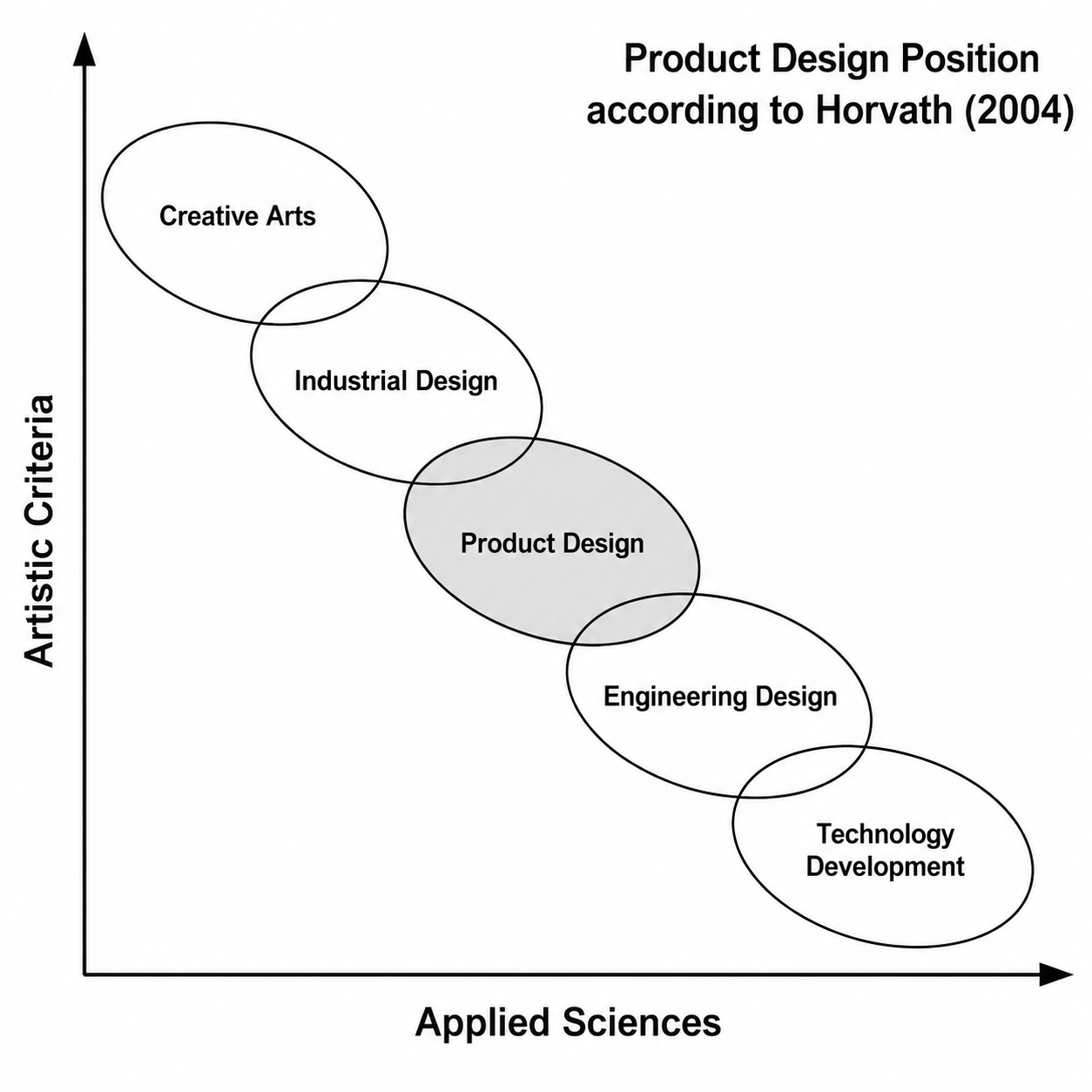
It is evident that product design is the result of the proper execution of the product design process. Some researchers consider the term “product design” to be equivalent to “product development.” Engineering design, industrial design, ergonomics, business design, and innovation management are fields that are closely interconnected and related to product design.
Industrial Design and Product Development
Both academics and professionals working in the market have emphasized that the role of industrial design in product development relates not only to aesthetics but also to aspects such as ergonomics, ease of use, manufacturability, efficient use of materials, and product performance. Design is a strategic tool that enables marketers to match customer needs with product functionality, quality, durability, appearance, and price. Beyond creating pleasing shapes and styles, the role of industrial design in product development can be viewed as communicating the company’s quality image and product integrity.
Empirical research indicates that, in practice, the function of industrial design may vary based on factors such as the nature of the company’s business and its design experience. Industrial design activity is part of a broader product development process that also includes other activities, such as establishing product requirements, product testing, and scaling up production.
The Importance and Impact of Product Design
The product design process is a set of strategic activities, from idea generation to commercialization, used to design a product. In a systematic approach, product designers explore and evaluate ideas and transform them into new and tangible products. The role of a product designer is to combine art, science, and technology to create new products that people can use. This process takes place in various categories such as household appliance design, medical equipment design, packaging, urban elements, and more.
Industrial design is concerned with beautiful and usable form, typically associated with craft design and ergonomics, to bring a product to the manufacturing stage. Other aspects of product design and industrial design involve engineering design, especially when issues of function or utility (e.g., problem-solving) are discussed, although such boundaries are not always clear. Industrial design is about creating value in products through rational management and development. Industrial designs are, in fact, defined to optimize the product manufacturing process and improve aspects that can lead to sales and the product’s relationship with the user.
In this way, it can be said that the presence of an industrial designer is essential in the process of creating, manufacturing, and bringing a product to market. Its impacts on brands and businesses include the following:
- Budget Allocation: Every company strives to nurture a design that is industrially sound and has a high confidence level regarding its outcome. Since industrial design adds a value proposition to products, it facilitates the allocation of budgets with defined costs or helps in attracting investors for any resources required for product development.
- Reliable Launch, Advanced Sales: In traditional manufacturing, a product had to prove its worth through trial and error in marketing and sales only after being manufactured and launched. In contrast, products created through the industrial design process allow for their approximate market position to be ensured from the very beginning by utilizing market and user analysis.
- Optimal Use of Resources: Industrial designs are developed after a precise understanding of all resources that can be used to improve product quality without incurring additional costs. Furthermore, the design is developed after evaluating the maximum benefits of resources to ensure the product can be easily launched and remain sustainable in the market for a long period.
- Product Differentiation: A product resulting from a design process distinguishes itself from other products on the market in terms of form and sometimes functionality. Even if they perform the same function, a designed product offers better and more optimized performance than others. Moreover, a product that is more beautiful and precise in its appearance and formal details garners more trust from its potential users.
- Structured Production: The final and most important point is that industrial design helps you achieve the best possible result within your budget. Furthermore, it enables you to reach the ultimate goals of the manufacturing process through organized objectives. Ultimately, this leads to the structuring of the entire production and sales process to achieve maximum profit.
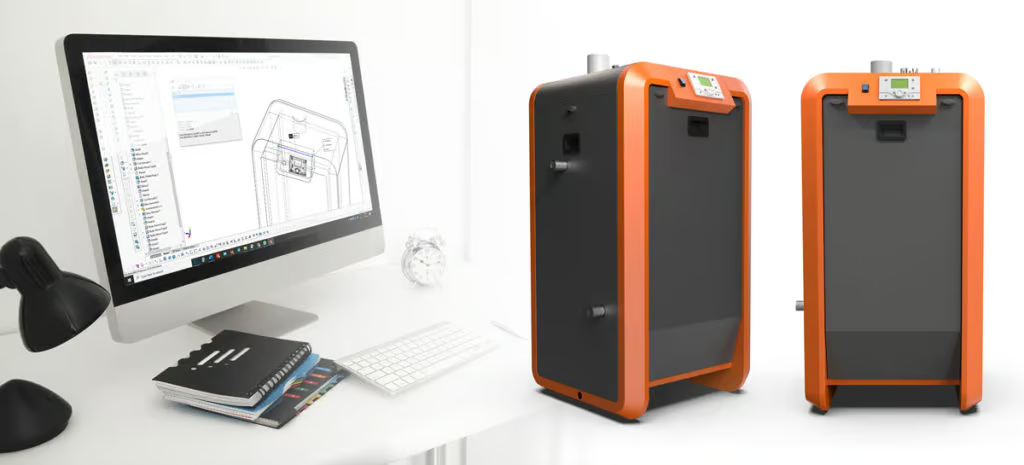
Industrial design not only helps you achieve a stronger market position for a product, but also improves the product’s standing in the eyes of users. Integrating the concept of industrial design with business helps add commercial value to the product, increase profits, enable entry into the market in a more competitive way, and support the company’s economic growth.
Great product design does not happen by accident; it requires a deep understanding of user needs, market expectations, and manufacturing possibilities. At Ekas Design, we help businesses transform ideas into functional, market-ready products through professional product design and industrial design services. If you are planning to develop a new product or improve an existing one, our team can help you create solutions that are both innovative and practical.
Main Areas in Product Design
The following sections introduce several key areas within the field of product design:
Packaging Design
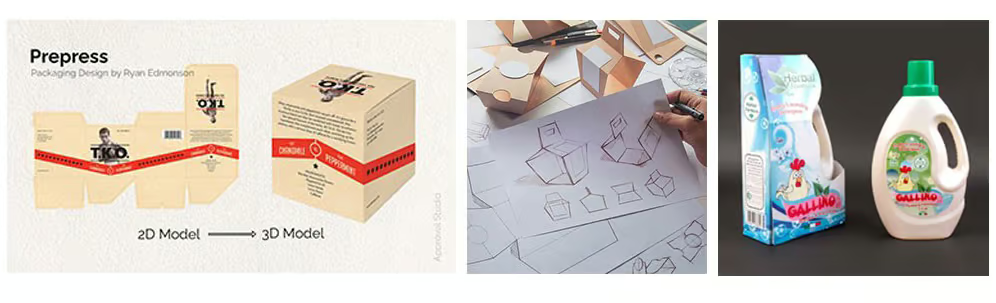
Packaging Design involves merging form, structure, materials, color, imagery, typography, and regulatory information with ancillary design elements to create a product suitable for marketing. To put it more simply: your packaging is an element of your marketing strategy. Packaging design encompasses not only the graphics but also the physical container of the product that the consumer purchases. It is vital not just for the product itself, but for the entire company, as it becomes a memorable representation of a brand. Packaging design serves as a hallmark of quality and an introduction to the business’s product identity.
Designing boxes and packaging cartons is not merely about creating a “beautiful box,” but rather a marketing tool capable of attracting many customers and dramatically increasing product sales. Whether intentionally or not, packaging design is one of the primary factors influencing customers’ purchasing decisions. Having high‑quality, refined, and attractive packaging directly (and indirectly) encourages customers to choose your product over competing items on the store shelf. In packaging design, the structure must correspond to the product category and consider the product’s life cycle—specifically, what process the product goes through from the moment it is produced until it reaches the consumer. Well‑designed packaging helps ensure that customers will confidently prefer your product over others available in the marketplace.
In designing the packaging structure, it is important to consider the product category and the product life cycle—specifically, the processes involved from the beginning of production until the product reaches the customer and the packaging is eventually recycled. Packaging graphics, alongside the form and structure of the package, shape the product’s identity for display and recognition on retail shelves. The level of creativity and attractiveness in packaging design increases the chances of the product being noticed in a marketplace filled with numerous competing products.
Overall, the packaging design process includes project definition and planning, research and information gathering, sketching the initial packaging layout, concept development and ideation, review and feedback collection, prototyping and sample making, final approval of the packaging design, printing the approved packaging, and supervising the packaging process.
Service Design
Service Design is the activity of planning and organizing people, infrastructure, communication, and the material components of a service in order to improve its quality and the interaction between the service provider and its users. Service design may function as a way to inform changes in an existing service or to create an entirely new one. Service design is a process in which designers create sustainable solutions and optimal experiences both for customers in unique contexts and for service providers.
In service design, you work across a broad scope, including User Experience (UX) and Customer Experience (CX) design. Users engage with products through complex chains of interactions. For example, a car is a product, but from a service design perspective, it may be part of a larger system—such as when an elderly customer uses it to book an Uber ride in order to visit a friend at the hospital.
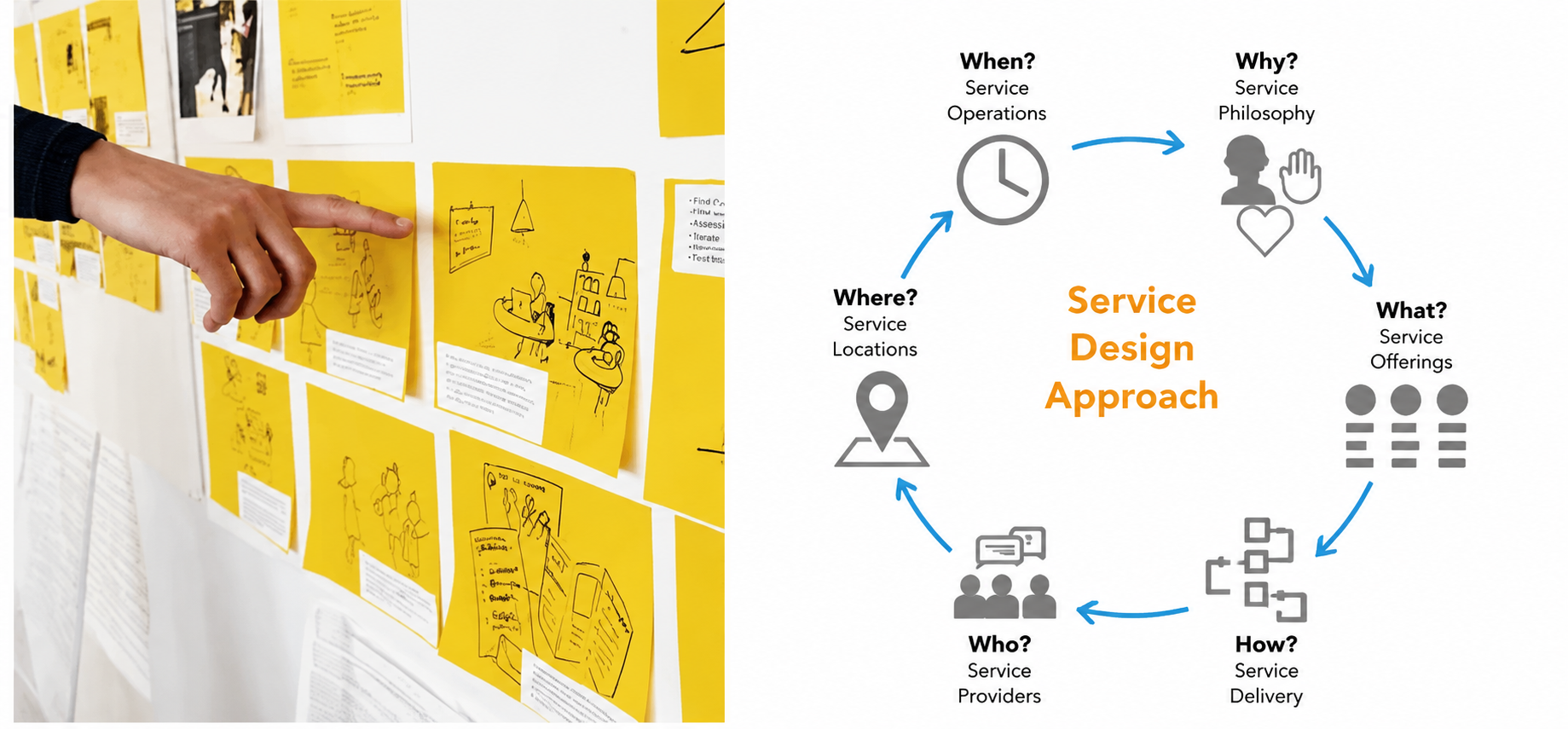
Many people emphasize the distinction between products and services—between intangible and tangible goods—and believe that a service cannot be treated like traditional products. While these differences may be valid in other contexts, in service design we define anything a company offers as a service, regardless of whether it is tangible or not. Whether we call it a product, a service, or physical and digital goods ultimately does not matter to customers. They pay organizations in exchange for an experience. The goal of service design is to ensure that this experience meets or even exceeds customer expectations and fulfills their needs. In general, the service design process includes: research, ideation, prototyping, testing, and implementation.
UI/UX Design
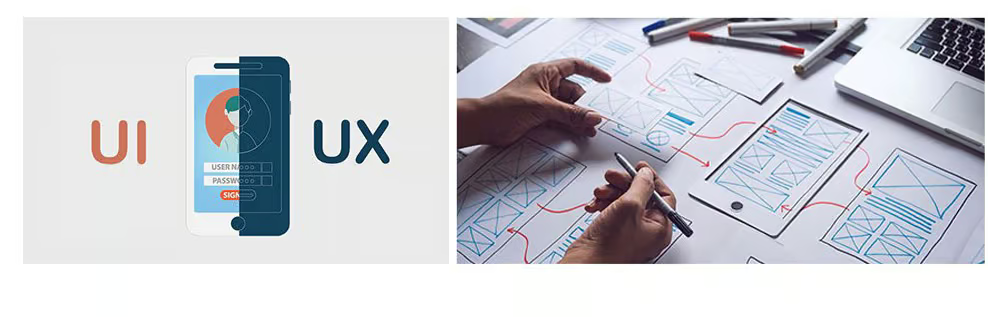
UI stands for User Interface. The user interface is the graphical layout of an application (app, website, etc.), including the buttons users click, the text they read, images, sliders, text input fields, and all other elements users interact with. It also includes page layout, transitions from one page to another, and interface animations. Every visual element, interaction, and animation must be carefully designed. UX, which stands for User Experience, focuses on the user—or more precisely, the human experience. This field involves analyzing users’ intentions when interacting with a product: how they should feel, what they should understand, and ultimately what action they should take. In most cases, UX design is addressed first, followed by the visual (UI) design.
User experience design is a process used by design teams to create products that provide meaningful and relevant experiences to users. It involves designing the entire process of acquiring and integrating a product, including aspects of branding, design, usability, and functionality. Don Norman describes UX as follows: “User experience encompasses all aspects of the end user’s interaction with the company, its services, and its products.” The UI/UX design process is similar to the product design process (research, problem definition, ideation, prototyping, and testing), with the difference that the methods used in each stage vary from those used in product design.
For example, ideation methods may include wireframing, while tools such as scenarios, storyboards, and personas are used during the needs analysis phase, along with similar methods in other stages.
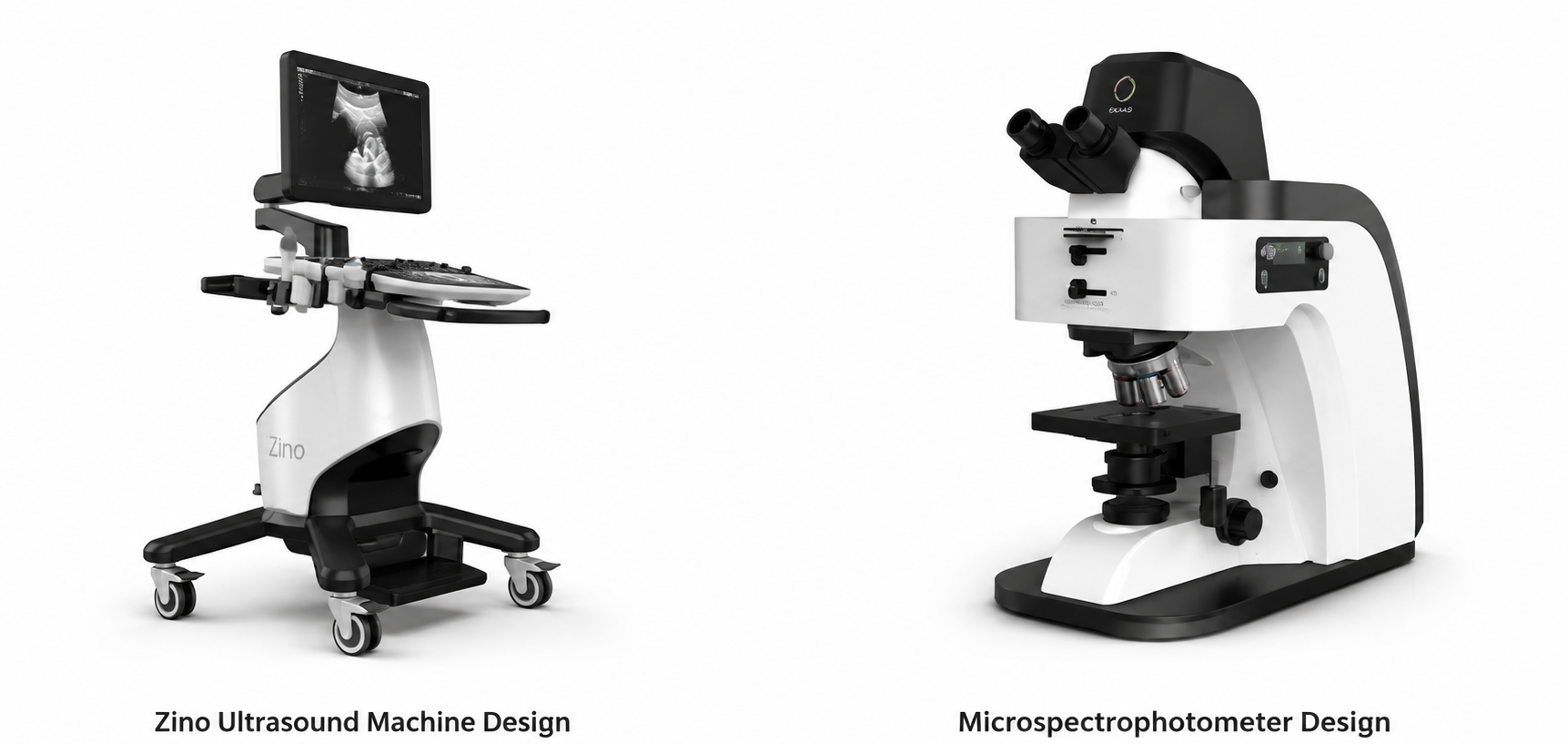
Medical Equipment Design
Due to the technical and medical complexities involved in designing medical equipment, and the absence of industrial design in the design and production process of these products, many of them often lack aesthetic and human-centered elements, which negatively affects the user experience during use. Most of these products are initially designed in a purely engineering and functional manner, with a mechanical or electronic perspective, and therefore require the involvement of industrial designers to enhance the product in terms of usability, ergonomics, aesthetics, and other design factors. These effects become even more significant when users are in a vulnerable psychological state and surrounded by such equipment.
If the integration of industrial design into medical products continues to grow, it can help improve the prevailing collective perception and reduce the sense of discomfort associated with hospital environments.
Medical equipment that was once designed and produced by physicians, technicians, and others who worked directly with them can no longer meet today’s human needs. This is because the quality of interactions with these products, users’ aesthetic expectations, and the experiences gained from them have changed. Moreover, today’s users possess diverse abilities, broader expectations, and higher levels of education. Different industries incorporate aesthetic elements into their products to varying degrees. The design of medical equipment is one of the fields where aesthetic considerations were initially less emphasized, although the extent varies among products; for example, in the design of dental units this aspect is far more developed than in the design of dialysis machines.
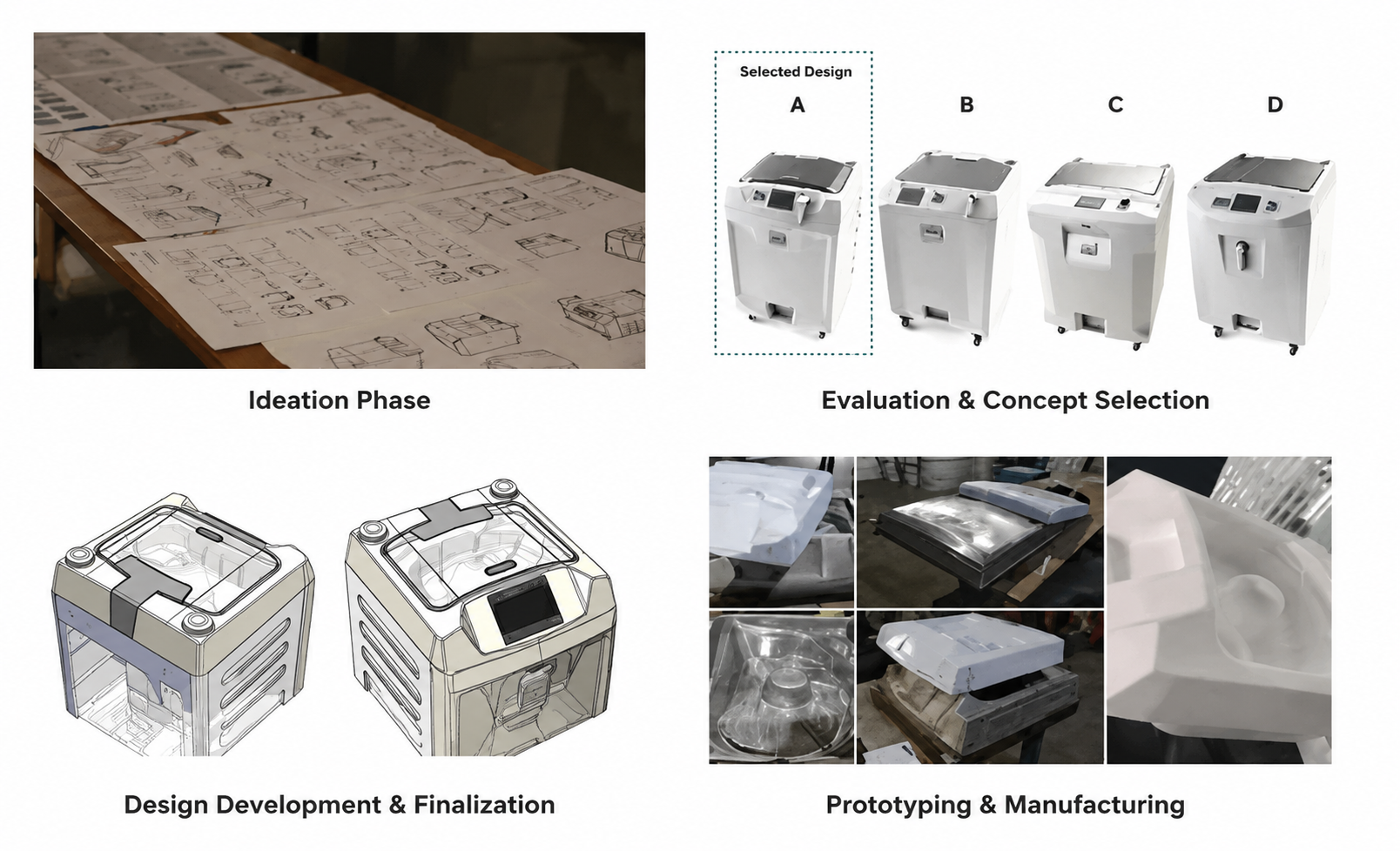
After the functional concept of a new medical device is defined during the problem-definition stage, the next step is the design and ideation phase. The design stage is the most critical phase in the development of medical equipment, because errors at this stage can render the device ineffective or even make its use dangerous. During the design phase, a design control process must be defined and implemented within the framework of the system’s quality requirements. In essence, design control is a logical and straightforward step that ensures the development of a product that has been properly designed and that meets customer needs and expectations.
In general, the medical equipment design process includes: defining the design problem, research, ideation, evaluation of initial concepts, development of the final concept, detailed design, prototyping, and testing the final product under defined real conditions. The entire design process requires feedback cycles in which the product is tested at specific intervals and the feedback is returned to the design team for redesign.
Sports Equipment Design
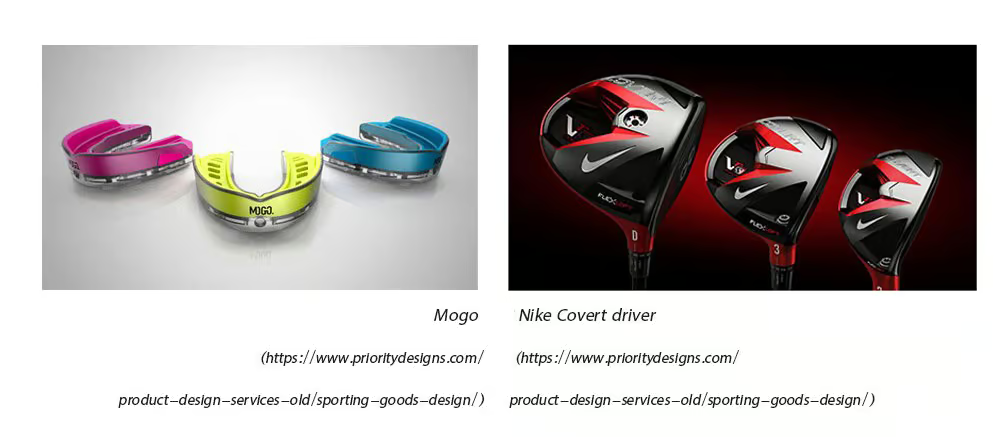
Sports design is a young and evolving branch of engineering. Sports equipment must work in collaboration with the athlete to enhance performance. “The primary goal of sports technology in competitive sports is performance enhancement.” Sports designers who develop such equipment possess a wide range of skills that are not fully covered by traditional engineering disciplines, including biomechanical testing and direct collaboration with coaches and athletes. This skill set equips designers with a deeper understanding of user requirements and performance needs, and it is anticipated that this approach can be achieved through modeling the sports design process.
In general, the sports equipment design process includes research, concept design, design development, design refinement, initial production and prototyping, and final production. An important point is that the user remains involved throughout the entire process.
Home Appliance Design
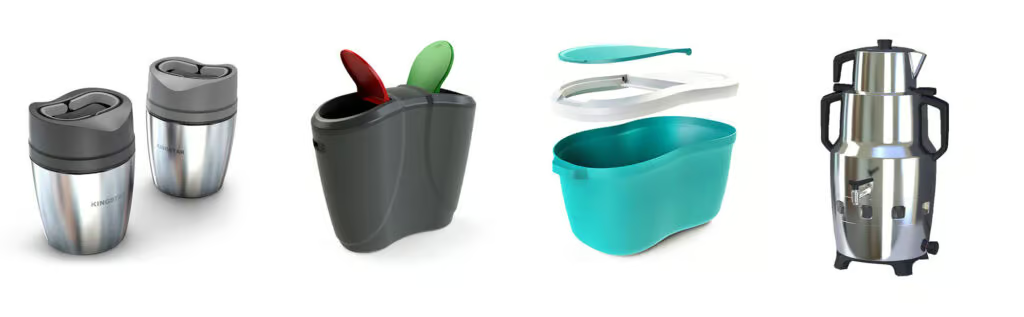
In the design of home appliance products, broader research and investigation are required, along with the collection of information from a wider range of users. Given consumers’ demand for the aesthetic aspects of household products, designers effectively combine various elements in the product’s shape and form—such as color, line, and texture—to meet users’ expected sense of beauty.
The appearance design of home appliances is, to some extent, a form of artistry; throughout the design process, the designer works alongside artistic and aesthetic outcomes. Consumers tend to favor designs with appealing forms, harmonious color combinations, and more comprehensive functionality, and some designers convey targeted emotional messages through product design features. In repeated consumer experiences—whether through the appearance of home appliances, color coordination, and so on—the use of such features and the communication of emotional cues can truly create a remarkable experience. This represents an excellent combination of form and function.
The consumer must be willing to purchase the product so that it can, in turn, deliver a positive feeling during use and shape a holistic experience. In home appliance design, discovering users’ hidden needs and translating them into creative functional ideas can contribute significantly to product sales. This requires gathering information about the patterns and habits of user groups. Many innovative and disruptive ideas in the design of home and kitchen appliances emerge from directly observing and experiencing how real users interact with existing products, as well as through interviewing them and analyzing their behavior.
Retail and Ordering Equipment
First of all, a large store must have a checkout system, POS (point of sale), or retail package to process transactions. To increase sales speed, accurately record purchases, and generate end-of-day reports, retail and ordering equipment is essential.
Nowadays, having a CCTV system is necessary in stores and supermarkets to maintain control and security. Many stores—such as greengrocers and supermarkets—also require a retail scale, shelving units, and refrigerators. The store should include a checkout counter where customers can place their purchased items. Designing such elements falls under the responsibility of a product designer.
Service design, interior design, product design, and packaging design, when integrated together, can create a pleasant customer experience. Achieving this requires a comprehensive and well-managed approach to all design parameters, ensuring that the overlap of different design aspects results in a cohesive and distinctive identity for the store.
Banking and Payment Equipment
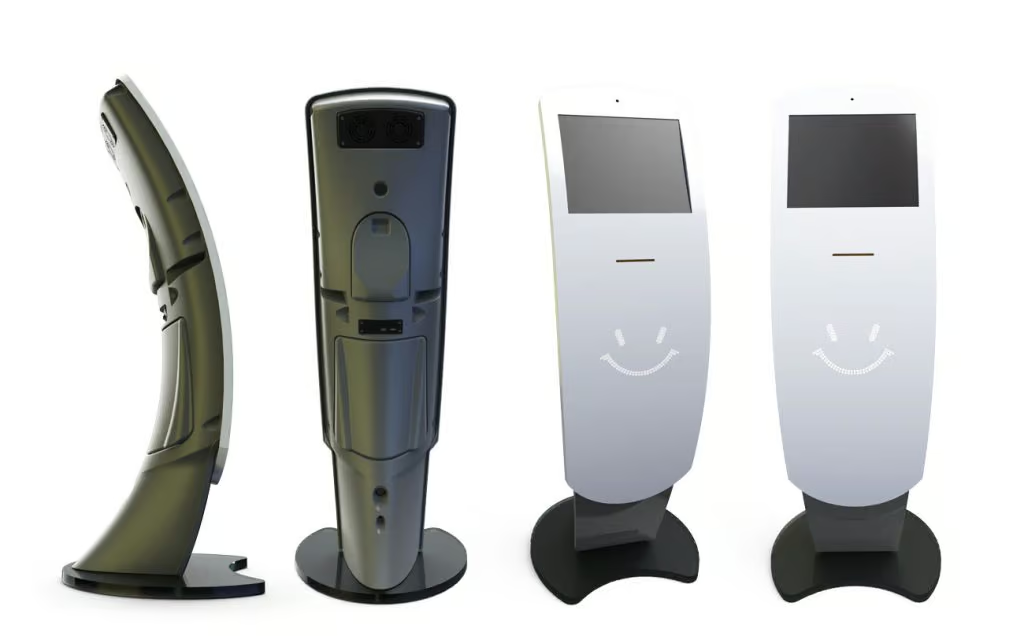
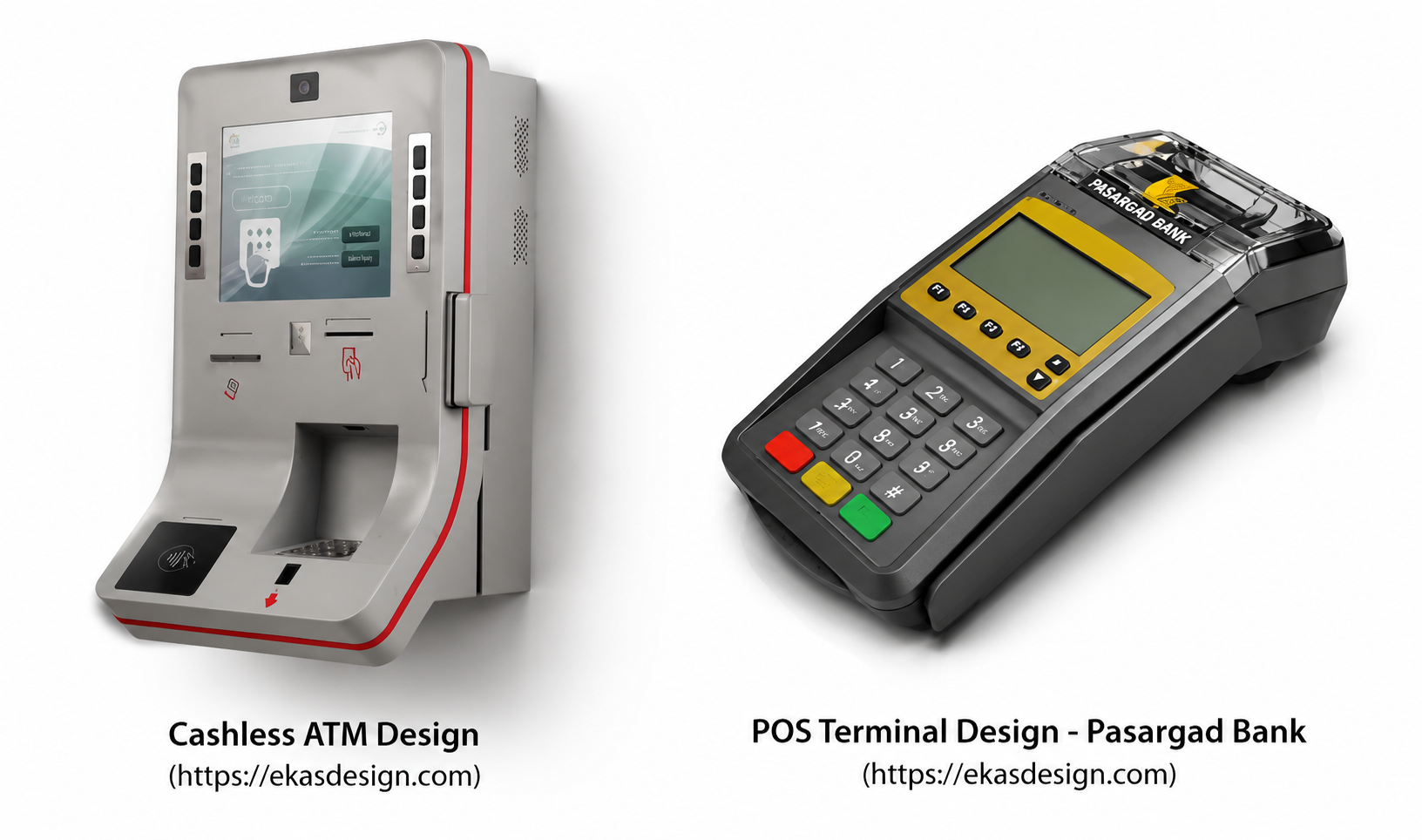
Design in this field is one of the most precise and important areas of design expertise, where details matter both in form and appearance as well as in mechanics and functionality. The design of banking equipment—including payment devices, identity verification systems, non‑cash transaction tools, and security products—must first and foremost be precise, while also being aesthetically pleasing and durable. Achieving customer satisfaction in banks requires the use of up‑to‑date equipment combined with interfaces designed according to defined scenarios within a well‑designed service framework.
Toy Design
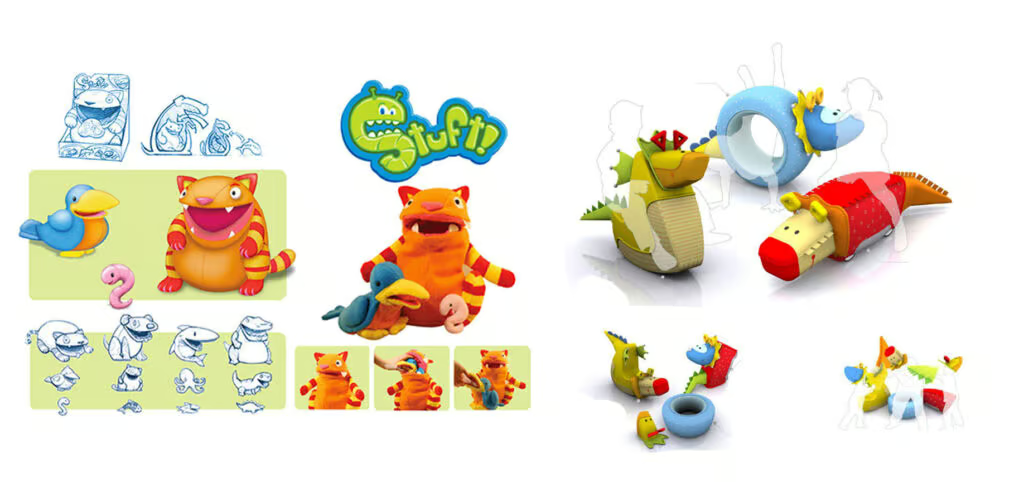
The primary criterion for defining toy design here is that it relates to play objects created through human creativity and design skills, intended for children, adults, or pets, with the goal of generating play value through physical, digital, or hybrid objects (throughout the design process).
A toy designer develops and implements ideas for toys. They are usually inspired by imagination, by observing other toys, or by examining different types of products. A toy designer may be an independent inventor or manufacturer, or may work for a small- or large-scale toy company.
Car Design
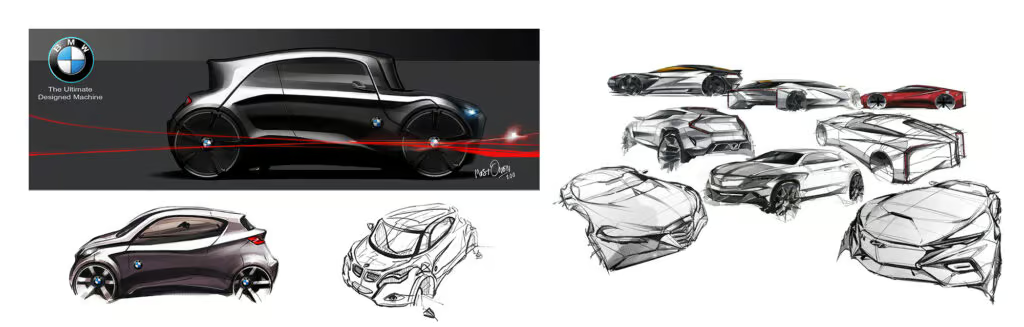
Car design is the process of developing the appearance (and to some extent, the ergonomics) of motor vehicles—including automobiles, motorcycles, trucks, buses, vans, and more. The functional design and development of a modern motor vehicle are usually carried out by a large team from many different disciplines, including automotive engineering. However, design roles in car design are not necessarily linked to holding professional or certified engineering degrees. In this context, car design primarily focuses on the development of the vehicle’s visual appearance or aesthetics, while also contributing to the creation of product concepts.
Car design as a profession is practiced by designers who may have an artistic background and a degree in industrial design or transportation design. The responsibilities of the design team are generally divided into three main aspects: exterior design, interior design, and color and trim design. Graphic design is also one aspect of car design.
Aesthetic value must align with ergonomic performance and functional features. In particular, automotive electronics create additional challenges for car designers, who must stay updated with the latest information and knowledge related to vehicles—especially devices such as GPS navigation systems, satellite radio, HD radio, television, MP3 players, video playback systems, and smartphone interfaces. Although not all new automotive tools are intended to be standard factory features, some may be essential in shaping the future direction of a specific car model.
Urban Furniture Design
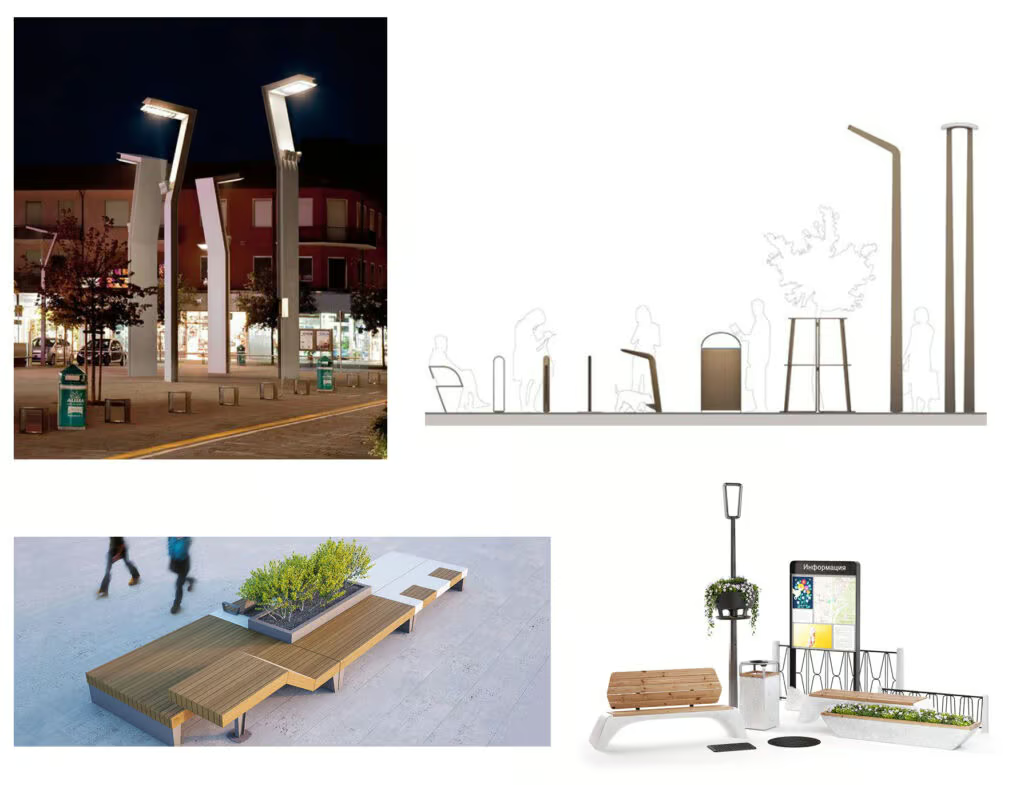
Urban furniture refers to the “furnishings” of public urban spaces—areas used by the general public, such as sidewalks, parks, public squares, and parking areas. These elements can include benches, bus shelters, streetlights, and signage. They may serve functional purposes, artistic purposes, or both.
Effective and high-quality urban furniture can enrich our overall experience of public spaces. For designers of urban environments, understanding the principles of placemaking and urban furniture design is essential. Urban furniture should be designed to incorporate all—or at least some—key characteristics such as safety, innovation, comfort, and environmental friendliness.
Elements such as bus and bicycle stations, benches, waste bins, street lighting, and other city-level installations all fall within the category of urban furniture design.
(Business to Business) Product Design in Relationships
Product designers can contribute to business and commercial activities beyond the design of physical products and influence the effective implementation of product development processes. Several studies indicate that industrial design plays different roles within companies, and these roles are connected with other functional areas such as marketing, engineering, sales, and production.
However, while companies benefit from industrial design in various ways, the roles played by industrial designers are not fixed. In fact, studies of companies show that industrial designers are engaged for different reasons. For example, while a marketing manager may be concerned with product differentiation and may hire designers to support the department in these areas, a research and development manager may pay more attention to aspects such as technical feasibility.
The management literature on design points to several important areas in the relationships between managers and designers. Communication between industrial designers and managers often involves many challenges. Managers may perceive the language and ideas used by designers as unrealistic. Companies sometimes overlook the important contribution of industrial design to their activities.
Therefore, understanding what industrial designers do—and perhaps more importantly, how different professionals perceive the contribution of industrial design—can help managers integrate industrial design more effectively with other disciplines. This can also help create new opportunities for B2B processes that aim to benefit from industrial design in a more strategic way.
The role of industrial design within companies has expanded over time. Today, designers have moved beyond their original role as commercial artists (or stylists), who primarily shaped the look and feel of products, and now contribute to many other areas, giving the profession a broader function within companies.
Design is a broad term that encompasses both the object of design and the process underlying its creation. The “object of design”—the result of the process—is a product or service-system that fulfills specific consumer needs. As a process, design refers to the path taken to create product attributes, wherein designers orchestrate “courses of action aimed at changing existing situations into preferred ones.” From a management perspective, this distinction provides a foundational classification for understanding the roles of industrial design in business processes: product-related roles and process-related roles.
Regarding product-related roles, designers have long been employed to enhance a product’s appearance and usability—capabilities that remain vital to industrial design today. The drive to improve aesthetics is a primary reason firms adopt industrial design, as is the pursuit of superior usability. Both aesthetics and usability contribute to a product’s perceived quality and value. Furthermore, they help align products with brand identity, increasing brand awareness and providing competitive differentiation. By translating consumer needs into tangible product features, designers influence market performance, with research consistently showing that investment in design positively impacts profitability and market share.
Industrial design has expanded significantly as companies seek to leverage designers’ skills, particularly through process-related roles. Two notable capacities are trend synthesis and visualization. Designers are trained to track social and technological trends, identify customer priorities, and convert them into concrete product ideas. Through visual representations—such as sketches, mock-ups, and 3D models—designers facilitate team communication and ensure a shared understanding of product features.
Consequently, they act as conduits between the end-user and internal stakeholders, such as marketing and engineering. Beyond communication, designers stimulate innovation by challenging existing constraints and fostering a creative culture; indeed, both practitioners and academics recognize “design thinking” as a key corporate resource. While these roles are well-established in B2C markets, they are increasingly relevant in B2B contexts. A prime example is Caterpillar, which leveraged industrial design to create a cohesive brand aesthetic and enhance driver usability. Ultimately, this highlights the diverse value industrial design offers B2B organizations and the importance of its recognition by cross-functional managers.
Product Design Expression
Product design expression emerges from the combination of all the elements that exist within a product. Color tones, shapes, and proportions must all be articulated in a way that encourages the customer’s mind to be attracted to purchasing the product. For this reason, one of the most important concerns of product designers is considering the product’s audience and its end user.
Understanding how the customer perceives the product has a direct impact on the product’s success in the market. The solution to this challenge is to design a product that expresses a distinct personality in its appearance and performance, or one that tells a story through its form and function.
Products that possess these characteristics will experience stronger acceptance by customers. However, it is important to note that expressing these features is not achieved solely by considering a product’s aesthetic qualities; taking the product’s functional characteristics into account is equally influential.
All stakeholders have specific expectations of the product designer and the design process. The product designer’s task is to create a suitable and valuable product by interacting with all these individuals:
- The manufacturer is concerned with production costs. Ultimately, the manufacturer wants a cost-effective product.
- The buyer thinks about the product’s price, appearance, and elegance.
- The end user emphasizes the efficiency and performance of the final product.
- The maintenance and repair department focuses on the product’s serviceability—ensuring that product components can be easily disassembled and that faults can be diagnosed and repaired with ease.
The Product Design Process
Product design is grounded in Design Thinking, a human‑centered approach to innovation that integrates user needs, technological possibilities, and business requirements. Skilled designers apply design thinking throughout the entire product development lifecycle—whether the outcome is physical or digital—because it guides end‑to‑end decision‑making rather than functioning as a single isolated phase.
The product design process itself is a problem‑solving framework, and the skills required from a designer shift depending on the stage. Product designers routinely move between roles: researcher, problem solver, visual designer, analyst, and even product strategist. As a result, no two days in their workflow are ever the same.
A process is simply a series of coordinated actions that lead to a specific outcome. The design process can be understood as a kind of “black box”: information enters, is transformed through structured design activities, and emerges as a refined, thoughtfully developed solution.
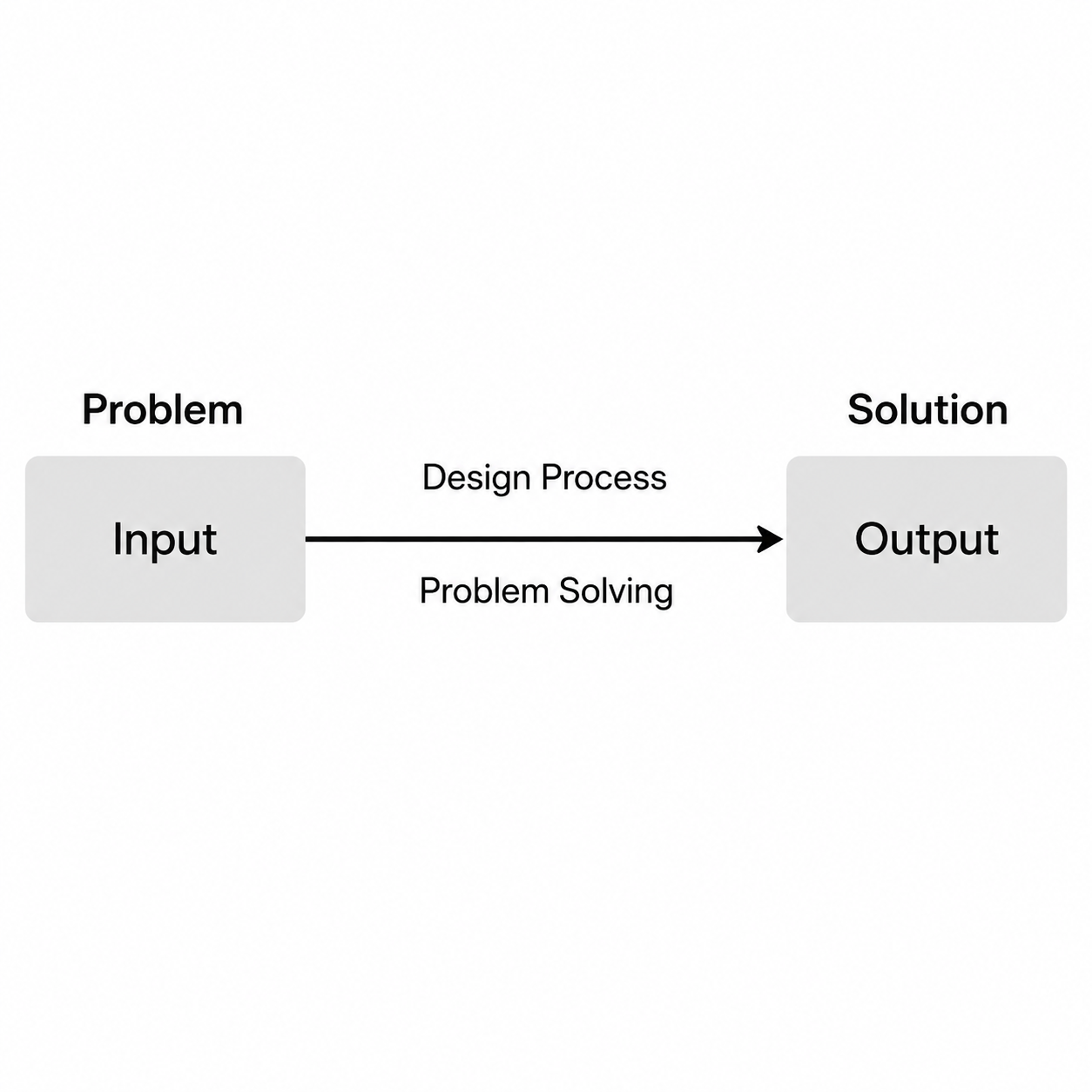
Various product design processes exist, each highlighting different aspects of development. One widely cited example is the seven-stage problem-solving model proposed by Don Koberg and Jim Bagnall. This framework presents product design as a structured progression—from an initial idea to a systematically developed solution—typically carried out by a multidisciplinary team of designers, engineers, and domain experts.
The process centers on defining requirements, generating ideas, prototyping, and developing a final solution. Yet development does not end there: designers must prepare the product for production and continue refining it through revisions and improvements after initial manufacturing.
The main product design process consists of the following three parts:
- Analysis
- Ideation (Concept Developmen
- Synthesis
Furthermore, when thinking about products or features, designers must understand business goals and be able to answer the following questions first:
What problem are we solving?
Who has this problem?
What do we want to achieve?
Answering these questions helps designers understand the overall user experience of a product, rather than focusing solely on the interaction (feel) or visual (appearance) aspects of design. Only after addressing these questions does it make sense to move toward finding a solution to the problem.
In general, finding a solution within the design process involves the following stages:
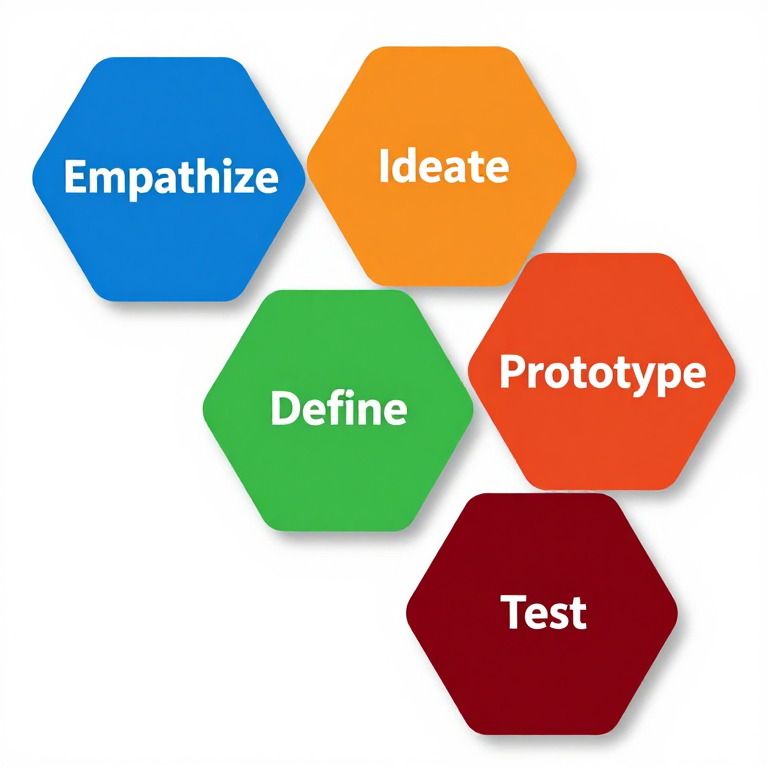
1- Empathize
Learn about the people you are designing for by conducting user research to gain a deeper understanding of their needs. Before beginning the design and development process, it is essential to determine whether a real demand exists for the product—often evaluated through product–market fit studies. For greater effectiveness, the design process should also be understood within the broader context and environment of the company.
A. User Research
Some user research methods include:
– User Interview: Interviews are a common qualitative research method conducted either in person or remotely. Although analyzing interview data can be time‑consuming, this approach allows researchers to gain valuable insights through direct conversations with users. Interviews help designers understand user needs, motivations, and emotions both before product development and after the product is released. Typically, one interviewer speaks with one user for about 30 minutes to an hour. Afterward, the collected data is synthesized to identify patterns and insights.
When possible, in‑person interviews are preferred because they provide richer behavioral information, including body language and verbal cues such as tone and inflection. Effective interviews require careful planning of questions. Poorly designed questions can mislead the development process, while skilled interviewers keep users comfortable, ask neutral questions, and know when to probe for deeper explanations.
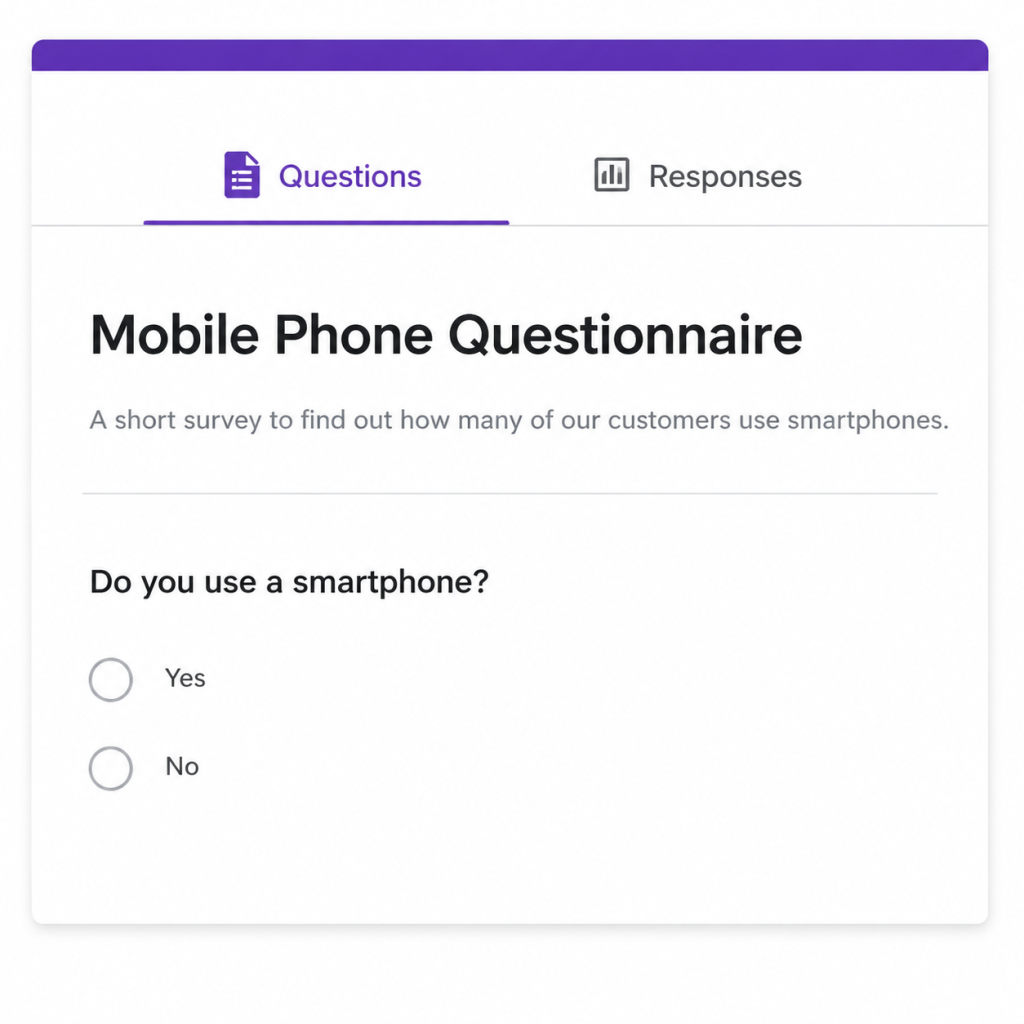
– Online Surveys and Questionnaires: Surveys and questionnaires enable you to obtain a large volume of quantitative data in a short period. While their implementation can be relatively quick and inexpensive, the downside is that they may lack the deeper insights usually gained from face-to-face interactions. Although online surveys are typically used for quantitative research, they can also be used for qualitative research. Collecting qualitative data is possible by asking open-ended questions (e.g., “What motivates you to make a purchase?” or “How do you feel when you want to return an item you purchased from us?”). Responses to such questions will be highly individual and generally cannot be used for quantitative analysis.
– Contextual and Demographic Research: Contextual research is a field study where researchers observe individuals in their natural environment as they perform daily tasks. This method provides deep insight into the context of use. Typically, users are first asked standard questions about their routines and are then observed while working. The goal is to gain a direct, authentic understanding of user perspectives through extensive observation. It is crucial to observe behavior rather than just listening to what users say, as verbal reports often differ from actual actions. To capture behavior as realistically as possible, researchers should observe how tasks are completed while minimizing interference and disruption.
– Market Research: To build a successful product, designers cannot ignore competitors. Understanding existing products and how they perform in the market is essential, which is why market research is a key part of the product design process. The ultimate goal is to create a solution with a clear competitive advantage.
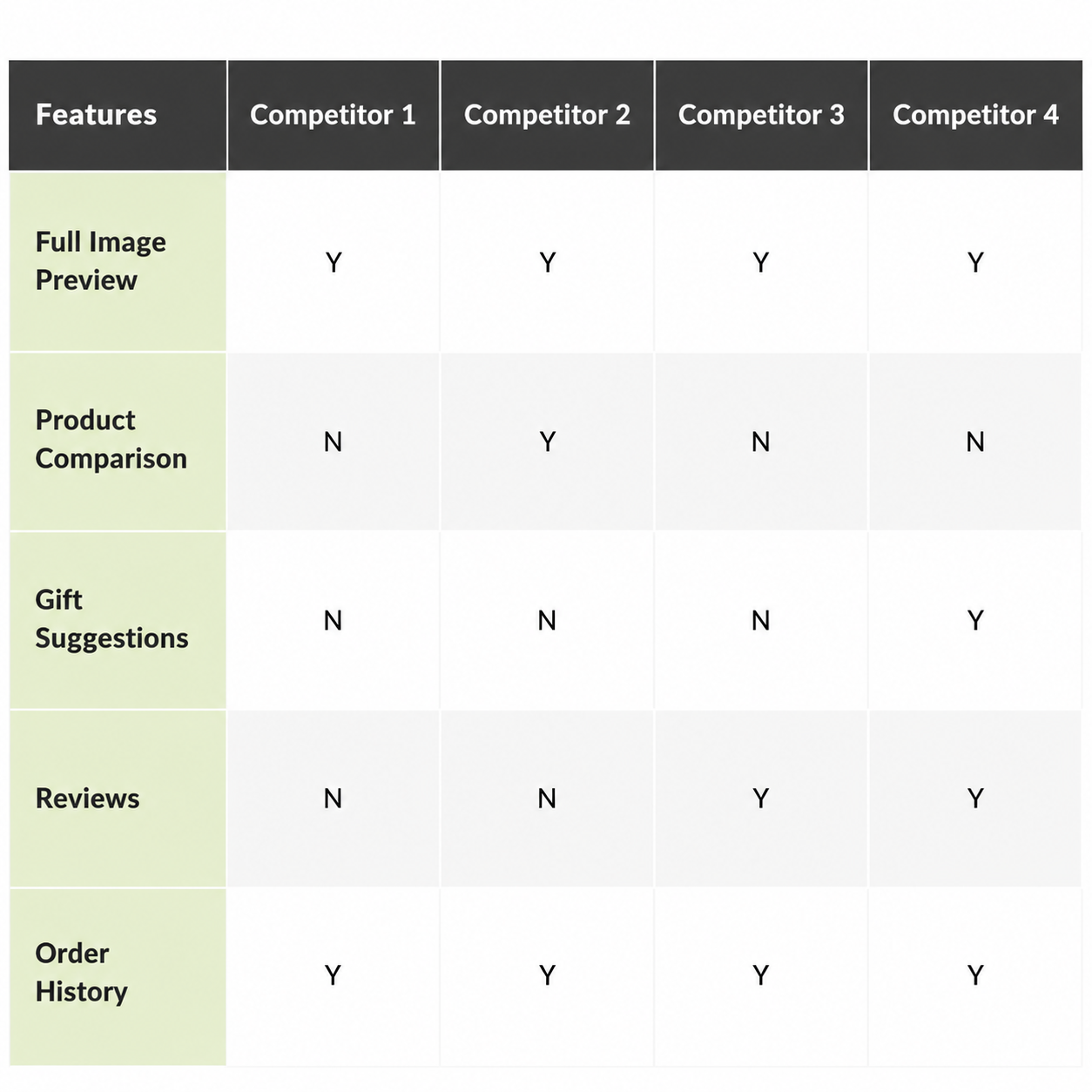
Competitor Research: Competitor research is the comprehensive analysis of competing products and the presentation of analysis results in a comparable format. This research helps product teams understand industry standards and identify product opportunities within a specific market segment. A competitor is a company that shares your goals and fights for the same things your product team desires. There are two types of competitors:
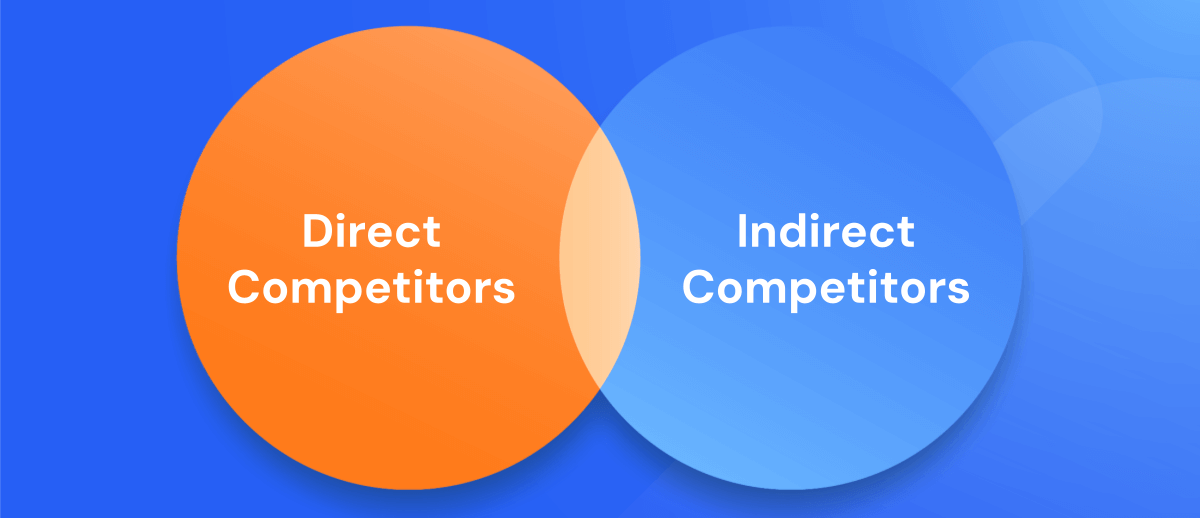
– Direct Competitors: Direct competitors are those whose products compete directly with your value proposition (they offer the same or very similar value proposition to your current or future users).
– Indirect Competitors: Indirect competitors are those whose products target your customer base without offering the exact same value proposition. For example, the primary product or service of an indirect competitor might not address your value proposition, but their secondary product certainly does.
The product team must consider both types of competitors because they influence the overall success of the product. As a general rule, identify the top three direct competitors and an equal number of indirect competitors.
B. User Analysis
After conducting the research, the product team must make sense of the collected data. The goal of the analysis phase is to extract usable conclusions from the data gathered during the product research stage.
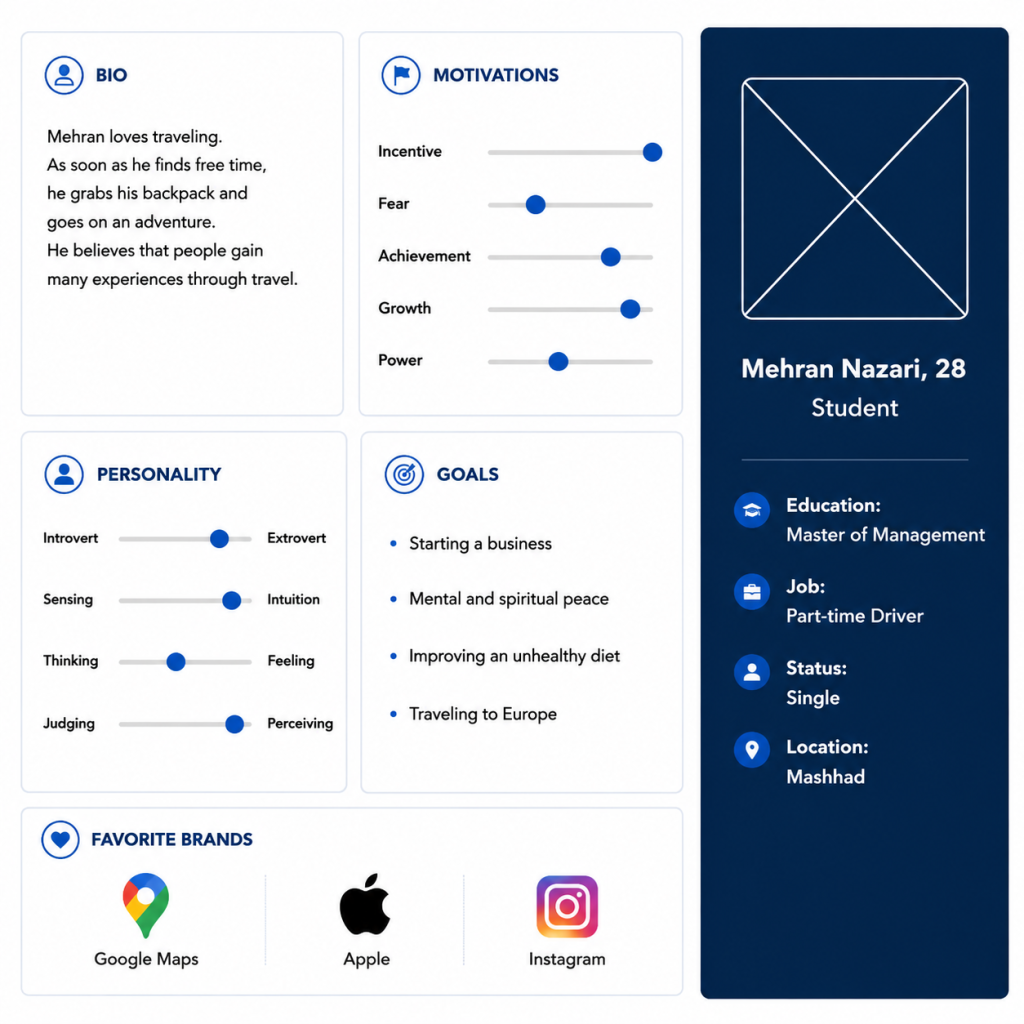
– Persona: Based on the results of the product research, designers can identify key user groups and create representative personas. Personas are fictional characters created to represent different types of users who might use a product in a similar way. The goal of personas is to create reliable and realistic representations of key audience segments for reference. Personas help product design teams understand users’ goals within specific contexts and use them during the ideation process.
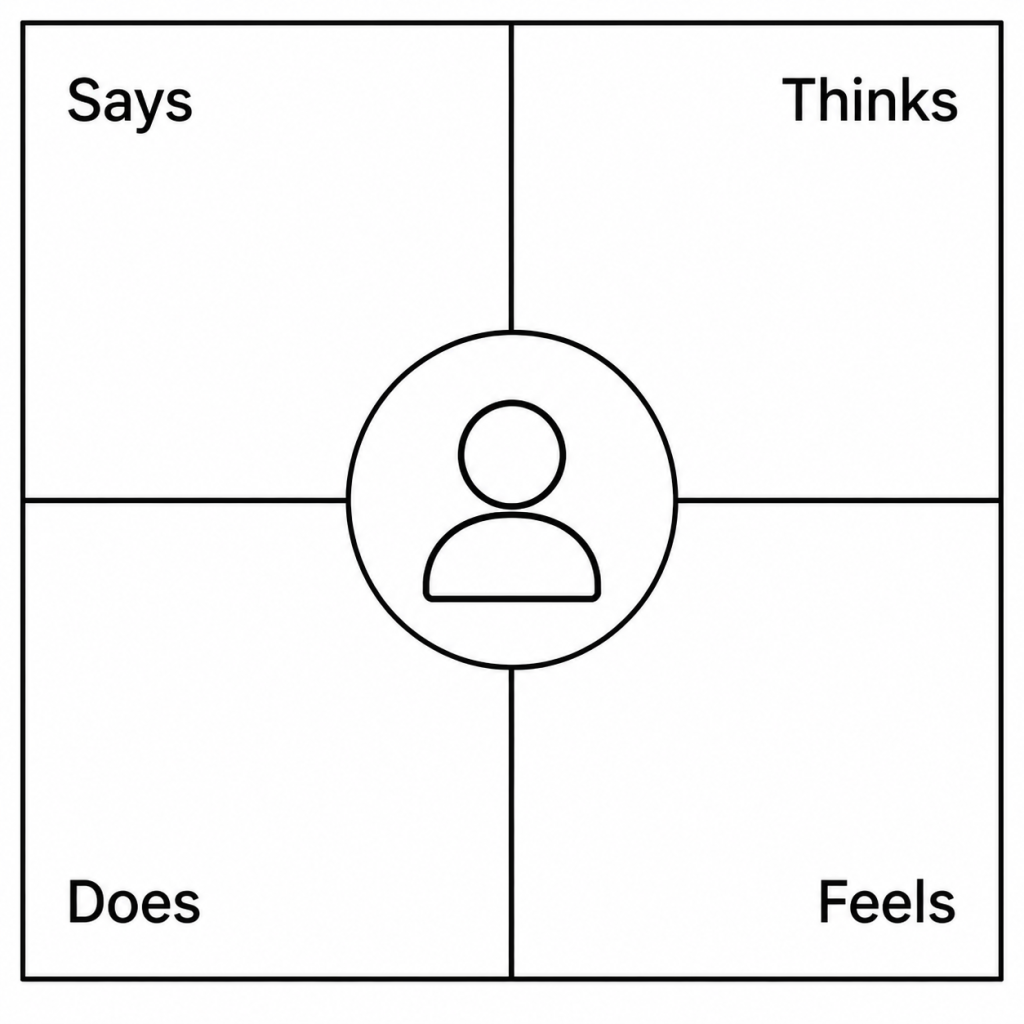
– Empathy Map: An empathy map is a visual tool used to articulate what the product team knows about the user. This tool helps the product team develop a broader understanding of the “why” behind the user’s needs and desires. It also forces product teams to shift their focus from the product they want to build to the people who will use the product. As a team identifies what they know about the user and then maps this information onto a chart, they gain a more holistic view of the user’s world and the problem or opportunity space.
2. Define the Problem (Define)
The Define stage follows the Empathize stage, where designers gather information about users through interviews, observation, and other research methods. After understanding users—their needs, motivations, and pain points—this knowledge is transformed into actionable insights.
The relationship between Empathize and Define can be described as analysis and synthesis. In the Empathize stage, designers analyze observations by breaking them into smaller parts (such as what users do, why they do it, and how they behave). In the Define stage, these findings are synthesized to form a clear overall understanding.
Defining the problem statement is essential because it provides focus, clarifies the goal of the project, and improves communication with stakeholders and team members. Problem statements often begin with the phrase “How might we…?”.
3. Ideation
During the Ideation stage, teams brainstorm creative solutions aligned with project goals while validating critical design assumptions. Designers utilize techniques like sketching to visualize design aspects and storyboarding to map user interactions. Once concepts are validated, the focus shifts to detailed design, involving CAD software to finalize technical specifications, including materials and cost analysis.
4. Prototyping
After ideation, designers prototype the most promising concepts to test their viability and bring ideas to life. If addressing multiple requirements, integrating these solutions into a single prototype ensures they work seamlessly together. Beyond technical testing, prototypes are vital for gauging consumer interest; presenting them for review confirms market demand and guides necessary improvements before production. These prototypes evolve through iterations—often labeled Alpha, Beta, or Gamma—with each version moving closer to the final design. To optimize costs during these development stages, designers frequently use alternative, less expensive materials that maintain the necessary functional properties.
5. Testing
Once functional, prototypes should undergo usability testing to verify that they effectively address the core problem statement.
A. What is a feedback loop?
Eric Ries explains in the book The Lean Startup that the fundamental activity of a startup is turning ideas into products, measuring how customers respond, and then deciding whether to pivot or persevere. This serves as the basis for a framework he calls the “Build-Measure-Learn” process.
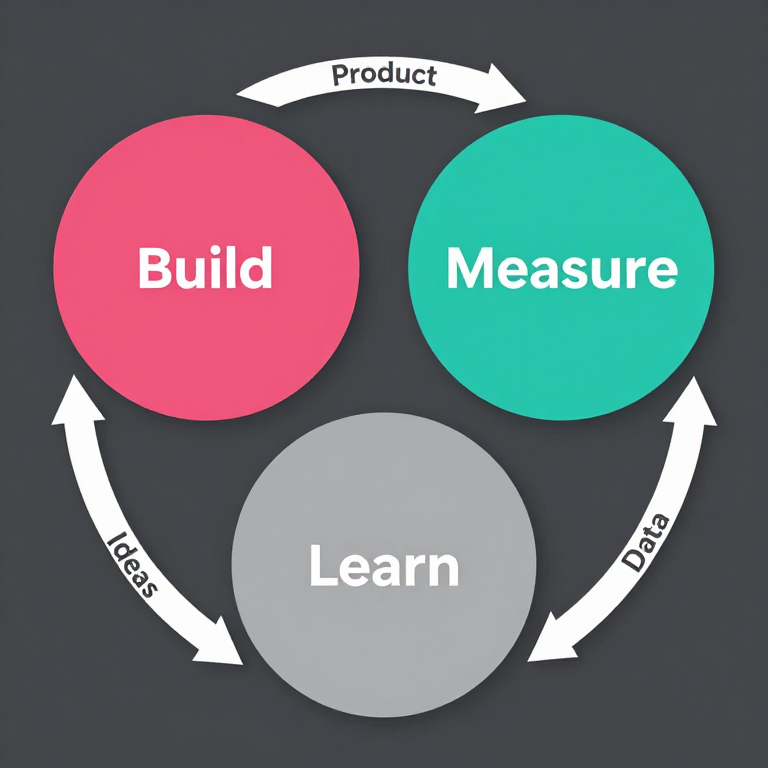
- Build the product: Turn an idea into something tangible that customers will love.
- Test the product: See whether customers like it or not.
- Improve the product: Learn from mistakes to build a product that customers will love.
The product feedback loop is a continuous process of refining a design based on user input. To facilitate this, designers should capture feedback early using tangible, cost-effective methods such as brochures, datasheets, or basic UI prototypes.
“Idea prototypes” are particularly valuable for communicating a product’s future vision. The fidelity of these prototypes should align with your testing goals: if testing functionality, create only what is necessary for a reliable result; if testing aesthetics or proportions, the prototype must closely resemble the final design. Ultimately, the objective is to put a tangible model in front of users as quickly as possible to begin data collection.
B. Measure your product feedback
Now it’s time to see whether customers like it as much as you thought they would. Here are the best methods for collecting customer feedback and starting your feedback loop:
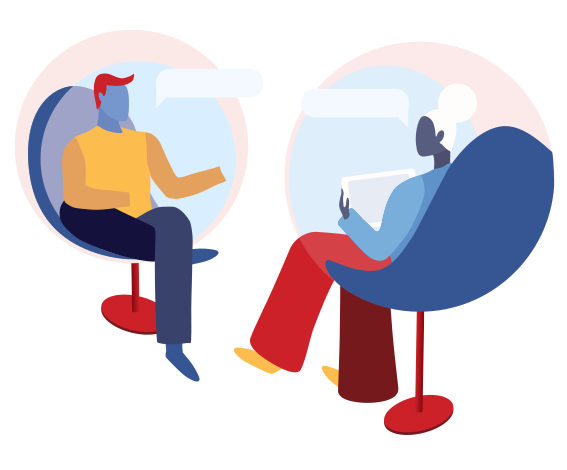
– Customer Interviews: Contrary to popular belief, customer interviews remain a cornerstone of user research. They provide product teams with invaluable, nuanced insights into user needs, pain points, and desired solutions. Whether conducting customer validation, persona development, or usability studies, the real value of these interviews lies in the depth and complexity of the qualitative data gathered—making them a more significant source of insight than almost any other form of customer feedback.
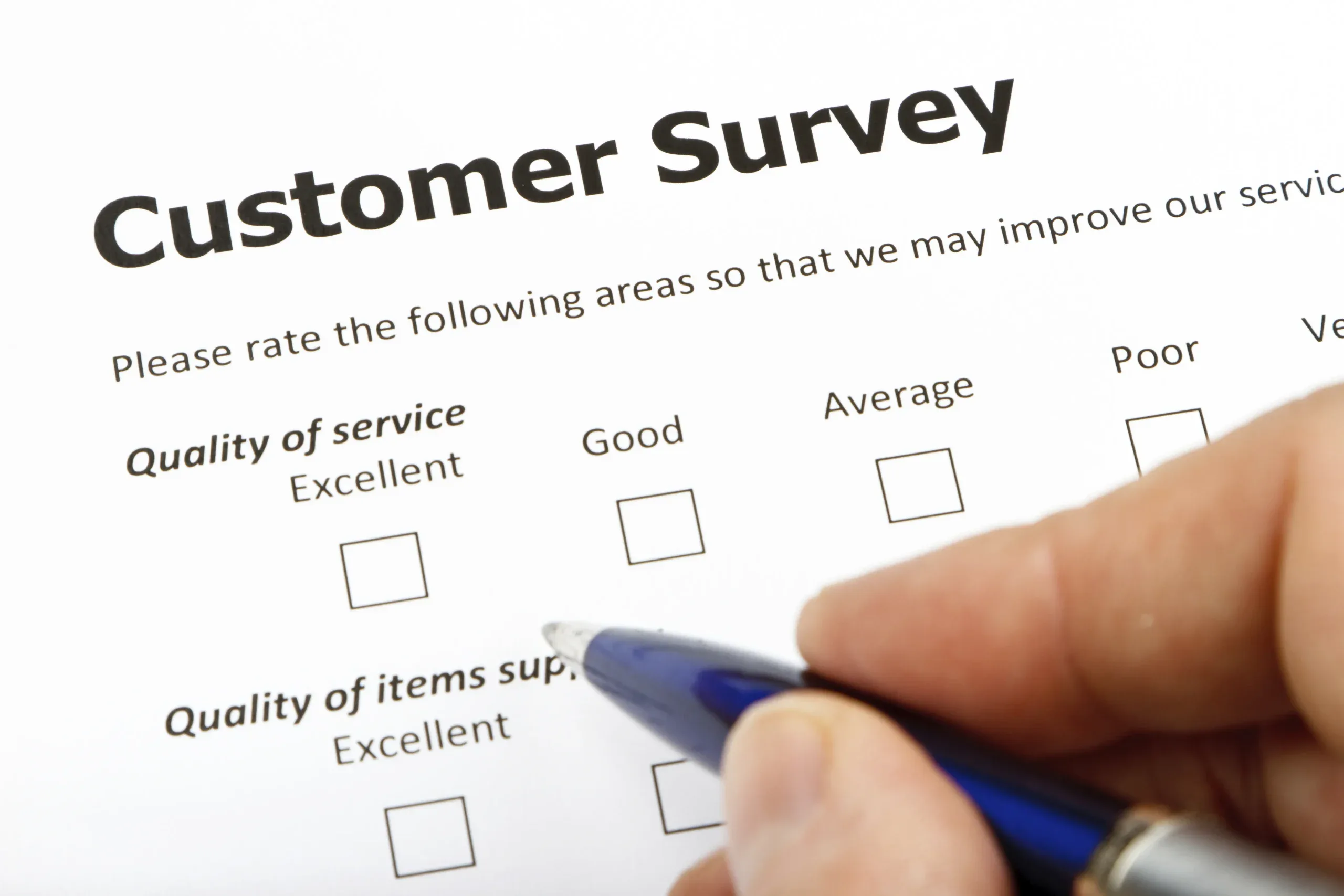
– Customer Surveys: Customer surveys are a vital component of the feedback loop, primarily because they are embedded directly within the user experience. By prompting users for feedback immediately after they interact with a feature, you capture timely and relevant data. While the simplicity of surveys often increases response rates, this method has limitations: without a researcher present, you cannot clarify user responses or probe for deeper insights.
– Customer Support: Customer support representatives are a crucial source of feedback, as they engage directly with users daily. Their insights provide a clearer understanding of recurring technical issues, feature requests, and general user pain points.
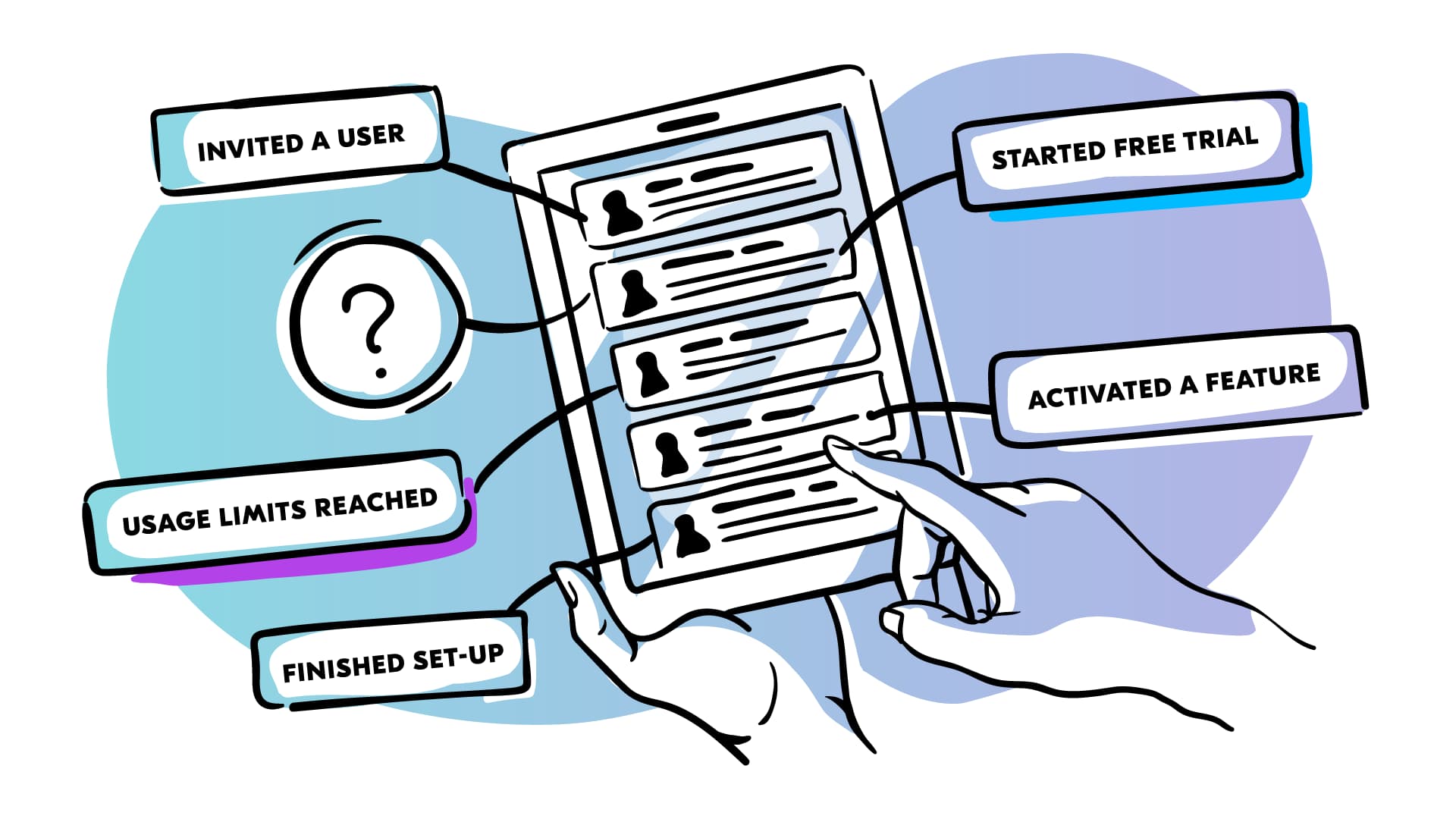
– Product Usage Metrics: Product usage metrics are a great way to discover customer feedback. Look for patterns in software analytics—they will help you gain a proper understanding of how different features are bein g used.
– Sales: Your sales department is in contact with your potential customers. Sales representatives can find out what motivates them and also what the most important pain points of your product are.
– Employee Feedback: Diverse perspectives within your organization can provide useful and sometimes surprising insights. Important feedback can be obtained this way because employees are somewhat aware of the details of the product design and manufacturing stages, while at the same time, they can act in the role of a user.

– Social Media: Customers usually provide feedback online or comment through various channels. Be sure to check these sources and continuously improve how you gather product feedback.
C. Decide which feedback to prioritize.
Anyone can collect customer opinions. But what comes after that is also important. What is your primary source of feedback? Is it in-app user surveys, email surveys, customer interviews, support requests, or something else? Will you have a lot of feedback?
D. Create a storage space for your feedback.
You can use web pages, forums, or another dedicated tool. A product management system provides a central repository for all product ideas, feedback, and requests collected by teams across the company.
E. Define processes and workflows.
To build the best possible product for your customers, you need to determine different solutions based on feedback. This brings you back into the feedback loop. In fact, it is an ongoing, never-ending process that you use to keep improving your product.
Design Process Models
In order to understand the differences among various design process models from a graphical and conceptual perspective, an analysis has been conducted. In the section above, we discussed the overall design process; in other words, the process described above is the Design Thinking process, from which most other processes originate. Over the years, different models of this process have been developed by researchers and designers in more open, clearer, and more detailed forms. Below we review some of the most important ones.
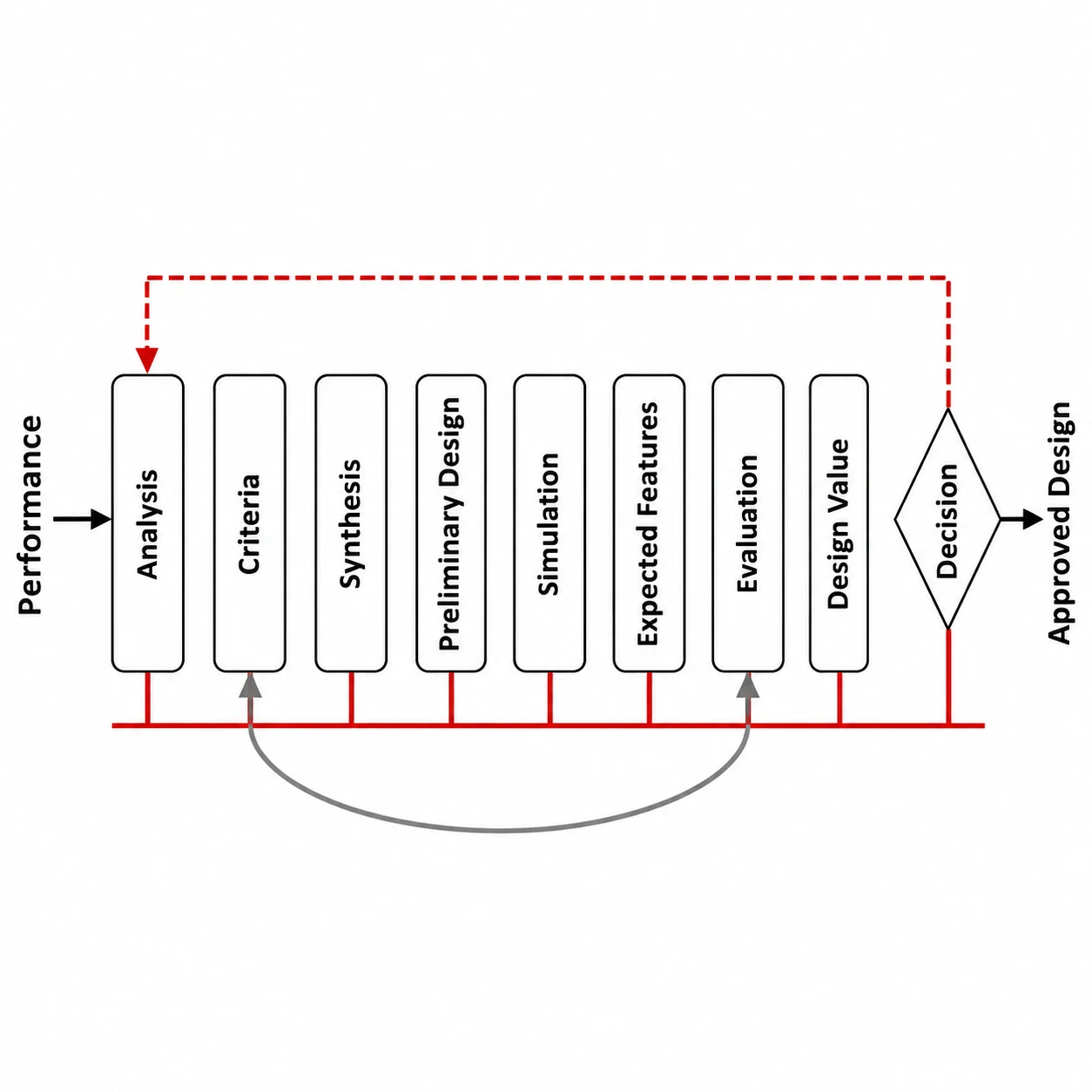
- Basic Design Cycle (BDC): The image below shows a linear design process model with several iterative loops. This simple design process model proposes a linear design process consisting of different phases and stages. Iterative stages exist, but they result from emphasizing the stages of the process and their sequence. The duration, scope, or certainty of the stages is not specified. All of these may vary depending on the subject, design style, the number and type of feedback, and the number of cycles.
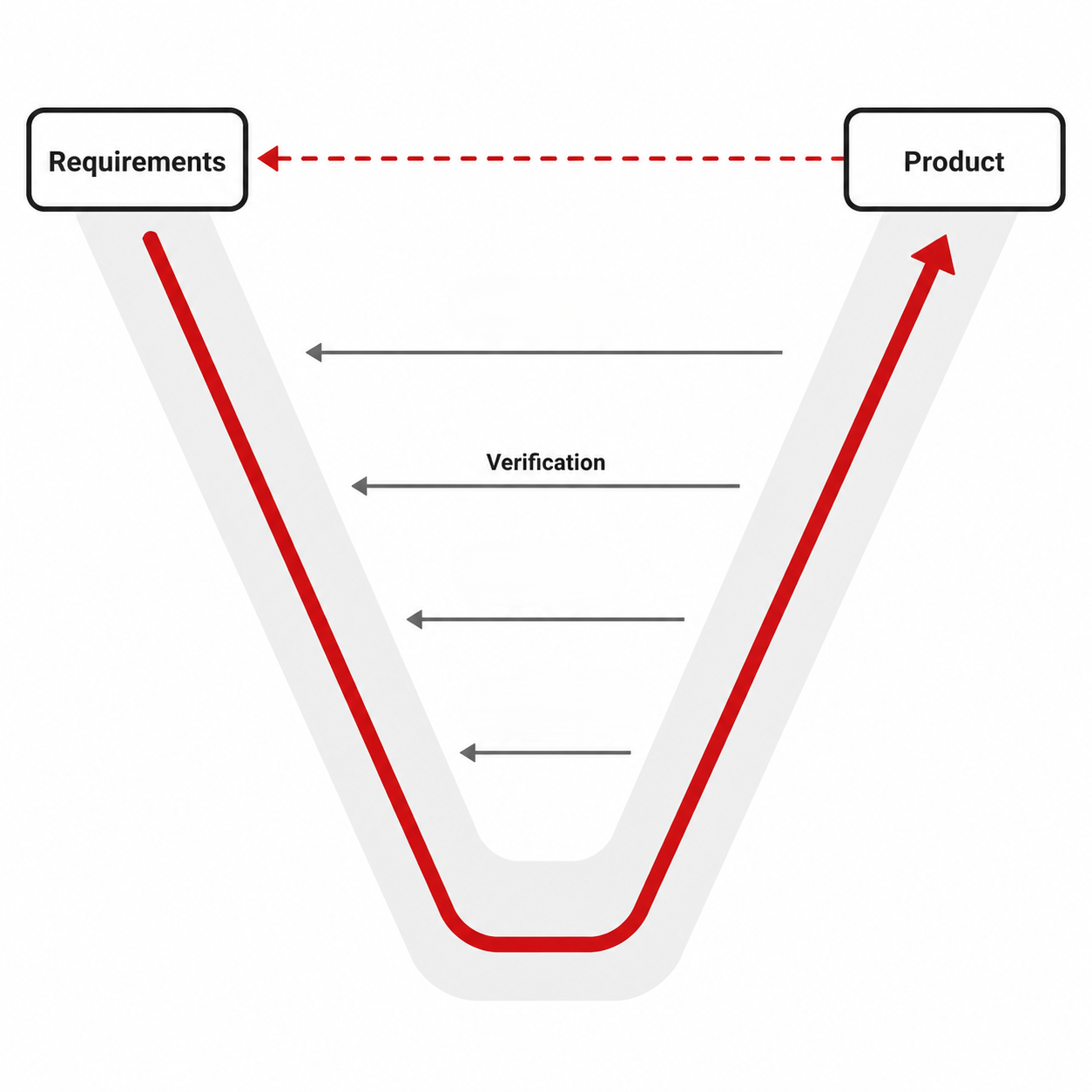
- V Design Process: The image below shows an example of the newer V and U models. This model has components similar to the linear model mentioned earlier. However, the different graphical concept shifts the emphasis toward feedback or iteration loops. This process does not appear to be very simple; there is a kind of exploration within the process and an emergence of solutions. It is clear that the requirements and solutions are explicitly available, while the central process that connects them may remain inaccessible. Visually, the V or U models can even be bent further to form a closed circle.
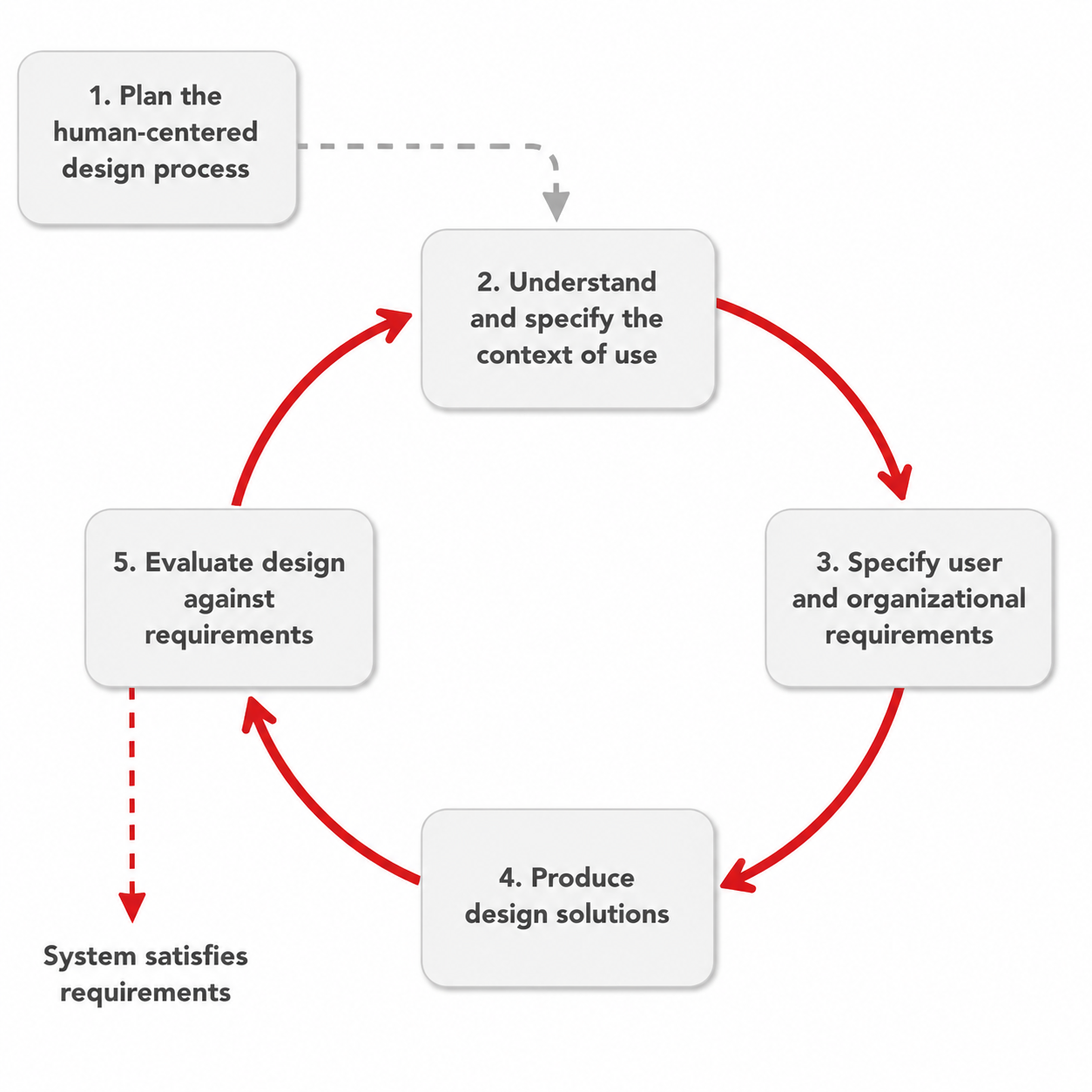
- Human-Centered Design Process for Interactive Systems: The figure below illustrates the Human-Centered Design (UCD) model for interactive systems, representing various types of circular design process models. These models generally place a very strong emphasis on the iterative nature of the stages within design processes.
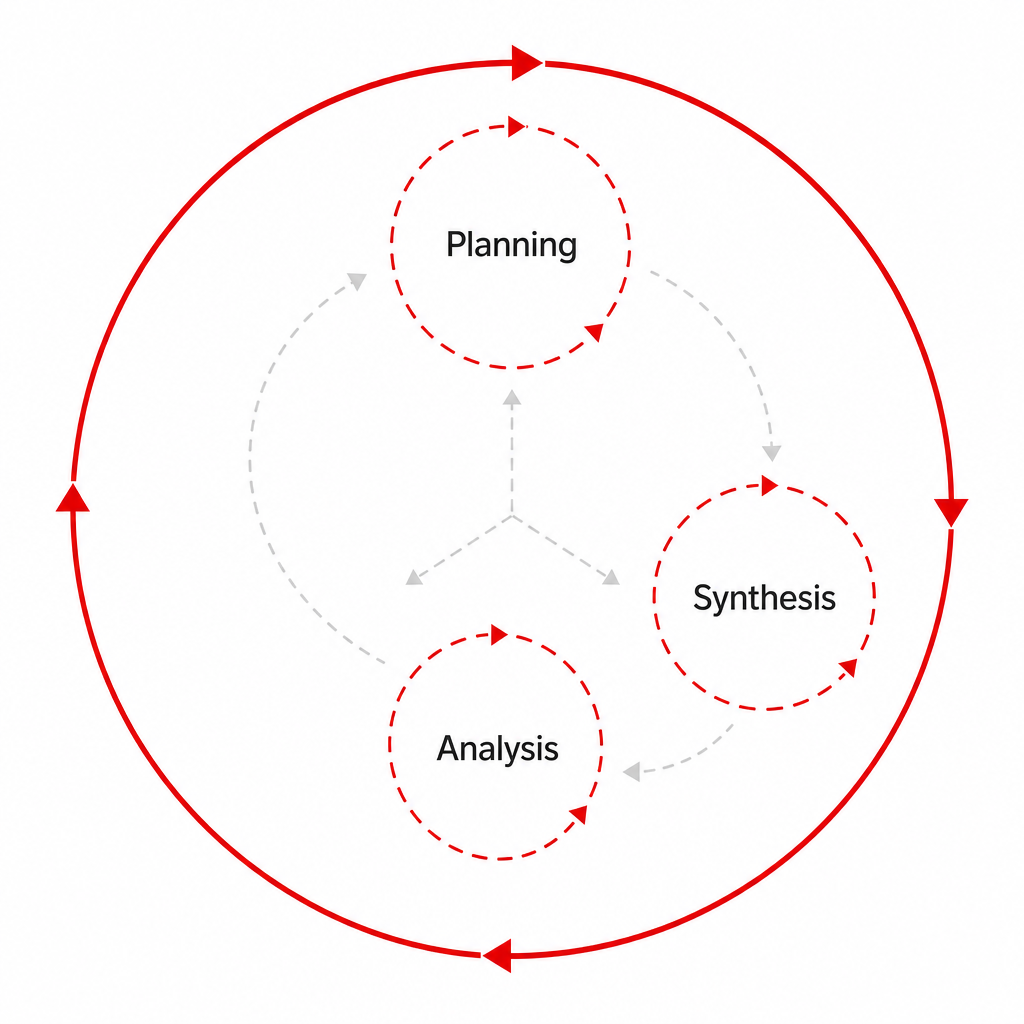
- General Design Process Model: Hugentobler et al. presented a model that makes the iterative nature of design processes even more visible. They emphasize the repetition of the design process as a macro-cycle, as well as repetition within the stages as micro-cycles.
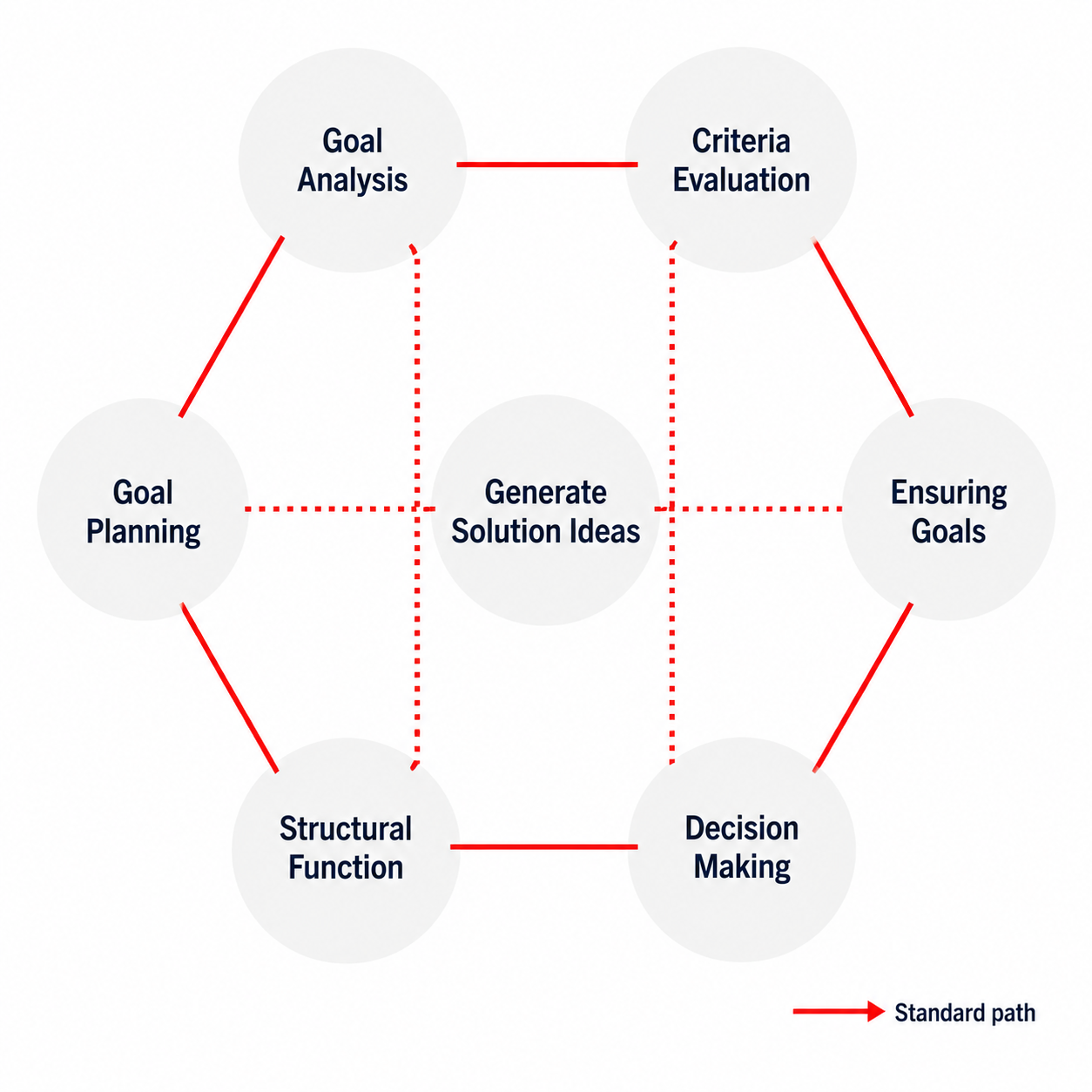
- The Munich Procedural Model: As shown in the figure below, the Munich Procedural Model seemingly does not suggest a preferred sequence for the seven stages of the design process. However, upon closer inspection, a preferred order is revealed, indicated by a thicker (red) line. While this model allows for the representation of various types of design processes, it does not propose a direct sequence of steps and lacks emphasis on the inherent iterative nature of the design process. Consequently, non-designers and novices may find it more difficult to understand or navigate design processes using this model.
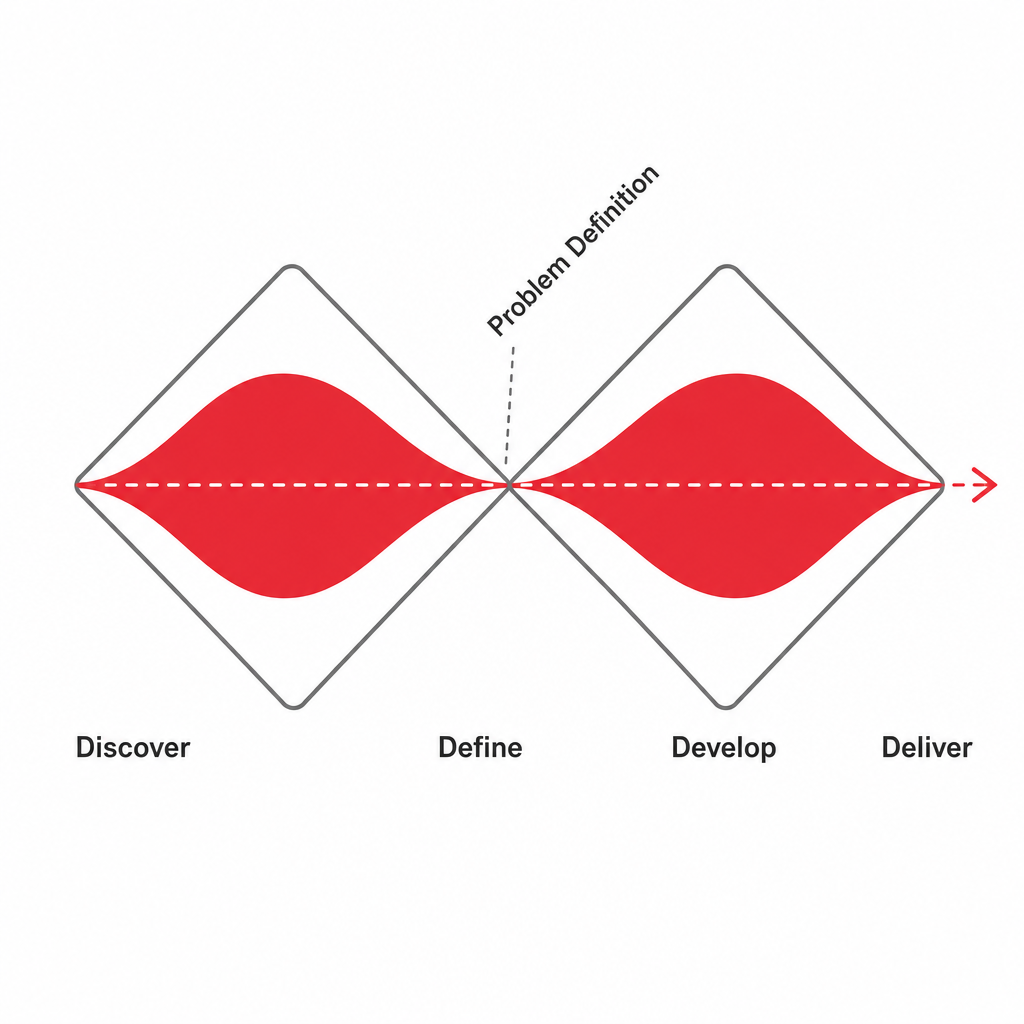
- The Double Diamond Process: The figure below shows the Double Diamond model, a more recent design process model that essentially consists of four stages and three milestones in a linear sequence. Although, at first glance, both the Munich Procedural Model and the Double Diamond appear as double-diamond shapes, the Double Diamond approach divides the process into four stages—Discover, Define, Develop, and Deliver. This model is probably the most widely known and popular design process model. Its main feature is the emphasis on divergent thinking and convergent thinking. In the divergent phase, a large number of ideas are generated for the intended design, while in the convergent phase, the ideas are narrowed down and evaluated to arrive at the best ones. These stages occur twice in this model: once to confirm the definition of the problem (research and problem definition), and once to create the solution (ideation and selection of the best idea).
Examples of Product Design in Different Fields
In this section, we examine several examples in each of the product design fields introduced in this article:
Trident Gum Packaging Design
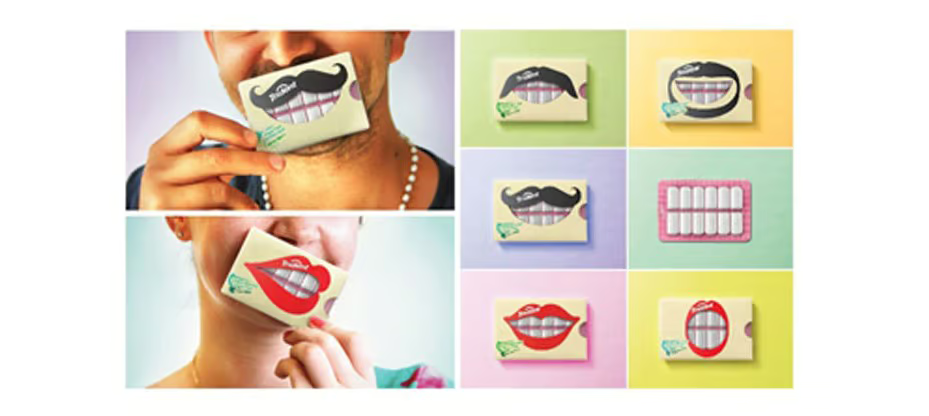
The Trident gum packaging was designed to attract consumers’ attention to the product by using images of different smiling mouths in contrasting colors. Since the creative design and imagery rely on two primary colors to reflect both genders—black-colored designs for men and red-colored designs for women—there are many mouth shapes for each gender. Consumers can easily identify the product through its transparent section, which displays the gum as if it were an actual tooth in the mouth. This design conveys a clear message to consumers that the gum is healthy and will not negatively affect the healthy appearance of their teeth.
This packaging delivers a joyful experience to consumers through its imagery; consumers can place the package over their mouths to create a healthy-looking smile thanks to the whiteness of the gums inside. In addition, the packaging can act as a stimulus that transforms their emotions into actions through purchasing behavior.
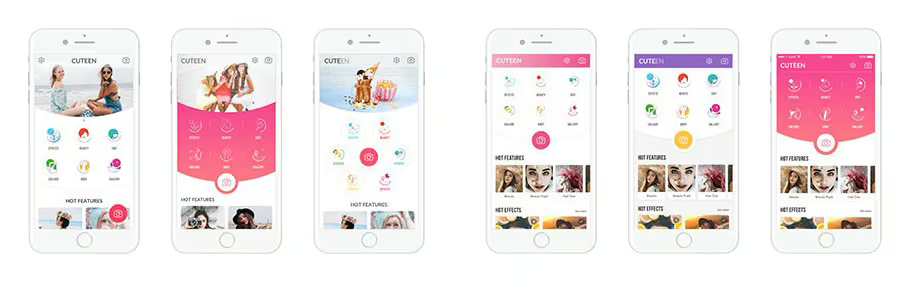
UI/UX Design for the Cuteen Photo Editing App
Photos are one of the ways to preserve memories of life events. With a smartphone, people can take thousands of pictures anywhere and never miss special moments. Mobile applications support people’s interest in photography by offering various features such as image editing. Today, photo editing products face high demand, which is why designers regularly engage in projects of this kind.
The product designer was responsible for developing the UI and UX for an integrated selfie camera and photo‑editing mobile application for teenage girls and young women aged 15 to 35. The slogan of this application is “Meet your most beautiful self!” The main task was to create a smart UX that highlights the six core features of the app and to design a modern, youthful, feminine, and playful user interface. In addition, the design team created a custom set of icons and applied a bright color palette in the user interface.
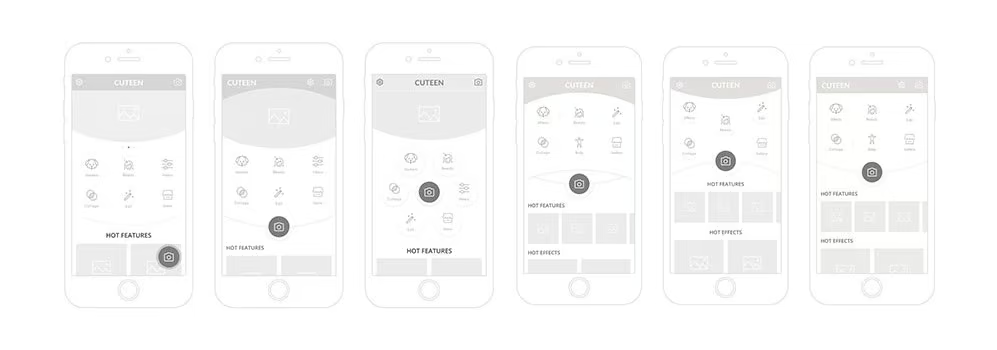
The task of the previous designer was to organize and present all the features in a way that allowed users to perform editing directly. To improve the efficiency of this process, the designer created a wireframe, which presented the information architecture of the future design. A wireframe is a simple and fast way to create a schematic visual representation of screens and transitions, helping developers and clients gain a clear understanding of the structure of the design.
The Cuteen app had six core features that needed to be presented in the most effective way. The designer proposed two layout options. The first included a circular banner and brand name at the top of the screen. The designer explored several ways to place the icons of the main features as well as the CTA photo button.
It was important that the CTA button had enough contrast so that users would recognize it as the main interactive element of the interface. This design included three alternatives for positioning the UI components in different parts of the app screen. The first showed the camera CTA button separated from the features, while the others presented different ways of visually connecting them within a single interactive area.
The second layout focused on presenting the features. The banners were removed, with the icons placed at the top of the screen and the CTA positioned in the center. Such a structure helps focus users’ attention and reduces potential distractions.
The designer also created a main feed displaying recent and popular effects so users could easily apply the best features without extra effort. Both layouts had their own strengths and advantages, so the designer decided to compare the two possible options during the UI design stage.
The main approach to the UI design involved a combination of fashion and entertainment visual styles. Considering that the application was designed for young female users, the designer decided to create the interface elements using a bright color palette with dark‑to‑light effects. The central color used for the CTA button and several other interface elements was pink. This color is strongly associated with beauty, sensitivity, and youthful femininity, making it a suitable choice when the target audience consists mainly of girls and young women.
The six feature icons were displayed in six contrasting colors. In this way, each color becomes associated with a specific feature, allowing users to quickly interact with the app even without reading the label of each icon. To ensure the interface appears soft and pleasant, the designer also used a white background, creating balance within the visual composition.
Nike Golf Club Design (Covert Driver)
Drawing on the established benefits of cavity-back golf clubs and their distributed weight, Nike and Priority Designs collaborated to iterate on this technology. Through an iterative workflow involving numerous renderings and physical models developed in the studio’s prototype lab, the team gathered critical feedback that informed the final form—ultimately leading to the decision to retain the club head’s traditional upper profile.
This collaboration produced the world’s first high-speed cavity-back driver. The design leverages cavity-back architecture to enhance stability at impact and optimize energy transfer, resulting in superior distance and control. By redistributing weight to the rear and perimeter of the club head, the design increases the moment of inertia, effectively preserving performance and distance on off-center strikes.
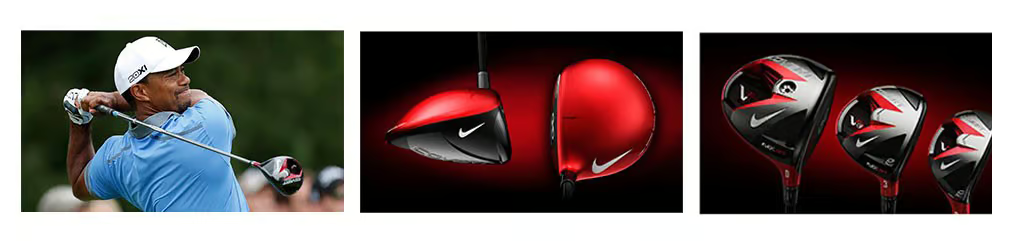
Nike and Priority Designs collaborated to develop the Flex-Loft system, a breakthrough in consumer-adjustable golf equipment. Traditionally, golfers were limited to adjusting club loft while the launch angle remained fixed, often necessitating the purchase of additional clubs to achieve a different trajectory. The Flex-Loft dual-axis system eliminates this limitation by allowing golfers to independently adjust both loft and launch angle, as well as face angle (left-to-right trajectory).
The core challenge lay in decoupling these two variables—launch angle and loft—within a user-friendly mechanism. The design solution utilized two independently controlled axes, each with clear, intuitive feedback. Through extensive calculation, prototyping, and testing, the team successfully engineered a system that offers unprecedented customization, providing golfers with 15 unique adjustable positions in a single club.
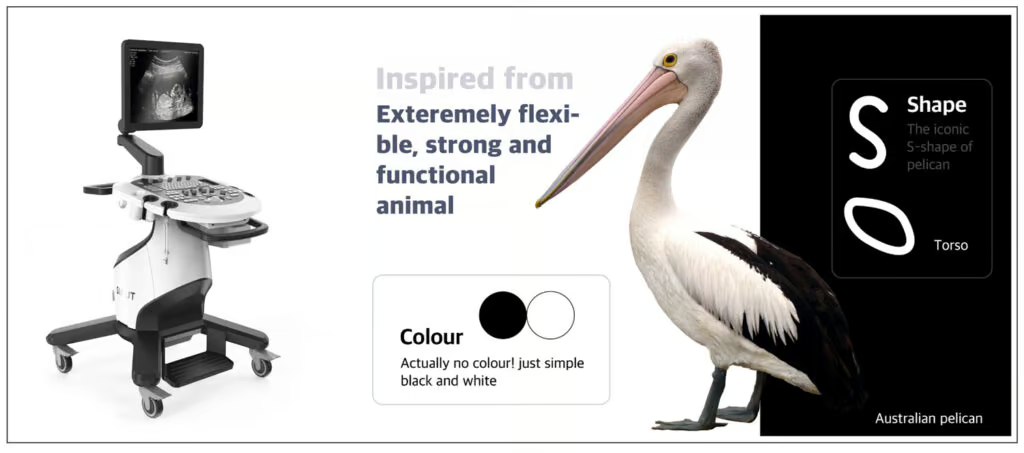
Zino Ultrasound Machine Design
Zino is an ultrasound machine designed by order of the Med Fanavaran Plus company. The core idea was to build a lower-priced device that, while offering cost savings, could still be used by professionals. In other words, this device is accessible to target groups with less financial power. The design team carried out the project with the goal of creating added value through a clever combination with aesthetic innovation.
Since the height-adjustment mechanism was removed to save costs, the dimensions of the ultrasound machine were designed according to the 50th percentile of users. The probe transducers were moved to the back of the device. This relocation made process management easier while giving the machine a tidier appearance. While Zino’s aesthetic design stands out from other examples on the market, it follows the principle of form follows function. Different viewing angles for the monitor are possible thanks to its arm mechanism, a feature that resulted from the efforts of the mechanical design team.
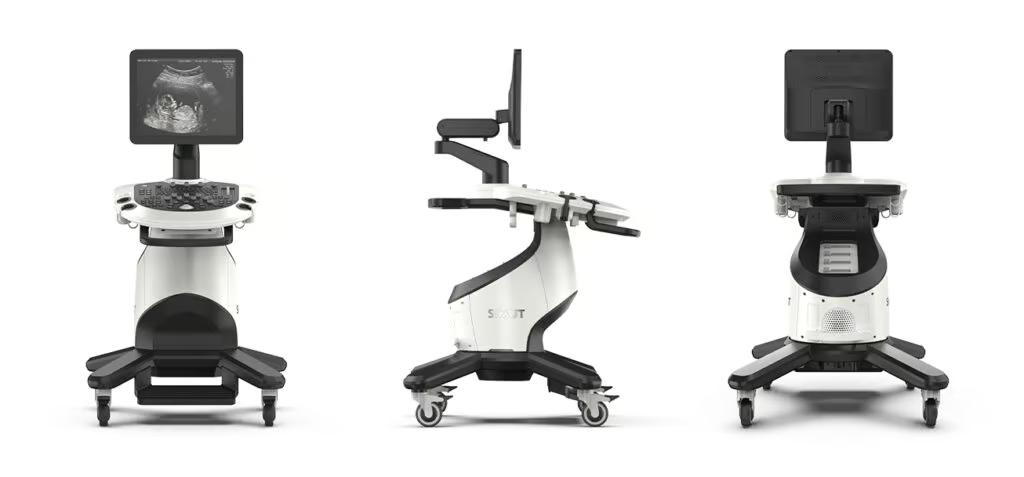
Achieving dimensions appropriate to the product’s location and usage scenario, full compliance with medical equipment design standards, a new and innovative form, alignment between form and function, proper proportioning of components in terms of assembly and disassembly scenarios, and reduction of manufacturing costs were among the challenges of this project.
Considering these challenges and the capabilities of the design team, a distinctive product was developed.
Among the notable features of the proposed design are changes in the layout of components and access points, a new form that distinguishes it from existing products on the market, ease of component maintenance considering the assembly and disassembly process, a body reinforced with a metal structure to increase strength and durability, and the alignment between the form of components and their functions.
Final Remarks
Product designers need to consider every detail: the ways people correctly or incorrectly use products, the products that fail, the errors that arise during the design process, and the intended ways in which people should use the product. Many new designs fail, and many never even reach the market. Some designs eventually become obsolete.
The product design process can be very long and exhausting, and the designer may have to make multiple attempts to achieve the desired outcome. Many new ideas fail. All products are, in some way, tied to the economic realities of production.
Creativity is also one of the key factors in product design. The use of new technologies can be highly influential as a competitive advantage. Furthermore, incorporating new technologies will always require new design approaches as well.
Today, products and product design are involved in almost every aspect of human life and encompass many fields, including packaging design, service design, home appliance design, and more. Product designers apply various design processes throughout their projects in an effort to create products that match customers’ preferences in terms of function and form, while also being compatible with available manufacturing capabilities and common production methods such as plastic injection molding, machining, sheet metal forming, vacuum forming, and others.
Throughout this article, we have attempted to address the concept of product design, design processes, and the various fields of product design as much as possible. However, this field continues to evolve and expand, and its definitions and processes are constantly changing.
Frequently Asked Questions About Product Design
In this section, answers to frequently asked questions about product design are provided. If you did not find the answer to your question, please write to us in the comments section.
- What is the difference between industrial design and product design?
There is significant overlap between industrial design and product design; however, product design encompasses everything related to a physical product. In other words, it is a collection of strategic and tactical activities—from the initial idea to commercialization—performed to create a product. In contrast, industrial design is defined as the art or process of designing manufactured products, which leads to the mass production of identical items, ranging from cars to clothing. Of course, in recent years, product design has become a relatively broad term that also includes items such as software and non-physical products.
- What are the stages of the overall product design process?
There are various processes depending on the design subject, and the designer selects one based on the project requirements. However, the following stages are common in almost all product design processes:
– Definition and Research
– Ideation
– Idea Development
– Prototyping
– Evaluation
- How can a product design be evaluated?
There are various methods for evaluating a design that help ensure the reliability of both the design process and its outcome. Each method is chosen based on the product domain; among the most important are user interviews, customer feedback, questionnaires, and the use of social media.
- What are the important aspects of a product in design?
The noun term “product design” is often used as a polysemous word. The value of product design is divided into three elements: aesthetics, function, and symbolism.
- What is the product design standard?
Every product that enters the market must comply with relevant standards. The standards for each product differ across fields such as medical equipment, urban furniture, automobiles, packaging, and others, and they are determined by the respective regulatory organizations.
- What does product function mean?
The term “function” in product design refers to the primary purpose of a product. For example, the main function of a telephone is to send and receive voice messages across geographically dispersed locations. Successful products must work well, and the sense of quality they convey to the user makes owning and using them enjoyable. The perfect alignment of a product’s form with its function, user characteristics, and place of use ensures the best possible performance for the product. The design and testing time can take months and, naturally, be costly; however, the result can be extraordinary.